Senate Housing Committee advances bills to ease certified‑mail rules for rent and eviction notices
Loading...
Summary
The Senate Housing Committee advanced two companion bills that remove or limit certified‑mail requirements for rent increase and unlawful‑detainer notices, aiming to reduce returned notices, cut administrative costs and improve tenant receipt of notices; supporters said the change restores prior practice and preserves tenant protections.
The Washington State Senate Housing Committee on Feb. 18 moved forward bills that would loosen recent requirements forcing certain landlord notices to be delivered by certified mail.
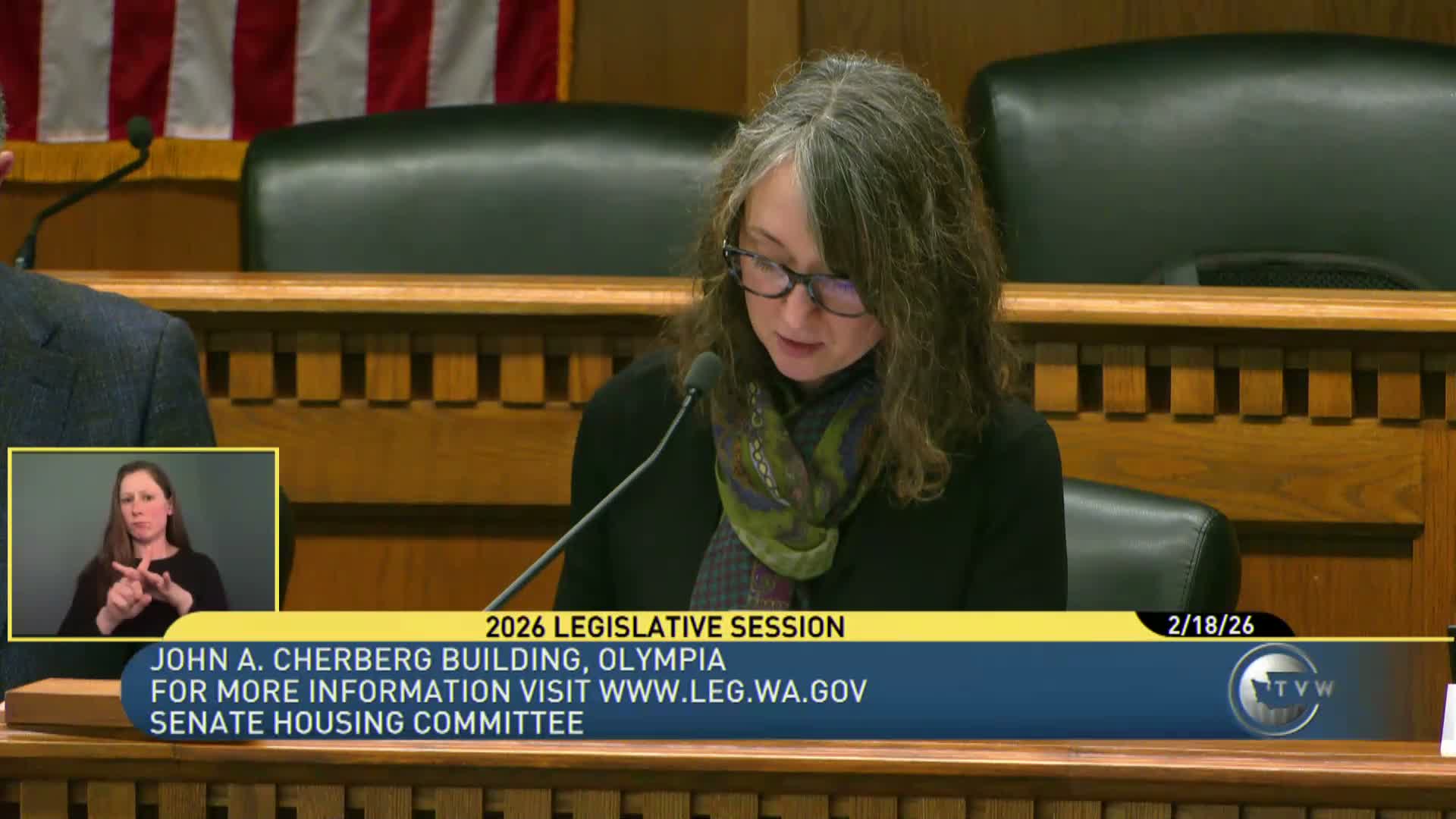
Committee staff described Substitute House Bill 2452 as a targeted change to the Manufactured Home Landlord-Tenant Act that would stop treating rent‑increase notices the same way as unlawful‑detainer notices and instead align them with other MHLTA service rules. "What it has done is it's made all notices ... every single notice has to be sent via certified mail, including rent increased notices," Representative Veil Connors said during her sponsorship remarks, describing returned and unclaimed certified notices as a practical problem for tenants and providers.
Staff said House Bill 2664 makes parallel changes for unlawful‑detainer and related notices by deeming service complete when mailed from within the state and removing the certified‑mail requirement for mailed service. Committee staff told members a fiscal note was not requested for SHB 2452 and that a fiscal note is available for other related bills where indicated.
Supporters in public comment — including multifamily housing associations and property managers — described the certified‑mail rule as costly and ineffective. William Zimmerman, a property manager, told the committee that since HB 1217 took effect last summer "housing providers are required to serve rent increase notices in the same manner as they serve notices that can result in eviction," which he said adds staff time and per‑posting costs without improving tenant notice outcomes.
Proponents argued the bills retain alternative service methods: posting on the door, hand delivery when possible, and mailing to last known address, and they said tenants could still rely on other protections in law. Committee members asked about evidence of receipt and enforcement; staff replied that certified‑mail provides an evidentiary receipt but that first‑class mail combined with posting and hand delivery remains common practice for many notices.
The committee first voted to suspend the five‑day notice rule to allow timely consideration and later closed the public hearing on SHB 2452 after proponent testimony. The bills were moved forward with due‑pass recommendations during the session's business, subject to signatures. The committee did not change statutory remedies in these briefings; it focused on service mechanics.
What happens next: Each bill will proceed through the Senate process with the committee’s recommendations; sponsors said similar language passed both houses previously and sought to restore what they described as workable notice practices for tenants and housing providers.