
Proposal would create statewide low‑income energy assistance program; stakeholders urge clarifications on funding and allocation
Get AI-powered insights, summaries, and transcripts
Subscribe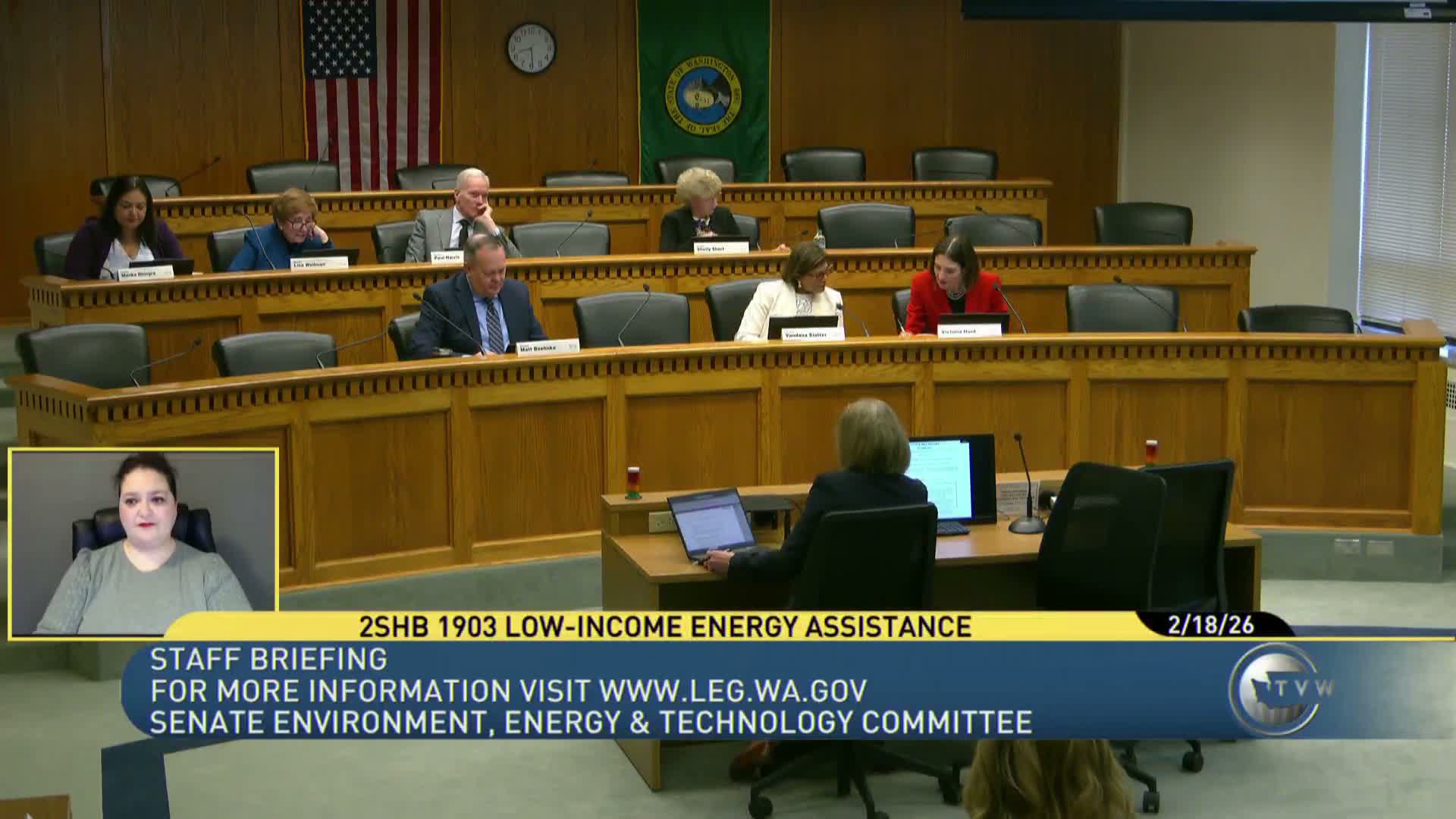
Summary
HB 19 03 would establish a statewide low‑income energy assistance program at Commerce, phased in subject to appropriation; testifiers including community action agencies, utilities and rural co‑ops discussed an estimated $270–275 million annual need, voluntary participation, equitable allocation, and possible use of Climate Commitment Act funds.
Lawmakers heard lengthy testimony on House Bill 19 03, which would create a statewide low‑income energy assistance program administered by the Department of Commerce to reduce energy burdens for low‑income households. Staff told the committee the program would begin providing assistance on Oct. 1, 2027, be phased in subject to appropriation and prioritize service to areas with disproportionate need.
Representative Mena, the sponsor, described the bill as an affordability measure developed with stakeholders; she and testifiers said the statewide need is roughly $270–275 million annually. Witnesses from the Washington State Community Action Partnership, MultiService Center and community action agencies said the bill builds on existing utility commitments and community capacity to expand assistance and that the proposed structure aims to strengthen rather than replace local programs.
Utility and public power witnesses (Avista, Washington Public Utility District Association, Washington Rural Electric Cooperative Association) generally expressed support for the bill’s goals but raised concerns about voluntary participation, how funds would be apportioned across utilities and regions, and safeguards that utilities would not be forced to backfill state funding shortfalls. Commerce staff said the bill is silent on total funding levels and that deployment details would be worked out during implementation and appropriation decisions.
Stakeholders debated whether Climate Commitment Act (CCA) revenues could or should be a funding source: some testifiers said the bill contemplates CCA funds or general fund support and urged clarity; others emphasized that the bill as drafted is phasing in and that apportionment rules and prioritization of high‑need areas still need definition. Lawmakers also discussed the balance between short‑term bill relief and long‑term weatherization and conservation investments.
The committee closed the hearing after multiple panels of testimony and asked sponsors and Commerce to continue stakeholder discussions on allocation, eligibility definitions and funding sources.