Get Full Government Meeting Transcripts, Videos, & Alerts Forever!
Get email alerts on the Hospital Policing Partnerships topic
No spam. Unsubscribe anytime.
Mayors, senators back bill to codify police partnerships at state psychiatric hospitals with funding caps
Summary
Witnesses told the House committee that codifying community policing partnerships between DSHS and the cities near Western and Eastern State Hospitals will improve safety; the bill sets reporting requirements and caps annual funding at up to $750,000 per facility per biennium.
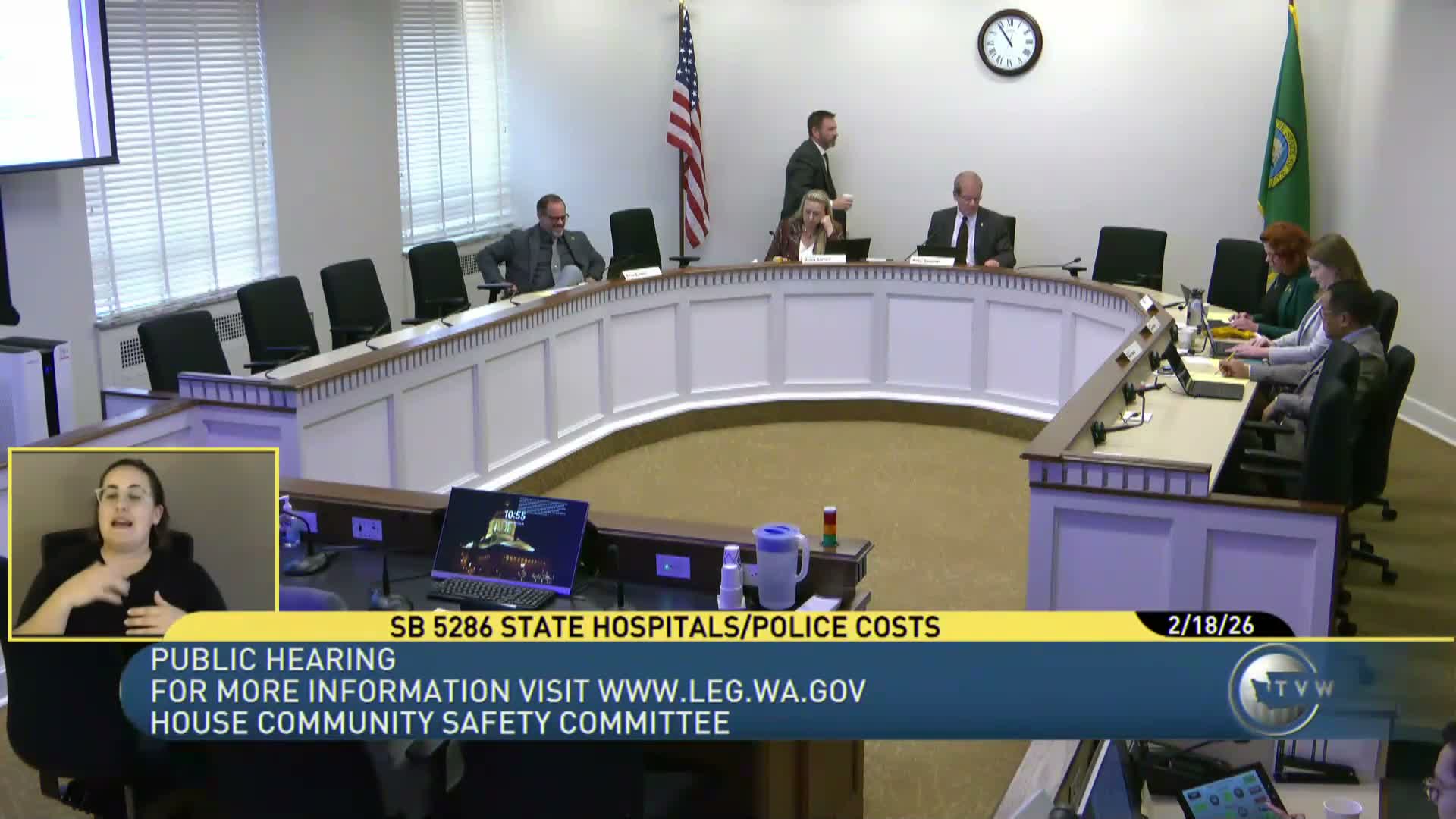
Committee staff briefed members on Engrossed Senate Bill 52 86, which recognizes and establishes community partnership programs between the Department of Social and Health Services (DSHS) and the cities hosting Western State Hospital (Lakewood) and Eastern State Hospital (Medical Lake). The bill adds a statutory framework, annual reporting to OFM and the Legislature, and a funding cap.
Corey Patton, staff to the committee, described prior operating-biennium appropriations that funded programs and payments: examples cited included $320,000 per fiscal year for partnership activities and a $45,000 payment line item. Patton said the bill requires annual funding to each city ‘‘in an amount to be determined in the biennial budget’’ but that funding may not exceed $750,000 per facility per biennium and that aggregate amounts should reflect hospital size and community need.
Senator Jeff Holy (6th) said the bill returned after unanimous Senate passage and that the $750,000 cap would reassure appropriators. Paul Bokey, mayor of Lakewood, testified that Lakewood’s community policing program—established in 2007—has ‘‘reduced calls for police service at the hospital by 40%,’’ improving safety for the facility and surrounding neighborhoods. Terry Cooper, mayor of Medical Lake, noted his city established a similar program in 2023 and that prior biennial budgets had already funded the work, so codification would reduce repeated appropriation requests.
The committee closed public testimony on SB 52 86 and indicated the bill would be considered at tomorrow’s executive session.
Ending: Public testimony concluded with bipartisan support from local officials; the committee signaled it will take executive action the next day.