Get Full Government Meeting Transcripts, Videos, & Alerts Forever!
Get email alerts on the Law Enforcement Face Coverings topic
No spam. Unsubscribe anytime.
Washington committee hears sweeping debate over bill to ban law-enforcement face coverings in public interactions
Summary
The House Community Safety Committee heard hours of testimony on Substitute Senate Bill 58 55, which would bar opaque facial coverings by law enforcement during routine public interactions while carving out exceptions for protective equipment and certain operations; witnesses clashed over federal preemption, officer safety, doxxing risks and public trust.
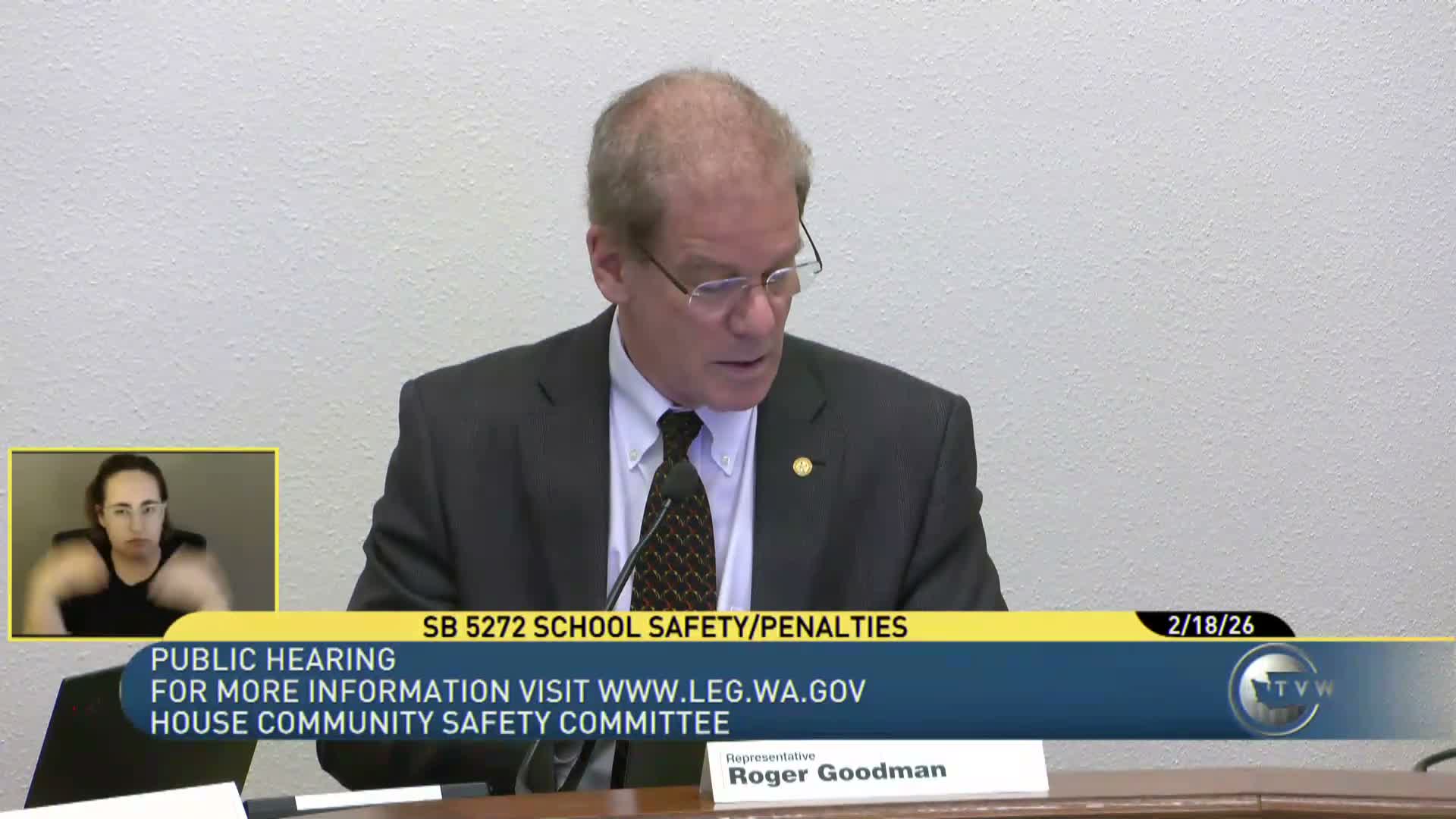
Chairman Goodman opened a full-day public hearing on Substitute Senate Bill 58 55, a proposal from Senator Javier Valdez that would prohibit law-enforcement officers from wearing opaque facial coverings while interacting with members of the public and require officers to be reasonably identifiable.
The bill’s sponsor, Senator Javier Valdez (46th Legislative District), said the measure grew from stakeholder work after national reports of masked federal agents and that the goal is transparency: “if you’re gonna be performing your job as a law enforcement official … the public needs to know exactly who you are and not not shielding and hiding your identity.” Valdez said stakeholders helped shape carve-outs for legitimate protective equipment and that he is open to a Labor & Industries-based exception for hazardous conditions.
Proponents argued visibility builds public trust and safety. Lisa Mannion, King County’s elected prosecuting attorney, testified in favor and described local incidents: “masked federal agents have been cited in Redmond, Seattle, and other locations across the state.” Municipal leaders, community organizations and the governor’s public-safety advisor supported the bill while indicating they seek narrowly tailored exceptions; Nathan Olsen, the governor’s public-safety policy advisor, told the committee the governor recommends passage and that an L&I rulemaking exception could address health and safety concerns.
Opponents warned of legal and practical problems. Several witnesses pointed to a federal injunction against a similar California law and argued the bill could invite costly litigation under the Supremacy Clause. Anthony Mixer (opposition) told the committee that “a similar proposal was struck down in federal court,” and others said the measure could increase officer vulnerability to doxxing and create liability for local governments. Law-enforcement groups seeking amendments argued that the bill’s current language is broad enough to sweep in hoods, sunglasses, or routine protective items and urged L&I-based exceptions to avoid unintended enforcement actions against officers acting in good faith.
Committee members pressed for clarifications on scope and exemptions, especially for inclement weather, medical or environmental protective equipment, undercover operations, and tactical units. Witnesses and counsel identified potential fixes: (1) explicitly preserving exemptions for L&I-defined hazardous conditions; (2) clarifying that the prohibition targets intentional identity-obscuring masks during routine public interactions and not necessary protective gear; and (3) ensuring the bill treats state, local and federal officers consistently to reduce intergovernmental-immunity risk.
The committee closed the public hearing after more than three hours of testimony and indicated it will consider amendments at the planned executive session the following day.
Ending: The committee recessed without taking a vote; members said they will work with sponsors, stakeholders and staff on amendments addressing L&I exceptions, language precision, and intergovernmental concerns before executive action scheduled for the next day.