Bill would create state center to promote environmentally sustainable urban design
Loading...
Summary
HB 17 42 would create a Center for Environmentally Sustainable Urban Design at the Department of Ecology (contingent on Ecology securing operating funds) to run design competitions, award grants and coordinate an advisory council; Ecology raised capacity and fundraising concerns during committee testimony.
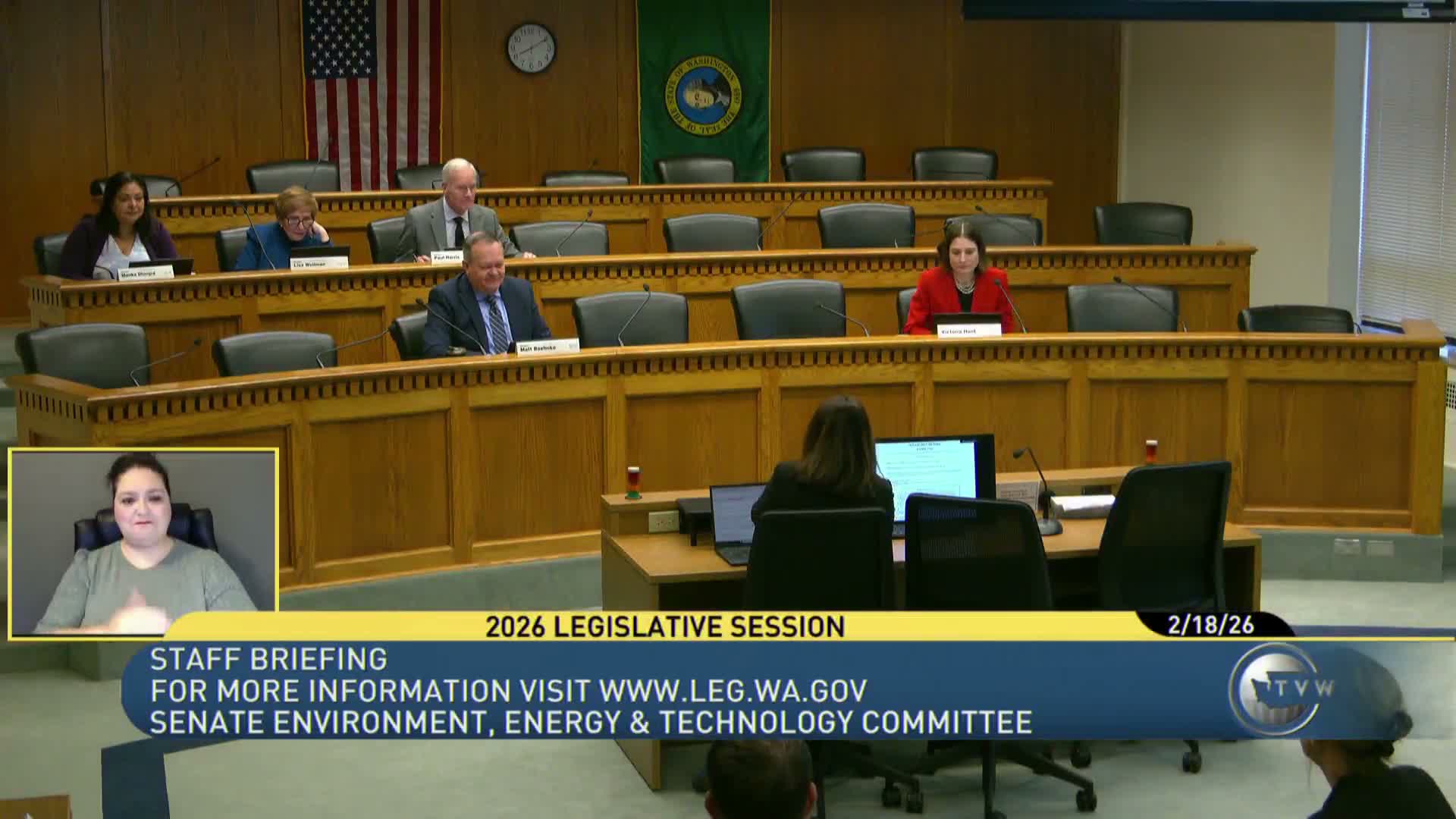
The Environment, Energy and Technology Committee considered House Bill 17 42, which would establish a Center for Environmentally Sustainable Urban Design at the Department of Ecology to identify priority projects, run a design commission and award grants aimed at promoting regenerative and biophilic design.
Alicia Kinney Clawson, staff to the committee, said the center would be contingent on Ecology securing funds to operate and would be authorized to seek gifts, grants and contributions from non‑state sources. The bill sets selection criteria for the first design competition (a parcel within three miles of the Capitol Campus, previously used for commercial beverage processing, idle for at least 20 years and damaged by fire) and creates an advisory council to make recommendations on awardees and grantees.
Representative Dye, who presented the bill, described the measure as a way for Washington to showcase sustainable urban architecture, citing Milan’s Bosco Verticale as an inspiration and proposing reuse of the Olympia Brewery site as a living case study. Dye said funding would be budget neutral because the center would rely on philanthropic contributions and private support.
Department of Ecology staff told the committee they generally support sustainable design goals but raised concerns that the bill would create a significant new line of work for Ecology, requiring new expertise and fundraising capacity; Ecology requested a technical amendment and suggested adding a statutory definition for “median environmental health disparities.” Architects and community advocates testified in favor of the bill as an opportunity to build local capacity and demonstrate integrated, people‑centered design approaches.
The committee closed the hearing after receiving testimony and asked Ecology and the sponsor to work on technical language and fiscal details.