Get Full Government Meeting Transcripts, Videos, & Alerts Forever!
Get email alerts on the Administrative Processes topic
No spam. Unsubscribe anytime.
Bill would let smaller panels speed pollution control appeals if parties agree
Summary
HB 2,426 would let the Pollution Control Hearings Board use alternative, smaller panels (including a single qualified member or an administrative law judge) to hear permit appeals when all parties consent and the Board unanimously approves, aiming to shorten delays without limiting public participation.
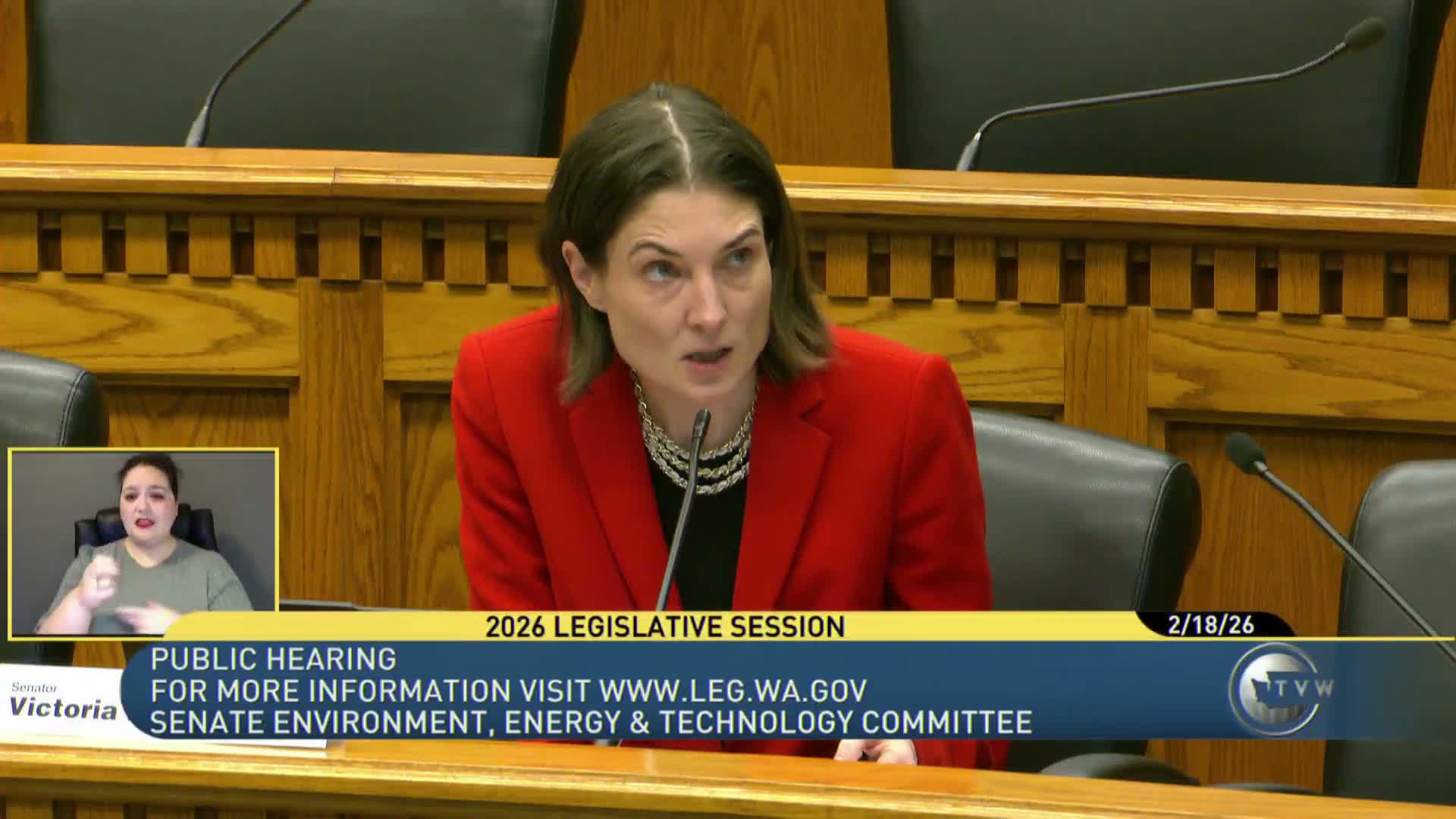
The Environment, Energy and Technology Committee heard testimony on House Bill 2,426 on procedures to speed appeals to the Pollution Control Hearings Board. Sponsor Representative Birnbaum said the change, negotiated with stakeholders including FutureWise and the Grays Harbor Chamber, lets parties opt in to alternative panel compositions — for example, an administrative law judge or a single qualified hearings‑board member — to resolve less controversial permit appeals more quickly.
Staff to the committee, Matt Schuppert Coningsworth, told the committee the bill would allow alternative PCHB compositions when all parties consent and the PCHB unanimously approves, and that the current fiscal note for the version before the committee shows no fiscal impact. Birnbaum said the change mirrors a model used for derelict vessel hearings and would preserve opportunities for public input while reducing routine delays that, she said, can last about 11 months.
Testimony from Greater Grays Harbor Inc. and FutureWise supported the bill as a balanced, cost‑neutral measure that would free full‑board capacity for complex matters while enabling simpler cases to be adjudicated faster. Industry witnesses noted the potential benefit for project predictability; environmental advocates emphasized safeguards for public participation.
The committee did not take a vote on the bill during the hearing. The matter was set aside for further consideration and the public hearing was recessed.