Get email alerts on the Elections topic
No spam. Unsubscribe anytime.
Senate passes bill tightening access to voter registration data amid debate over penalties
Summary
Senate Bill 5892 passed after floor debate over centralizing access requests through the Secretary of State and criminal penalties for unauthorized disclosures; sponsor argued the change protects sensitive data while an opponent called the penalties overly punitive.
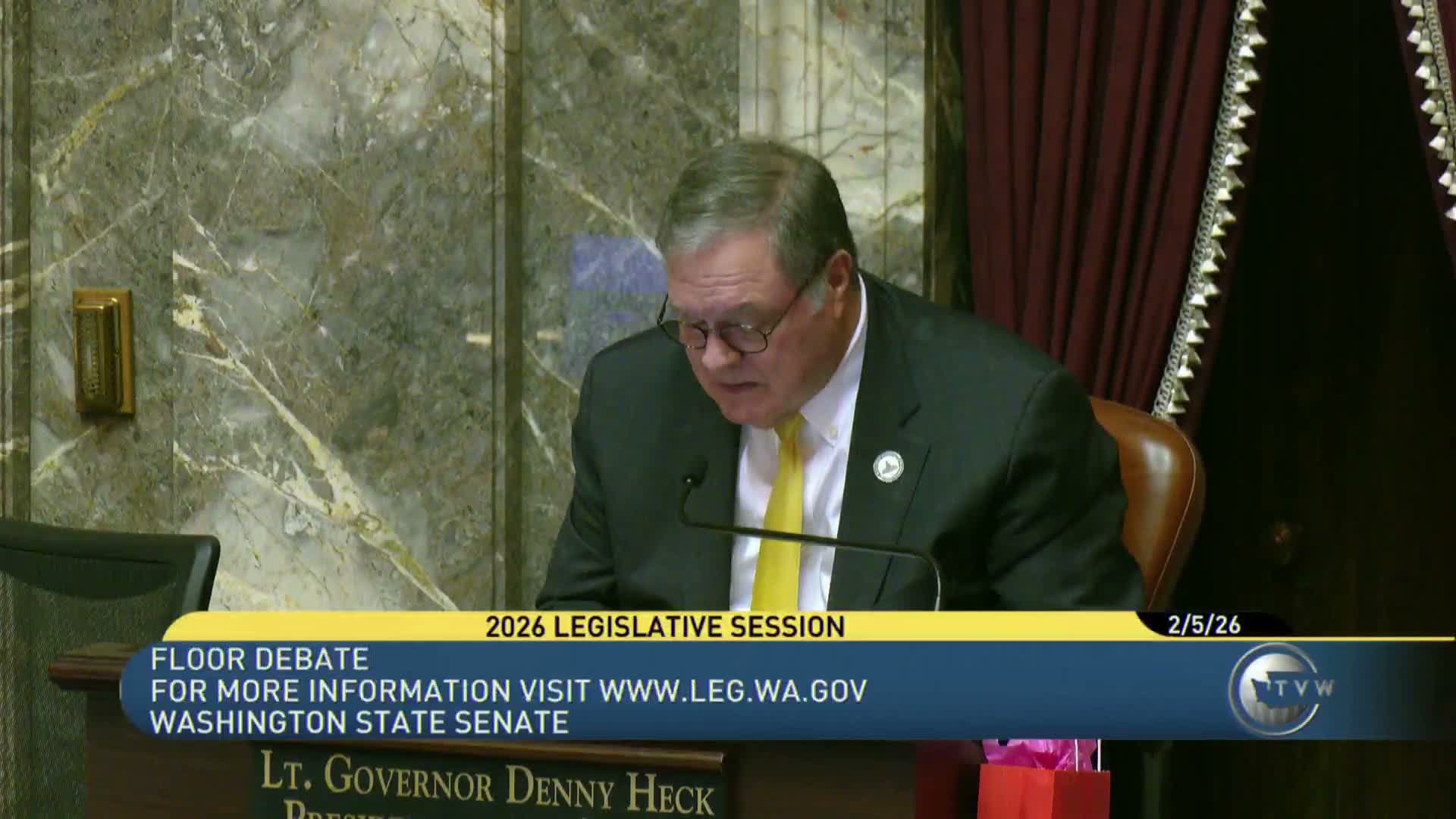
Senate Bill 5892, which narrows public access to certain fields in the state's voter registration database and requires requests to go through the Secretary of State's office, passed the Washington State Senate after an extended floor exchange. Sponsor Senator Richeli argued the measure protects confidential personal information — including driver's license numbers, Social Security numbers and full birth dates — and prevents improper distribution by ensuring a single, central point of request.
"Attempts by federal officials to access protected information in Washington state's voters database are unnecessary, and they're illegitimate," Senator Richeli said on the floor, framing the bill as a bipartisan privacy safeguard. Opposing the bill, Senator Wilson Jeff said he supported protecting private information but objected to the bill's process and the severity of penalties, saying the measure makes certain violations a class C felony and that he would prefer a revised version with different guardrails.
Despite the opposition, the roll call recorded 29 ayes, 19 nays and 1 excused, and the chair declared SB 5892 passed. The legislation, as read on the floor, also includes an immediate effective date provision.
AI generated
The text on this page is AI generated. Summaries, highlights, analysis, and video transcripts are all produced from the original source material.
AI can make mistakes, so if you spot one, and we will fix it for everyone.
Note: the source content is unaltered by us. Any content source we link to, be it a video, an audio recording, or a document, is presented exactly as its publisher released it. That publisher is usually a government body, sometimes an individual official or another organisation.