Lifetime Citizen Portal Access — AI Briefings, Alerts & Unlimited Follows
Lawmakers weigh science, ecology and industry costs in proposed 6PPD tire chemical ban
Loading...
Summary
Substitute HB 24‑21 would ban 6PPD and certain 6PPD substitutes in vehicle tires beginning in 2035; proponents say the chemical is lethal to coho salmon and that upstream prevention is necessary, while tire manufacturers urge caution, citing no currently available safe alternatives and fiscal/supply impacts.
The committee received a briefing and lengthy public testimony on substitute House Bill 24‑21, which would prohibit the manufacture and sale of tires containing the tire‑protectant chemical 6PPD and ‘regrettable’ substitutes beginning in 2035. Staff described Ecology’s ongoing regulatory work under the Safer Products for Washington program and noted the bill preserves Ecology’s authority but places an explicit statutory ban and timetable in law.
Environmental groups, tribes and many local governments urged the measure, citing Washington research linking 6PPD‑quinone to lethal impacts on coho salmon and arguing that without action the state’s large investments in stormwater and habitat restoration cannot achieve recovery goals. Seattle Public Utilities and Trout Unlimited said remediation alone is infeasible and expensive and urged an upstream solution.
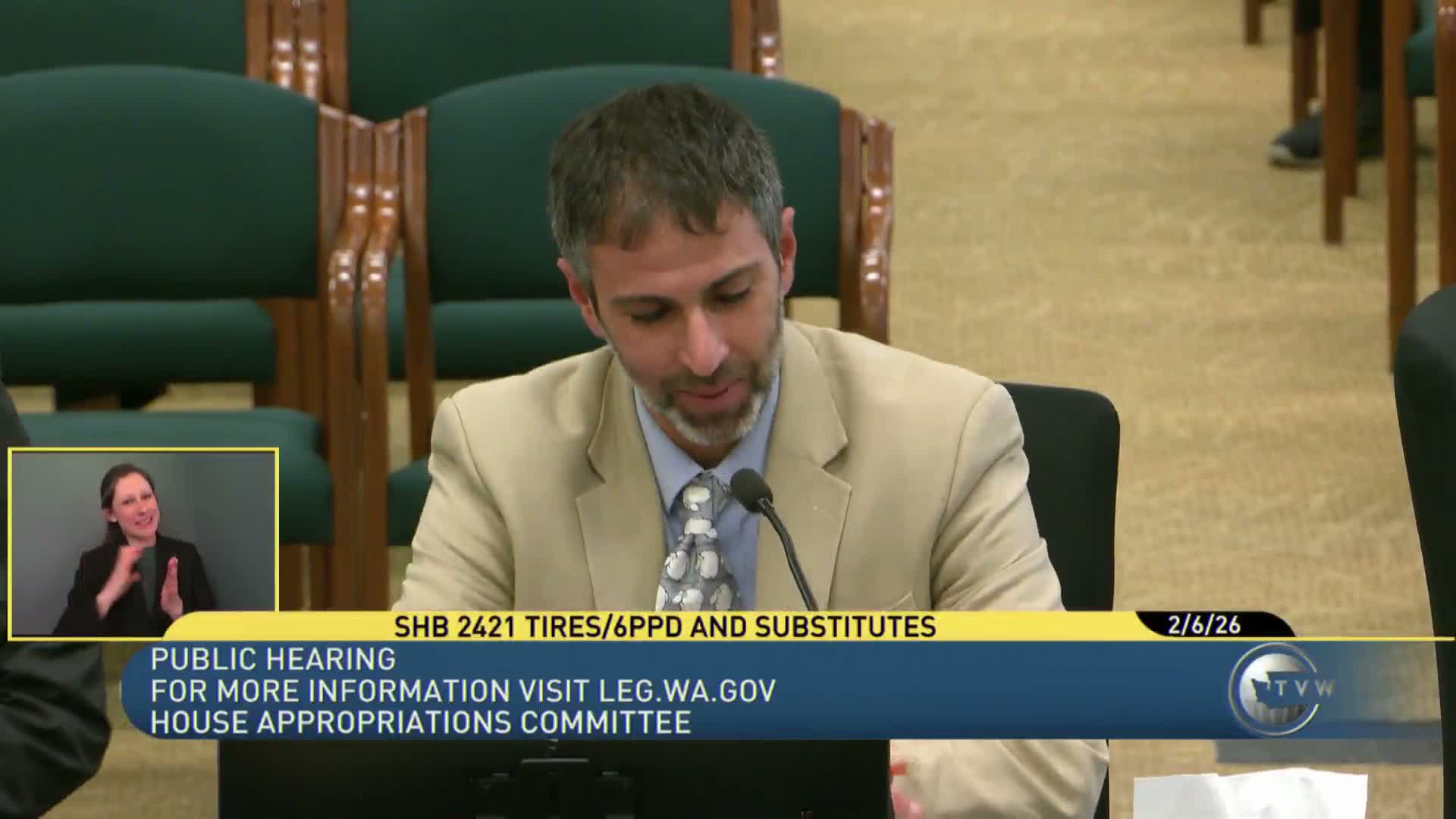
Tire manufacturers and trade groups said no viable, safety‑tested alternative is currently available and that a 2035 ban risks supply and safety consequences; industry witnesses also flagged the fiscal note and questioned feasibility. They urged reliance on Ecology’s Safer Products process and more time for alternatives testing. Several witnesses asked for delayed rulemaking start dates and amendments to reduce short‑term fiscal impacts on Ecology.
Committee members heard both the ecological science and practical industry constraints. Staff noted Ecology’s draft fiscal estimate for rulemaking and testing costs over coming years and that an amendment (H3451.1) would delay rulemaking until after 07/01/2029. The bill remained under committee consideration.