Get Full Government Meeting Transcripts, Videos, & Alerts Forever!
Get email alerts on the Childcare Workforce topic
No spam. Unsubscribe anytime.
Committee hears competing views on bill to create statewide childcare workforce standards board
Summary
A House Appropriations hearing on a second substitute to HB 11-28 drew testimony from childcare providers, unions and industry groups. Staff said the bill would create a 10‑member advisory board at L&I to make recommendations on wages and workforce standards; opponents warned of added costs and redundancy.
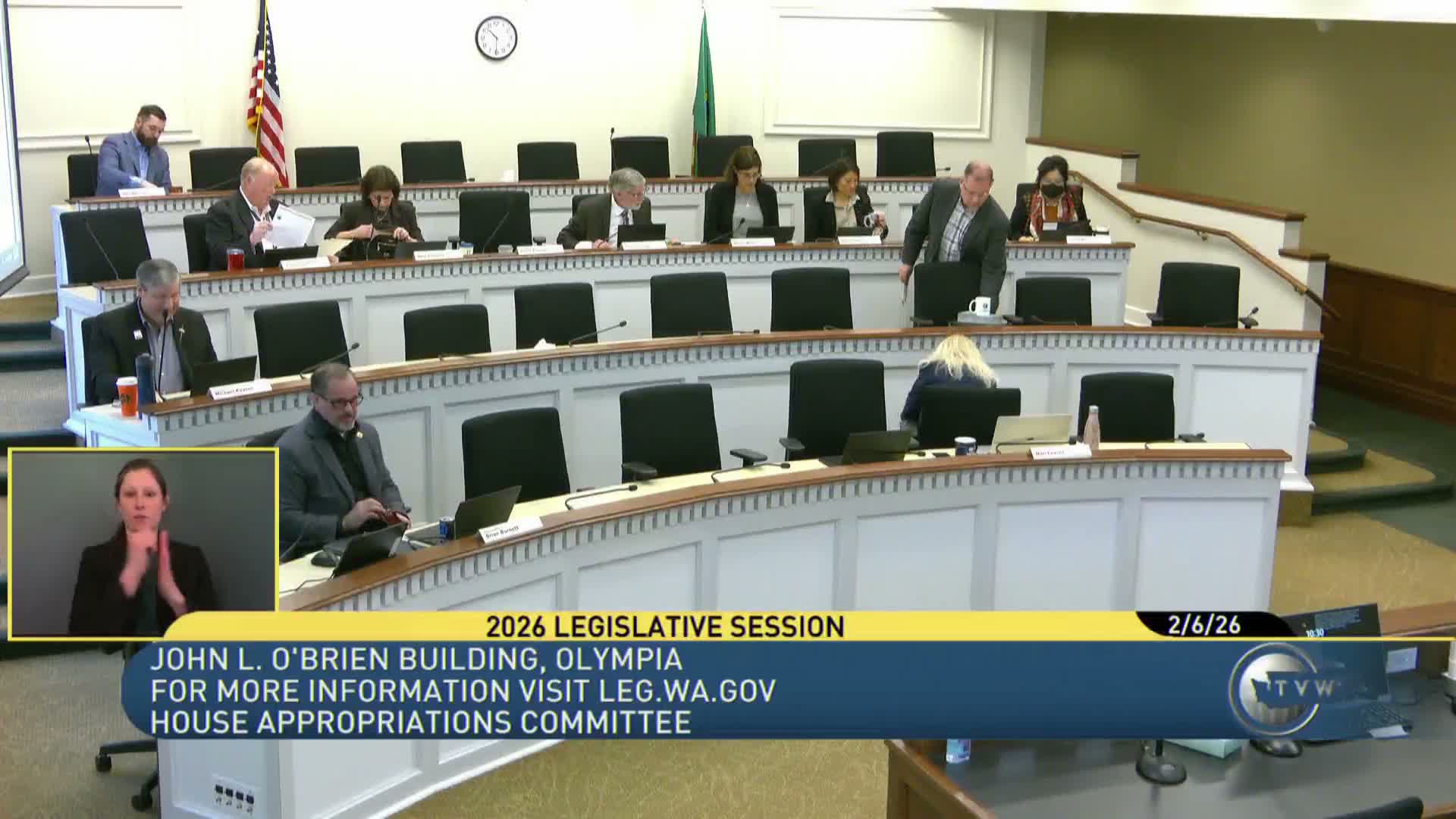
The House Appropriations Committee heard a staff briefing and more than an hour of public testimony on the proposed second substitute to House Bill 11‑28, a measure to establish a Childcare Workforce Standards Board administered by the Department of Labor & Industries.
Nonpartisan staff described the substitute as setting up a 10‑member, gubernatorial‑appointed board that would meet quarterly, collect evidence through hearings and analysis, and publish recommendations on wages, recruitment and retention, and systemic barriers, including impacts of systemic racism and economic injustice. Jordan Clark, staff to the committee, estimated the agency might need two full‑time staff — a program manager and an administrative assistant — at roughly $250,000 per year to support the board, plus stipends for non‑state board members and modest travel reimbursements.
Providers and employers who opposed the bill said the board duplicates ongoing work at state agencies and would create long‑term general‑fund obligations without a dedicated funding source. Amy Anderson of the Washington Child Care Centers Association told the committee the substitute “creates significant and ongoing financial obligations for the state, introduces unfunded mandates and exposes both the legislature and childcare providers to long‑term budgetary risks.” Several national and chain providers echoed that concern.
By contrast, union representatives and worker advocates urged the committee to back the measure, saying the board would create a structured public forum that brings employers, workers and parents together to address chronic understaffing and low pay. Erin Hike of SEIU 925 said the current substitute is “significantly skinny down” from prior versions and argued it creates a standing space with equal representation for employers and employees.
Supporters included small family childcare providers and teachers who described closed classrooms and staff working while ill because programs cannot fill shifts. Georgina Malagon, a home‑daycare operator, said those staffing shortfalls directly affect the availability of infant and toddler rooms.
Staff noted some prior provisions that raised costs (for the Attorney General’s Office and the Office of Administrative Hearings) were removed in the second substitute, and that DCYF could require data‑sharing agreements with L&I, potentially adding modest costs.
The hearing concluded with the committee moving on to other bills. No formal committee action on HB 11‑28 was recorded at that meeting.
The committee materials list a fiscal note and staff recommended that members weigh fiscal tradeoffs against the board’s potential to create consistent, systemwide standards. The bill remains subject to further amendment and to the Legislature’s budget decisions.