
Committee hears bill to bar competitive suppliers from charging LIHEAP recipients above standard offer
Get AI-powered insights, summaries, and transcripts
Subscribe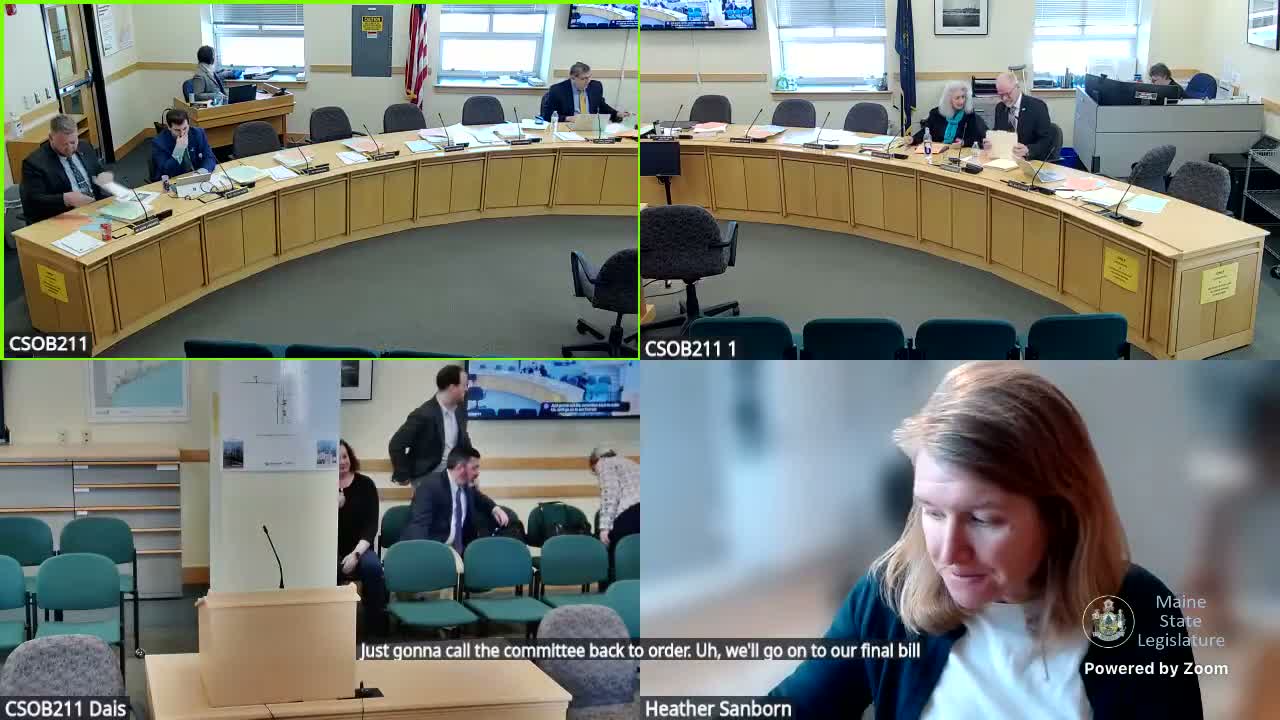
Summary
Public Advocate Heather Sanborn and consumer groups urged the committee to pass LD 2203 to prohibit competitive electricity providers from charging LIHEAP recipients more than the standard offer, citing OPA analysis that low‑income assistance recipients have paid substantially more under competitive contracts; PUC and DOER flagged implementation challenges that rulemaking would need to resolve.
Lawmakers reviewed LD 2203, a committee bill that would prohibit competitive electricity providers (CEPs) from entering into contracts with LIHEAP recipients that charge a higher rate than the standard offer, during a public hearing before the Energy, Utilities and Technology Committee.
Public Advocate Heather Sanborn told the committee the bill responds to analysis showing LIHEAP customers often pay more for supply when served by CEPs. Sanborn said reports covering 2016–2024 indicate LIHEAP recipients together paid about $156 million more than they would have on standard‑offer service and that the shift in LIHEAP program design to monthly discounts tied to customers' bills makes the protection more urgent.
Several proponents echoed that assessment. Alf Anderson of AARP Maine called the outcome "outrageous" and urged the committee to move the bill. Versant Power and Central Maine Power testified in support and said they would work with the OPA and PUC to implement necessary rules. Versant noted it would be willing to help develop customer‑data‑sharing processes needed for compliance, while CMP cautioned the analysis and identification of affected customer classes will take time and resources.
DOER's legislative liaison said recent changes in LIHEAP administration (automatic enrollment and the change to monthly discounts) increase the policy's urgency but also pose timing and operational challenges. The Public Utilities Commission, while supporting consumer protections in principle, told the committee it has concerns about policing CEP contracts and potential unintended elimination of choice for LIHEAP customers; the commission recommended a thoughtful rulemaking process to balance protections with options for low‑income customers to obtain rates below standard offer.
Committee members had no questions that changed the bill's central components. The public hearing closed with proponents urging prompt committee action and stakeholders agreeing to work on implementation details during rulemaking or follow‑up sessions.
The committee did not vote during the hearing; proponents and agency witnesses agreed that detailed implementation work — including rules for data sharing, contract timing and customer choice — will require further work in rulemaking and at subsequent committee meetings.