
Maine Technology Institute reports procurement practices, bond outcomes and launches Maine Life Sciences Center
Get AI-powered insights, summaries, and transcripts
Subscribe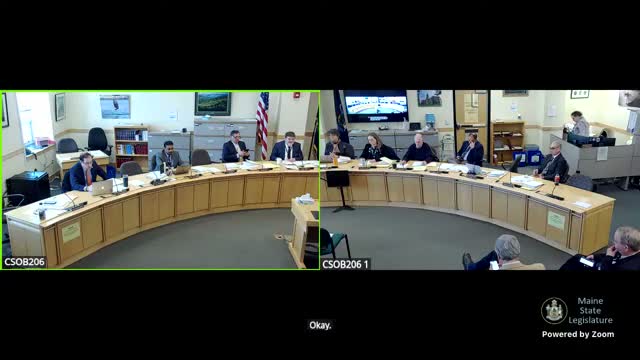
Summary
MTI briefed the committee on procurement, TAP/e‑resident programs, outcomes from the $25 million R&D bond and the Maine Life Sciences Center start‑up; the committee confirmed MTI met statutory requirements in a voice straw poll.
Brian Whitney, president of the Maine Technology Institute, and Sarah Upton, founding director of the Maine Life Sciences Center, briefed the Housing and Economic Development Committee on Feb. 9.
Whitney reviewed MTI’s procurement approach for technical assistance providers (TAP) and e‑residents, describing these as specialized consultants who provide mentorship and grant support to portfolio companies. He said MTI’s TAP and e‑resident programs provide thousands of hours of mentorship and that several expert hires are outside standard state RFP processes due to unique expertise.
Whitney summarized results from the voter‑funded bond program (MTAF / MTAP) administered recently: bond proceeds must be used for infrastructure, he said, and those awards were structured to support commercialization and R&D capacity. Whitney reported the bond program’s private‑sector match and economic impact figures supplied to the committee (he said the $25 million in bond awards generated roughly $700 million in private match and supported about 4,000 retained or retained+new jobs, including ~1,233 new jobs reported in the program’s metrics).
Sarah Upton described the Maine Life Sciences Center (housed at MTI) as an initiative to coordinate state assets and attract private investment to grow life‑science jobs in Maine across human, environmental and animal health. Upton said the center is in startup mode focused on advancing priority investments, convening stakeholders and advocating for Maine’s life‑sciences ecosystem, and highlighted anchor institutions and recent philanthropic investments that increase the sector’s profile.
Members discussed program accessibility for rural counties and the challenge of scaling capital‑intensive businesses; Whitney said MTI is statewide but acknowledged some counties had low application numbers and that outreach and targeted programming remain priorities.
The chair asked if any member opposed a committee finding that MTI met statutory requirements; members indicated no opposition and the committee included that finding in its letter by voice straw poll.
Why it matters: MTI’s grants and technical assistance are a major conduit for state‑sponsored R&D investment and commercialization supports, and the launch of a life‑sciences coordinating center could affect future state economic development strategy and grant deployment.
Next steps: Committee staff will include the straw‑poll finding in their letter and MTI will continue outreach to improve rural access and investor attraction.