Get Full Government Meeting Transcripts, Videos, & Alerts Forever!
Get email alerts on the Third Party Litigation Funding topic
No spam. Unsubscribe anytime.
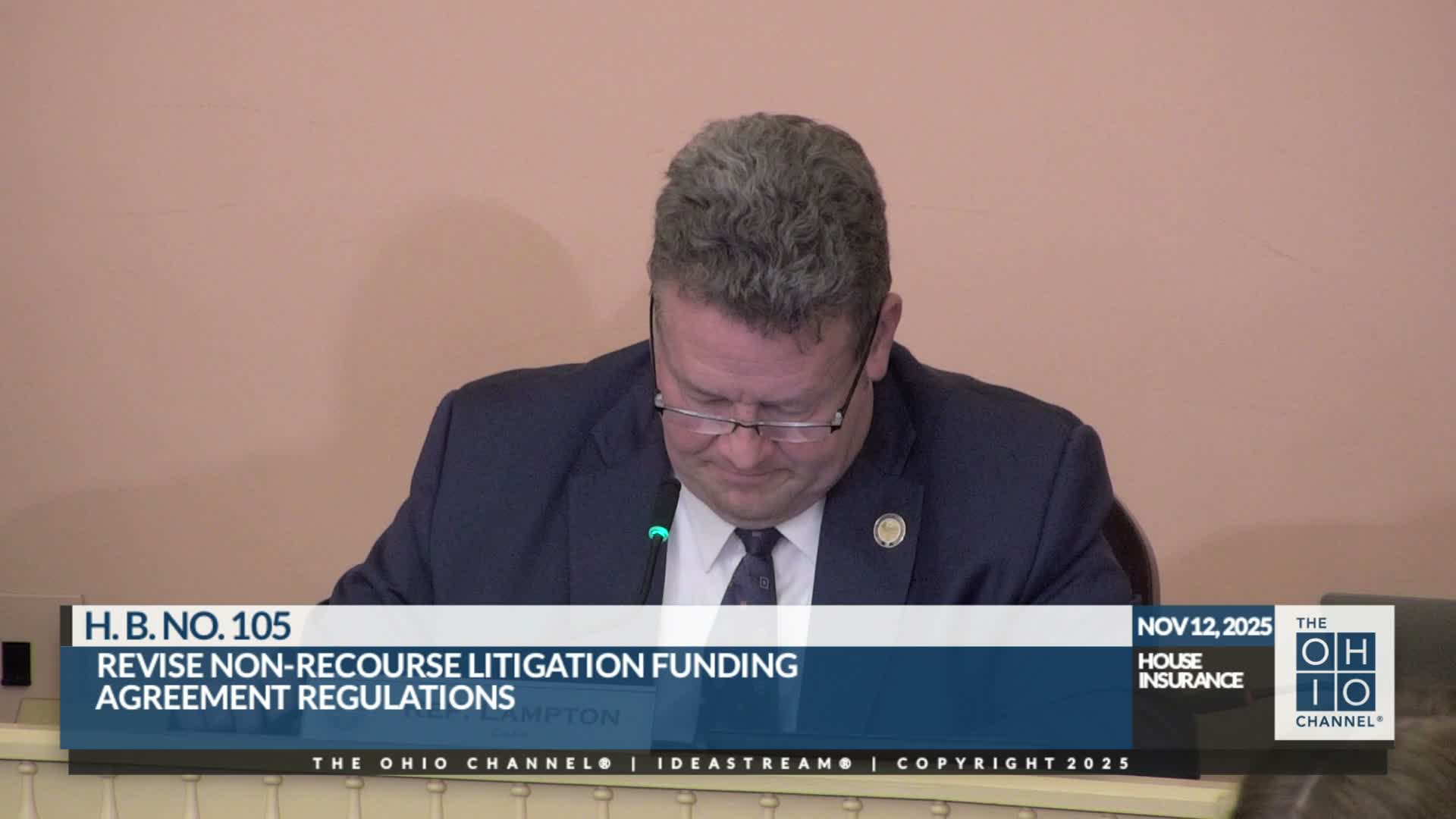
House Insurance Committee accepts substitute for HB 105 to register litigation funders, require post‑case disclosure to attorney general
Summary
The Ohio House Insurance Committee approved a substitute to House Bill 105 that would require consumer and commercial litigation funding companies to register with the attorney general and to notify the attorney general of any funding agreement within 14 days after settlement, judgment, or final order; the attorney general would publish redacted copies online.
The Ohio House Insurance Committee on Monday accepted a substitute to House Bill 105 that would create a statewide registration and disclosure framework for third‑party litigation funding companies.
Vice Chair Craig moved to accept Substitute 136_0706-7 as the committee substitute to House Bill 105. The committee approved the submission without objection.
The substitute, as explained by Vice Chair Craig, would require both consumer legal funding companies and commercial litigation funding companies to register with the Ohio attorney general before doing business in the state. Required registration information would include company details, leadership names and a certification that the registrant has read the law.
The substitute also changes timing for disclosure of third‑party funding agreements. Instead of requiring disclosure during trial, the substitute would require parties who entered into third‑party funding agreements to notify the attorney general within 14 days after settlement, judgment, or final order. According to Craig, the attorney general would then publish copies of those agreements online with personally identifiable information redacted.
Craig said the draft reflects discussions within the sponsor's caucus and represents what members felt comfortable advancing to the committee. With no members objecting, the committee accepted the substitute and concluded the bill's seventh hearing.
The committee did not take a recorded roll‑call vote; members approved the substitute without objection. The committee also approved minutes from its previous meeting and then adjourned.
The bill will proceed according to the committee's legislative process; additional committee action and floor consideration were not specified during the hearing.