Get Full Government Meeting Transcripts, Videos, & Alerts Forever!
Get email alerts on the ACA Codification topic
No spam. Unsubscribe anytime.
Sponsors Tell Committee HB438 Would Enshrine Key ACA Protections in Ohio Law
Summary
Representative Tristan Raider and Representative Karen Brownlee testified that HB438 would codify four Affordable Care Act protections—guaranteed issue, bans on preexisting condition exclusions, prohibitions on annual/lifetime limits, and essential health benefits—aiming to stabilize coverage for about 1.5 million Ohioans on small plans.
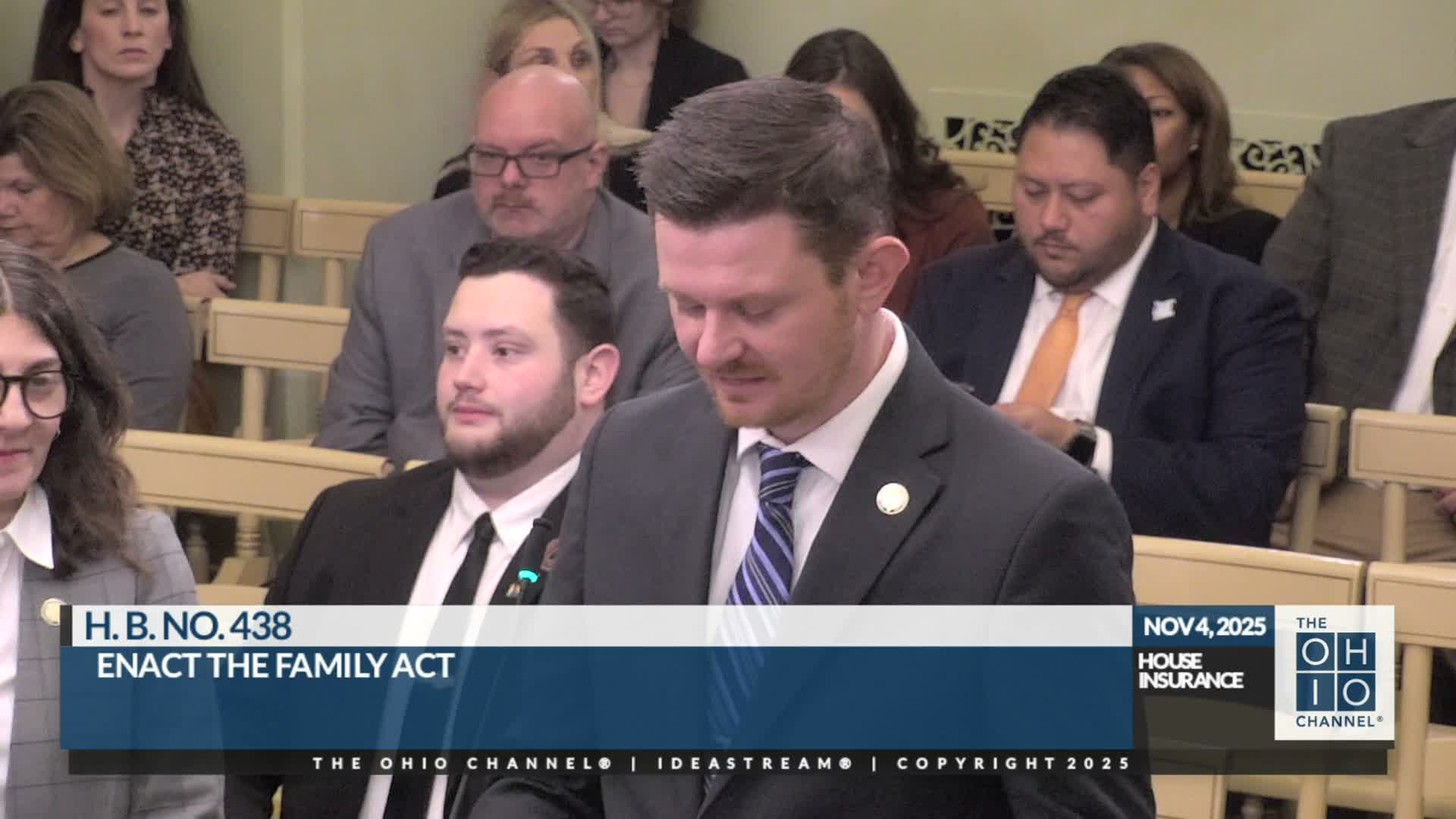
Representatives Tristan Raider and Karen Brownlee presented sponsor testimony for House Bill 438, the "Fair Access to Medical Insurance for Local Youth and Families (Family Act)," telling the House Insurance Committee the bill would codify four core Affordable Care Act protections into the Ohio Revised Code.
"The 4 main provisions are to prohibit insurance policies from excluding coverage for preexisting conditions, to place limitations on premium charges, to ban annual and lifetime limits on coverage, and to require policies to cover what the ACA describes as essential health benefits," Representative Brownlee said in sponsor remarks.
Representative Raider said the bill "doesn't do anything new" but would provide stability and predictability for the market and for approximately 1.5 million Ohioans who rely on smaller individual plans. He listed package items including guaranteed issuance, no preexisting condition exemptions, minimum coverage standards and renewal protections for small‑employer and individual plans.
Brownlee emphasized the human and economic impact, citing rising marketplace premiums and potential hardship for families. She said codifying the protections would help Ohioans access preventive care and avoid bankruptcy caused by medical bills.
Committee members did not pose questions during sponsor testimony; the chair thanked the sponsors and closed the bill's first hearing.