Get Full Government Meeting Transcripts, Videos, & Alerts Forever!
Get email alerts on the 340B Program topic
No spam. Unsubscribe anytime.
Witness Says HB276 Would Protect 340B Grantees From Manufacturer Delivery Limits
Summary
Proponent testimony for HB276 argued manufacturers' shipping restrictions since 2020 have forced community health centers to navigate dozens of different rules, costing services and staff; the bill's sponsor amendments clarify covered purchases and allow contract pharmacies inside and outside Ohio.
Jason Redish, an attorney with the Washington, D.C., firm Powers Pyle Sutter & Verville, told the Ohio House Insurance Committee that House Bill 276 seeks to restore how the 340B drug discount program operated before 2020 and to protect health centers that rely on contract pharmacies.
"Manufacturers began imposing restrictions on contract pharmacy shipments in 2020," Redish said in proponent testimony on behalf of the Ohio Association of Community Health Centers. He said the changes have left grantees navigating "20 different sets of restrictions, different claim submission requirements, different registration requirements" and that some health centers have experienced reductions in services, layoffs and site closures.
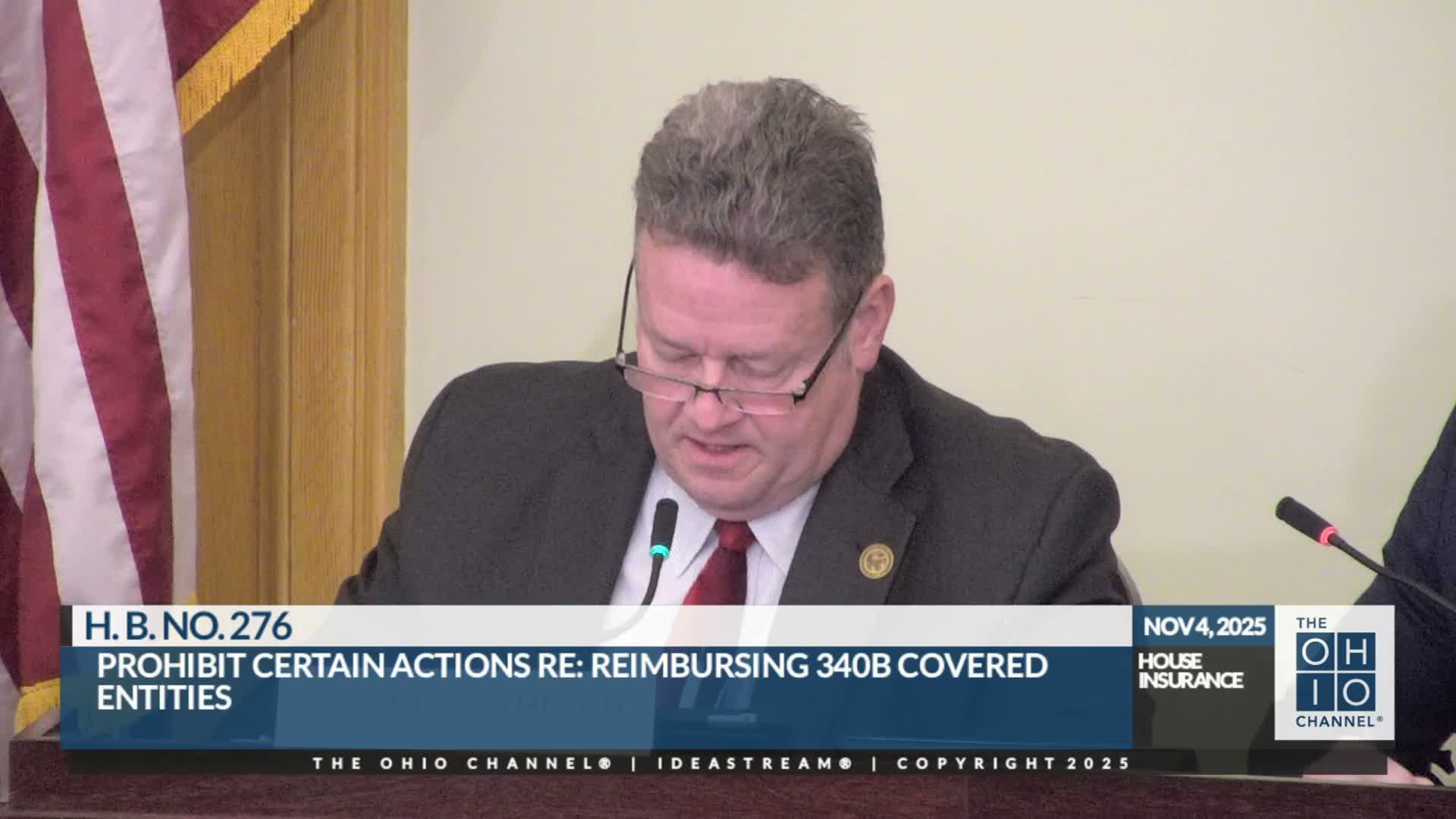
The bill was taken up for its fourth hearing and sponsors first moved and won two technical amendments. Representative John explained one amendment clarifies the bill's title to address manufacturer conduct toward purchases by 340B covered entities; a second amendment clarifies that grantees may use contract pharmacies located both inside and outside Ohio. Both amendments were accepted without objection.
Redish described legal and administrative limits on federal enforcement of the 340B statute, saying the program's statutory language focuses on pricing and who may receive discounted drugs but does not address how shipments are delivered. "Ohio can regulate the delivery of drugs into the state, without touching any of the federal aspects of the 340B statute," he said, explaining why states have pursued similar legislation.
He urged caution about expanding claims‑level reporting, saying additional reporting requirements create substantial administrative burdens for small health centers. "We've had covered entities lose 20, 30 hours that could be dedicated to patient care just putting together responses to drug manufacturers," Redish said, arguing reporting obligations have already increased under Ohio's 340B transparency law and at the federal level.
Redish also discussed rebates and pricing models, noting the Inflation Reduction Act authorized a new Medicare negotiated‑drug model that will begin using a 340B rebate mechanism for 10 drugs on Jan. 1; he said manufacturers and PBMs also conduct separate private rebate negotiations that can complicate billing and cash flow for covered entities.
The committee asked questions about federal versus state authority and transparency for manufacturers; Redish said several states (he cited about 20) have passed similar prohibitions on manufacturer restrictions and that courts addressing those laws have upheld them where final decisions were reached. Committee members thanked Redish and concluded the fourth hearing on HB276.
The committee record shows amendments to HB276 were accepted; no final committee vote on the bill was taken during this meeting.