
State agency outlines security program for state buildings, cites training and technology
Get AI-powered insights, summaries, and transcripts
Subscribe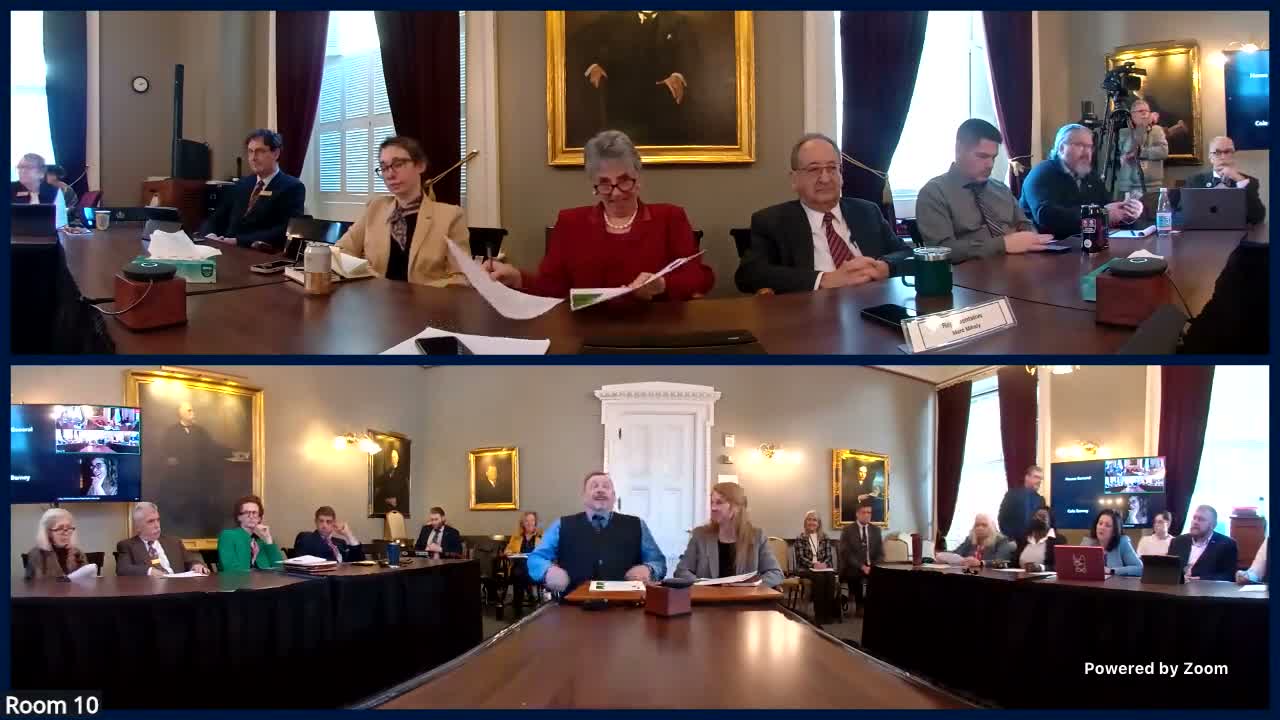
Summary
The Department of Buildings and General Services told a joint House committee it operates a 23-FTE safety program, uses a mix of state staff and contractors (including Securitas), and reported roughly 1,000 incident reports a year and about 70 threats that sometimes require armed law-enforcement responses.
The Department of Buildings and General Services (BGS) told a joint meeting of the House Corrections and Institutions Committee and the House General and Housing Committee on Feb. 19 that it runs a centralized safety and security program for state-owned facilities and offers a mix of uniformed staff, contract officers and technology to protect employees and visitors.
"We accomplish that responsibility through a variety of methods," Leighton Sadie, deputy commissioner of BGS, said as she described the office's mission to "develop, coordinate, implement, and evaluate safety and security programs." William McSalas, director of PGS Safety and Security, led a presentation that laid out personnel, training and incident-response practices.
The office said it has 23 FTEs assigned to the safety and security program and relies on contractors for supplemental coverage at some sites. McSalas said BGS currently contracts approximately 10 security officers through Securitas to provide presence at buildings including Brattleboro, Burlington, St. Albans and Williston, and operates a flexible "rover" position to respond when particular facilities need extra attention.
McSalas said the agency logs about 1,000 safety and security incident reports annually across the state's portfolio, ranging from maintenance issues to troubling behavior, and that roughly 70 reported threats of violence occur in a typical year. He added that heightened threats sometimes require contracting armed law enforcement — "probably about once a month, maybe slightly less," he said.
BGS described a program of emergency procedure planning and training that the office expanded when many employees worked remotely during the pandemic. The transcript includes an unclear numeric note about the number of employees trained; the precise total was not specified in testimony. The department said it has a history of CPR and AED training, reporting it has run dozens of CPR/AED courses, trained hundreds of employees and deployed AED devices in state buildings.
The agency also outlined technology and notification tools it uses: badge systems, cameras with remote monitoring, building alert systems that can send email or cell-phone messages, and specialized client-service areas that limit movement between visitors and staff. McSalas described a safety-and-security incident report (SSIR) system and a regular multiagency meeting — the Vermont Interagency Threat Assessment Task Force (referred to in testimony as BITAT) — used to proactively identify offices at elevated risk ahead of events such as hearings.
On parking-lot safety — a concern raised by legislators — McSalas said most parking areas are state property unless secured; cameras and patrols are concentrated where officers are posted and BGS can provide escorts to vehicles in some locations. He confirmed BGS no longer maintains emergency pedestal phones in parking lots and that staff can receive alerts by cell phone or email.
The agency said it works closely with agency leadership and local law enforcement when incidents arise and that the security staff include individuals with law-enforcement backgrounds. "We're always open to feedback and collaboration on how we can improve," Sadie said.
The committees did not take formal action during the session. BGS officials invited follow-up conversations on site-specific concerns and to provide further documentation about staffing and contract arrangements.
Ending: The committee moved on to additional testimony after the BGS presentation; no votes or motions were recorded on the security items discussed that day.