Get Full Government Meeting Transcripts, Videos, & Alerts Forever!
Get email alerts on the Civil Investigative Demands topic
No spam. Unsubscribe anytime.
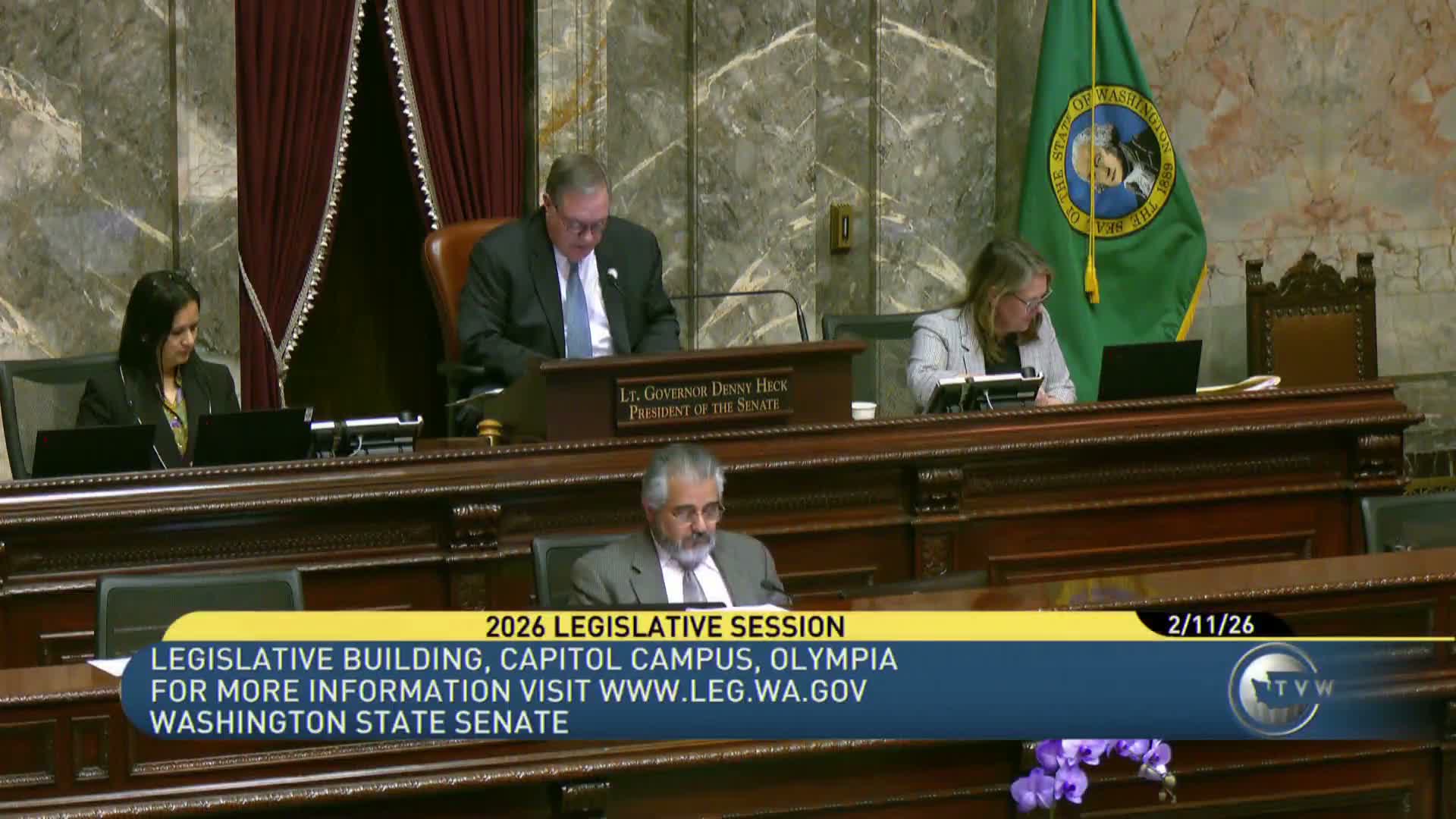
Senate passes bill expanding attorney general's civil investigative authority after amendment fight
Summary
The Washington Senate passed substitute Senate Bill 5,925, which clarifies and expands civil investigative demand (CID) authority for the attorney general; floor debate centered on protections for small and minority- and women-owned businesses and procedural safeguards, and the chamber adopted an amendment that sets factual thresholds and assistant-AG review.
Senator Hansen opened floor debate by saying the bill would make it easier for the attorney general's office to enforce existing laws, from wage theft to discrimination, by clarifying use of a tool called a civil investigative demand, or CID. "This bill narrowly and technically deals with a tool called a CID or a civil investigative demand," Hansen said, arguing CIDs let the office obtain information before filing suit.
The most contentious debate concerned whether the bill should add exemptions or stronger thresholds before a CID can issue. Senator Christian moved amendment 0584 to exempt certified minority- and women-owned businesses with no violations in the prior three years, saying the amendment would "reward the businesses that have proven ... they have not had any issues in the previous 3 years" and warning that small firms could be bankrupted by investigative demands. Senator Hansen opposed that amendment, arguing it was unnecessary and could prevent investigations that arise from newly discovered facts.
Other senators pressed competing views. Senator Wagner and Senator Dhingra successfully offered amendment 0616, which the floor adopted; Wagner described it as creating a documented standard requiring "facts and circumstances" that would lead to a possible violation and an assistant attorney general's review to create a record. "It sets a standard ... and it requires an assistant attorney general to review it, and that creates a record," Wagner said. Dhingra called the change a guardrail that aligns civil investigative standards with the probable-cause-type review used in criminal investigations.
Other amendments addressing criminal penalties for disclosing a CID and reimbursement of targets' costs were debated and failed. Senator Holy argued for converting a potential criminal penalty into a class 1 civil infraction to avoid chilling First Amendment concerns; that amendment was not adopted after floor opposition. Senator Fortunato proposed a reimbursement provision—"loser pays"—for targets if an investigation yields nothing; the floor rejected that change as well.
After debate and multiple roll-call votes, the secretary reported the final tally for passage as 30 ayes and 19 nays, and the Senate declared engrossed substitute Senate Bill 5,925 passed. The bill text focuses on CID authority and the added amendment 0616 introduces procedural thresholds and assistant-AG signoff as safeguards. The Senate placed the bill on final passage following a procedural motion to advance it to third reading.