
Council hears Transportation Funding Task Force update; consultants hired and summer launch targeted
Get AI-powered insights, summaries, and transcripts
Subscribe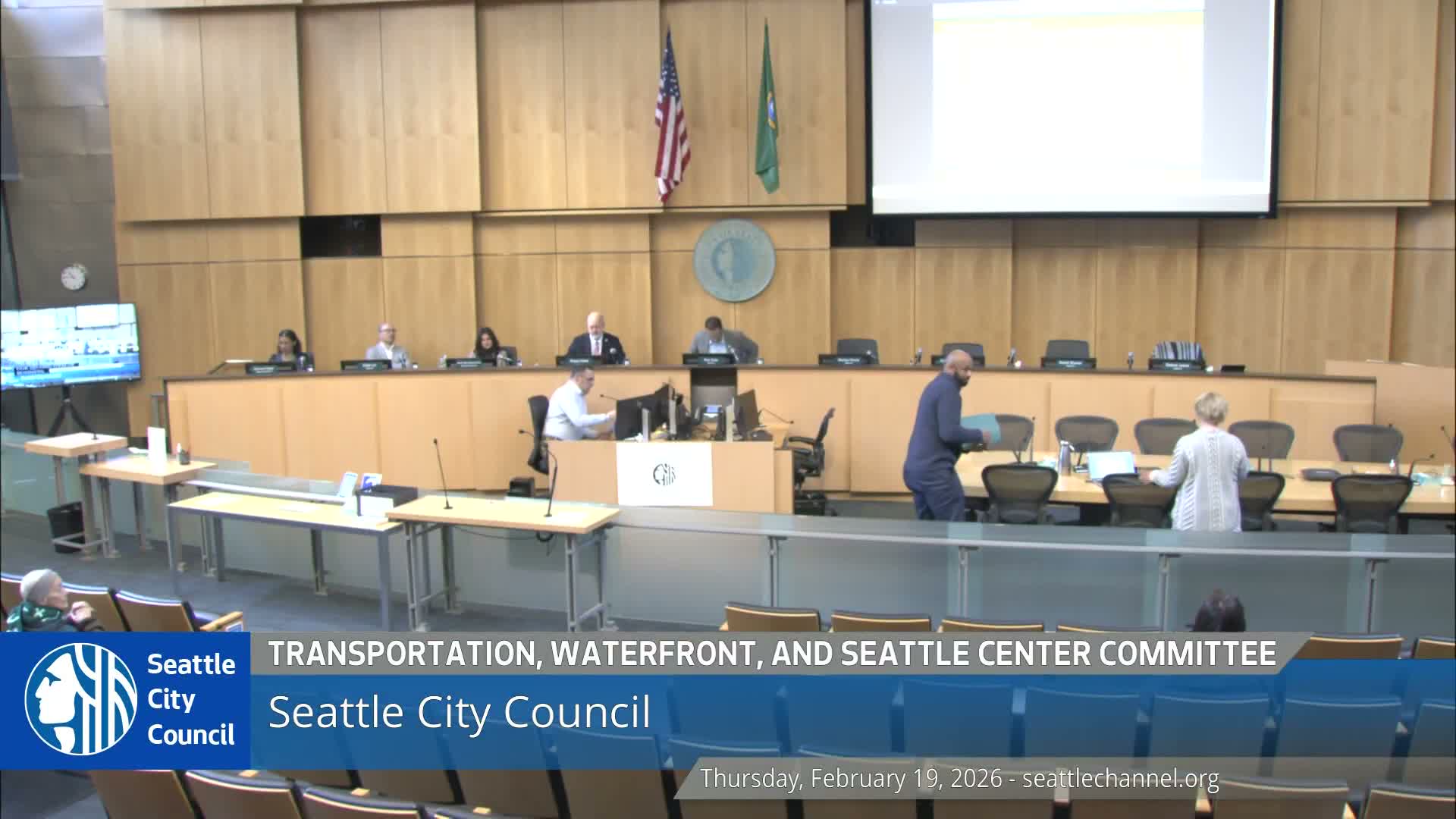
Summary
Council and SDOT briefed the Steps Committee on a newly formed Transportation Funding Task Force to study funding for roads, bridges and sidewalks. SDOT said consultants (Nelson Nygaard and subconsultants) were procured, a summer launch is targeted and recommendations are expected by the end of 2027; councilmembers raised urgency for accelerating sidewalk funding and discussed revenue options including commercial parking tax and impact fees.
City staff and SDOT on Feb. 20 updated the Steps Committee on a new Transportation Funding Task Force aimed at identifying implementable revenue and policy options to address long‑term funding gaps for sidewalks, roads and bridges.
Calvin Chow of central staff reminded the committee the task force was created alongside the 2024 voter‑approved transportation levy to study additional funding tools and provide actionable recommendations. "This resolution did highlight the need for sidewalks, bridges, and paving projects as the transportation network greatest needs," Chow said.
SDOT project manager Sarah Strand said the department completed a complex procurement and brought on Nelson Nygaard and a multi‑disciplinary subconsultant team to support finance, asset analysis and equity‑focused facilitation. Strand said the team expects to recruit and launch the task force this summer and deliver final recommendations to council by the end of 2027.
The presentation listed potential revenue tools for consideration: property and sales taxes, vehicle license fees, commercial parking tax, transportation impact fees, tolls or congestion pricing, local improvement districts and general‑fund allocations. When asked whether the commercial parking tax has a statutory cap, central staff said there is no statutory cap and that Seattle’s rate had been increased over time to around 14.5%.
Several councilmembers stressed urgency for sidewalks. Public commenter Clara Canter of Seattle Neighborhood Greenways had told the committee earlier that Seattle is "missing over 11,000 blocks of sidewalk, which is over 24% of our street," and warned that levy investments are front‑loaded and drop to zero in 2028 if not replaced. Councilmember Foster and others asked whether the task force timeline could be accelerated given that sequencing concern; staff noted the front‑loading in levy spending but said the task force still needs careful recruitment, public process and technical analysis to produce legally and financially vetted recommendations.
Councilmembers also discussed equity and tradeoffs. Staff said equity will be central to both the analysis and the membership of the task force. Several members raised the possibility of recommending changes that require state action and flagged the need to craft approaches that do not hinder housing development (for example, balancing any transportation impact fee design against Seattle’s existing affordable‑housing tools).
The committee and staff agreed the body should narrow its scope to realistic and implementable options and avoid trying to "boil the ocean." Staff will return with recruitment plans and more specific analyses as the task force prepares to stand up this summer.