Get Full Government Meeting Transcripts, Videos, & Alerts Forever!
Get email alerts on the Seattle Center Overview topic
No spam. Unsubscribe anytime.
Seattle Center presents budget and priorities; Memorial Stadium construction 'on track and on budget'
Summary
Seattle Center leaders told a council committee the 74‑acre campus hosts 11–12 million annual visitors, proposed 2026 budgets ($59M operating; $38.3M capital) and said Memorial Stadium renovation remains on schedule and funded in part by a $40M city commitment, while council flagged a large maintenance backlog and potential funding options.
Seattle Center leaders told the City Council’s Steps Committee on Feb. 20 that the 74‑acre campus — home to arts, sports and cultural institutions — draws roughly 11–12 million visitors a year and faces a substantial backlog of maintenance needs.
“Seattle Center sees about 11 to 12,000,000 visitors a year,” interim director Dematras Winston said during the overview. He described Seattle Center as a regional destination and a campus of roughly 30 resident organizations that together generated most of the department’s revenue.
Winston and staff outlined the department’s 2026 budgets: an operating budget of $59,000,000 (about 60% of which is staffing cost) and a capital budget of $38,300,000. They said about $27,000,000 of the capital budget is related to Memorial Stadium work, funded in part by an interfund loan to be repaid through a future general obligation bond.
On Memorial Stadium specifically, Seattle Center staff said construction is proceeding on schedule. “We are on track and on budget,” Dematras Winston told the committee, noting sewer work beneath the field is ahead of schedule and foundations and walls are going up. The department repeated earlier funding commitments: $40,000,000 from the city, roughly $4,000,000 from the State Department of Commerce, about $6,069,000 from the school district, and additional private and philanthropic contributions.
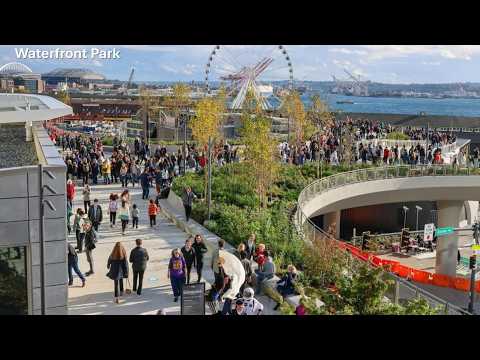
Seattle Center staff also reviewed operational priorities for 2026: implementing a 10‑year strategic vision and action plan, continuing large events and cultural festivals, running the Seattle King County health clinic (now in its tenth year), and operating the newly opened Waterfront Park in partnership with the nonprofit Friends of Waterfront Park.
Councilmembers used the briefing to press on neighborhood engagement, small‑business impacts and how Seattle Center coordinates with transit and nearby neighborhoods. Councilmember Kettle asked about engagement with adjacent neighborhoods and resident organizations; staff said they hold bimonthly resident‑organization meetings and use public‑benefit rent reductions to support tenant programming.
The chair flagged the scale of deferred maintenance as a citywide concern and recalled prior consideration of a voter‑approved funding package for Seattle Center. “There are some nontrivial, in fact, substantial, maintenance backlog, capital improvement needs within Seattle Center,” the chair said, and told members the committee will pursue further discussions of funding options, including bonding, levy proposals, and public‑private partnerships.
Seattle Center leaders said they will return for deeper briefings on the 10‑year strategic plan, Memorial Stadium, and waterfront operations. The committee moved on to the transportation funding update after the presentation.