Get Full Government Meeting Transcripts, Videos, & Alerts Forever!
Get email alerts on the Special Education topic
No spam. Unsubscribe anytime.
Bill would give parents five school days to review special‑education evaluation reports before eligibility meetings
Summary
HB 2,557 requires school districts to provide parents a copy of a completed special‑education evaluation report by the 35th school day after consent and hold eligibility meetings no sooner than five school days after providing the report, so meetings occur by the 40th school day. Supporters emphasized meaningful parent participation; some school psychologists asked for implementation safeguards.
A substitute version of House Bill 2,557 would require school districts in Washington to provide a student's parent or guardian with a copy of the completed special‑education evaluation report by the 35th school day after the district receives consent to evaluate and to convene the eligibility determination meeting no sooner than five school days after giving the report, meaning the meeting must occur by the 40th school day absent a parental waiver.
Committee staff explained the combined timeline preserves an overall evaluation schedule: 35 school days to complete an evaluation, five school days for parental review, and a 40‑school‑day deadline to hold an eligibility meeting. The bill allows parents to waive timelines. Staff said a fiscal note estimates $64,000 for OSPI to develop model forms, technical guidance and rules.
Supporters told the committee the change standardizes practice across districts and helps parents prepare to participate as members of the IEP (individualized education program) team. Ramona Hattendorf of The Arc of King County said parents sometimes receive reports only during a rushed meeting and need time to read and seek advice. Yana Parker of the Seattle Special Education PTSA asked for a ‘‘do no harm’’ amendment that would shorten the eligibility‑decision window and clarified concerns about school‑day versus calendar‑day calculations.
Jared Mason of the Washington Education Association said school psychologists initially raised concerns that inserting a fixed five‑school‑day review window could inadvertently reduce time available for other evaluation activities; after House amendments WEA said it is comfortable with the current substitute version but asked that adopted amendments stay in the Senate version.
Tanya May, OSPI assistant superintendent for special education, said OSPI supports the substitute bill while also undertaking rulemaking to align agency timelines; she noted OSPI proposes shortening a referral timeline so that the total evaluation timeline remains consistent with federal expectations and oversight from the Office of Special Education Programs.
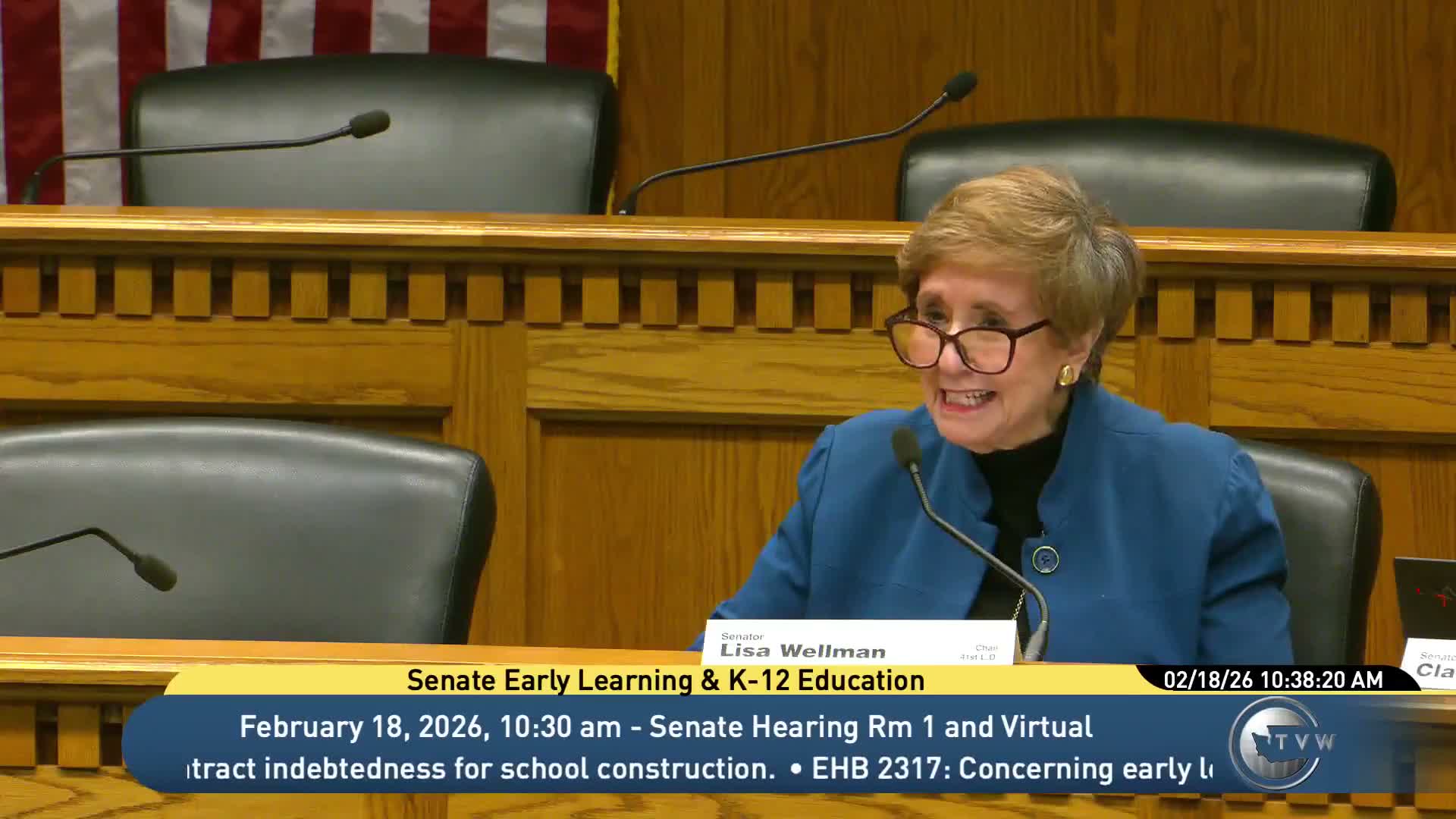
The committee heard testimony from parents, advocates, school psychologists and OSPI; sponsors and stakeholders said they will continue technical conversations to ensure implementation details—especially around waiver language and school‑day vs. calendar‑day timing—preserve family participation without hampering evaluation quality. No final floor vote occurred during the public hearing.