Bill would let Washington school districts bond against voter‑approved levies to build schools sooner
Loading...
Summary
Supporters say HB 17‑96 lets districts with voter‑approved capital levies front‑fund construction to avoid inflationary cost escalation; opponents say it risks diminishing voter control. No formal committee vote was recorded at the hearing stage.
House Bill 17‑96 would allow Washington school districts that have passed voter‑approved capital levies to contract indebtedness and issue non‑voted bonds within the existing 0.375% indebtedness cap to fund new construction and furnishings earlier in a levy cycle.
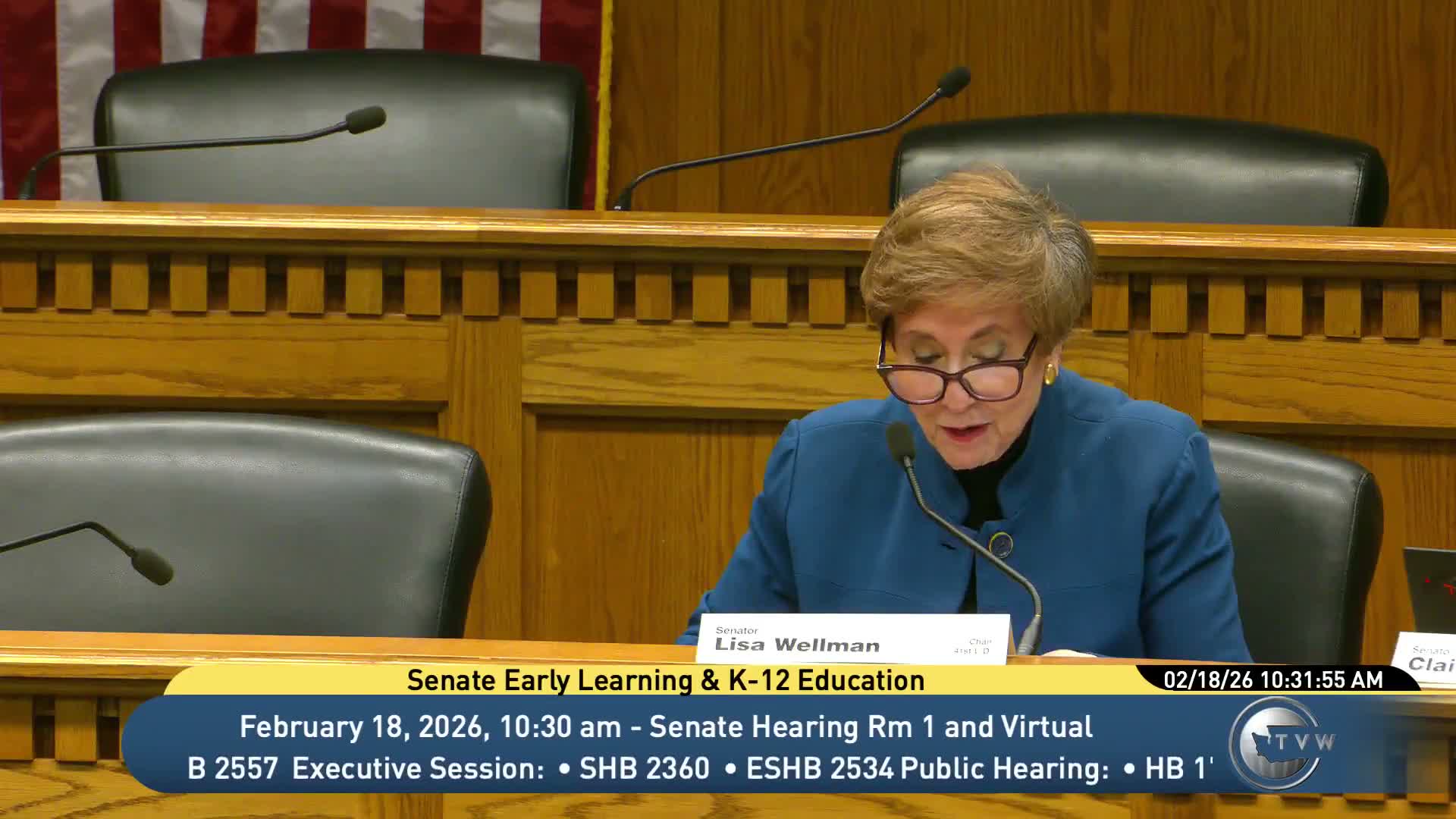
Committee staff told senators the bill adds a new type of capital project that may be financed as non‑voted debt under current constitutional limits. A 2025 fiscal note estimated no fiscal impact, but an updated 2026 fiscal analysis on a companion measure described costs as indeterminate because they depend on whether districts access the School Construction Assistance Program (SCAP).
John Holman, superintendent of the Lake Washington School District, testified the bill provides a common‑sense, no‑cost tool that allows communities to start projects earlier and protect taxpayers from persistent construction inflation. Holman said the proposal does not change which projects qualify for SCAP reimbursement and offered an amendment that would delay school districts’ access to SCAP reimbursement for two years when districts use the front‑funding method, a change he said would address state budget‑planning concerns.
Supporters from districts and advocates highlighted rapid escalation in materials and labor costs and said the measure is intended to let districts ‘‘lock in’’ pricing and begin projects sooner. Grace Yuan of the School Alliance said front funding can let districts accelerate timelines already approved by voters. Tyler Munch, appearing for the Office of Superintendent of Public Instruction, said the bill provides a practical financing option while larger reforms (for example, bond‑approval thresholds) remain pending.
Opponents at the hearing argued the measure could undercut voter control. Eric Lundberg, identifying himself as a Washington taxpayer and voter, said the bill ‘‘sends a message’’ that voter input is unnecessary and described the change as a dangerous precedent. Committee staff and several presenters clarified that the bill requires an underlying voter‑approved capital levy before a district may bond against levy revenue; staff said the levy must exist and be the basis for bonds.
School finance officials told the committee that only some districts would be able to use the tool to build entirely new schools and that the School Construction Assistance Program would continue to determine reimbursement; Holman gave a recent example in which a district with an $85 million elementary project expected roughly $5 million in SCAP reimbursement, underscoring that SCAP alone rarely covers full project costs.
The bill was heard and testimony concluded; the committee did not take a recorded vote on HB 17‑96 during the public hearing. The sponsor and supporters said they will work on amendments to address SCAP timing concerns before the measure moves forward.