Get Full Government Meeting Transcripts, Videos, & Alerts Forever!
Get email alerts on the Artificial Intelligence topic
No spam. Unsubscribe anytime.
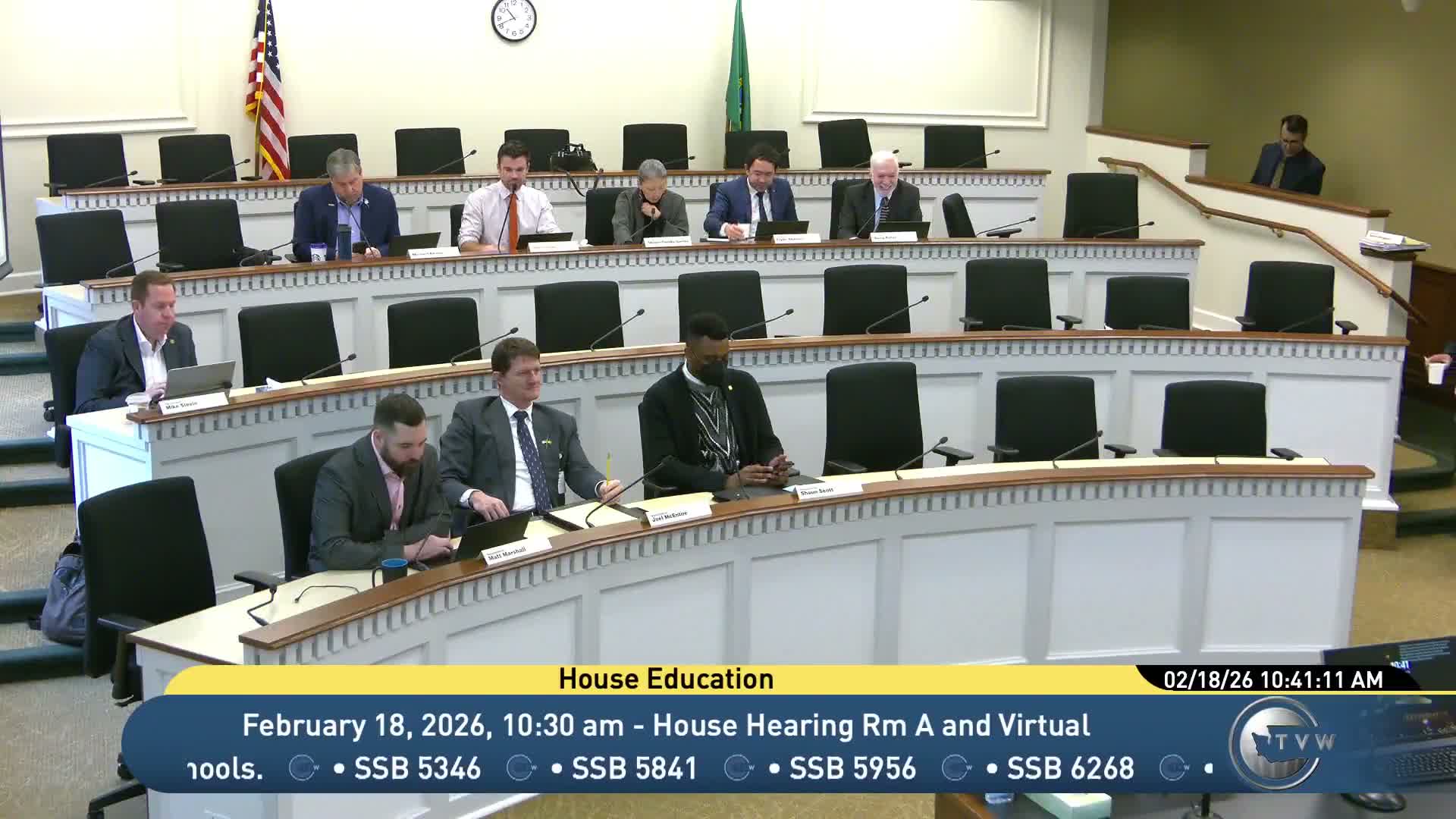
Bill to limit AI-driven student discipline draws broad testimony over surveillance and safety
Summary
Substitute Senate Bill 5,956 would prohibit automated decision systems and certain school surveillance technologies from being the sole basis for student-discipline decisions and restrict facial-recognition and biometric inferences. Advocates argued it protects marginalized students; industry witnesses warned the bill’s real‑time exceptions are too broad or undefined.
Lawmakers heard lengthy testimony on Substitute Senate Bill 5,956, which would restrict how Washington public schools use automated decision systems — including AI and machine-learning tools — in student-discipline and surveillance contexts. Committee counsel Megan Wargack told members the bill bans using automated systems as the sole or determinative basis for emergency removal, suspension, expulsion or assignment to alternative settings and bars certain biometric inferences (such as deducing emotional states or gender identity).
Sponsor Senator Tawanna Nobles said the bill is intended to establish data-privacy, transparency and human-oversight guardrails after national incidents in which AI misidentified benign objects as weapons. “It’s really important that we continue to look at at least three things: data privacy, transparency, and also guardrails,” Nobles said, describing cases where a bag of Doritos or a clarinet were misidentified, triggering school safety responses.
Student and community witnesses urged passage. Lake Washington High School senior Elias Ng described an essay wrongly flagged as 30% AI by a detector and warned such tools can harm non-native English speakers and marginalized students. “This put me at risk of disciplinary action,” he said, urging human review requirements.
Opponents — including the Security Industry Association — said the bill’s prohibition on “real-time” facial‑recognition use could prevent time-sensitive safety actions such as locating a missing child or alerting staff when a barred individual enters campus. Industry witnesses recommended narrowly tailored exceptions similar to a Colorado approach. Derek Harris of the Black Education Strategies Roundtable countered that existing state law (cited in testimony) already permits law-enforcement use in narrow emergency circumstances and that the bill does not remove those exceptions.
Committee members asked whether the bill requires teacher training and how it differentiates disciplinary decisions from standard classroom grading; staff clarified the bill targets formal disciplinary outcomes but acknowledged gray areas where predictive scores or conduct policies might overlap with academic matters.
The committee did not take final action during the hearing; staff and the sponsor acknowledged the language could need tightening to address training requirements, definitions (for terms such as “real time”), and implementation details.