Bill would cap prejudgment interest on some medical debt at 1%; health providers and collectors warn of unintended harm
Loading...
Summary
ESSB 5993 would limit prejudgment interest on nonwritten medical debt incurred after 12/31/2026 to 1% per year and bar interest while required charity-care screening is incomplete; patient advocates praised the proposal while hospitals, collectors and provider groups warned the cap could shift costs or reduce access without stakeholder work.
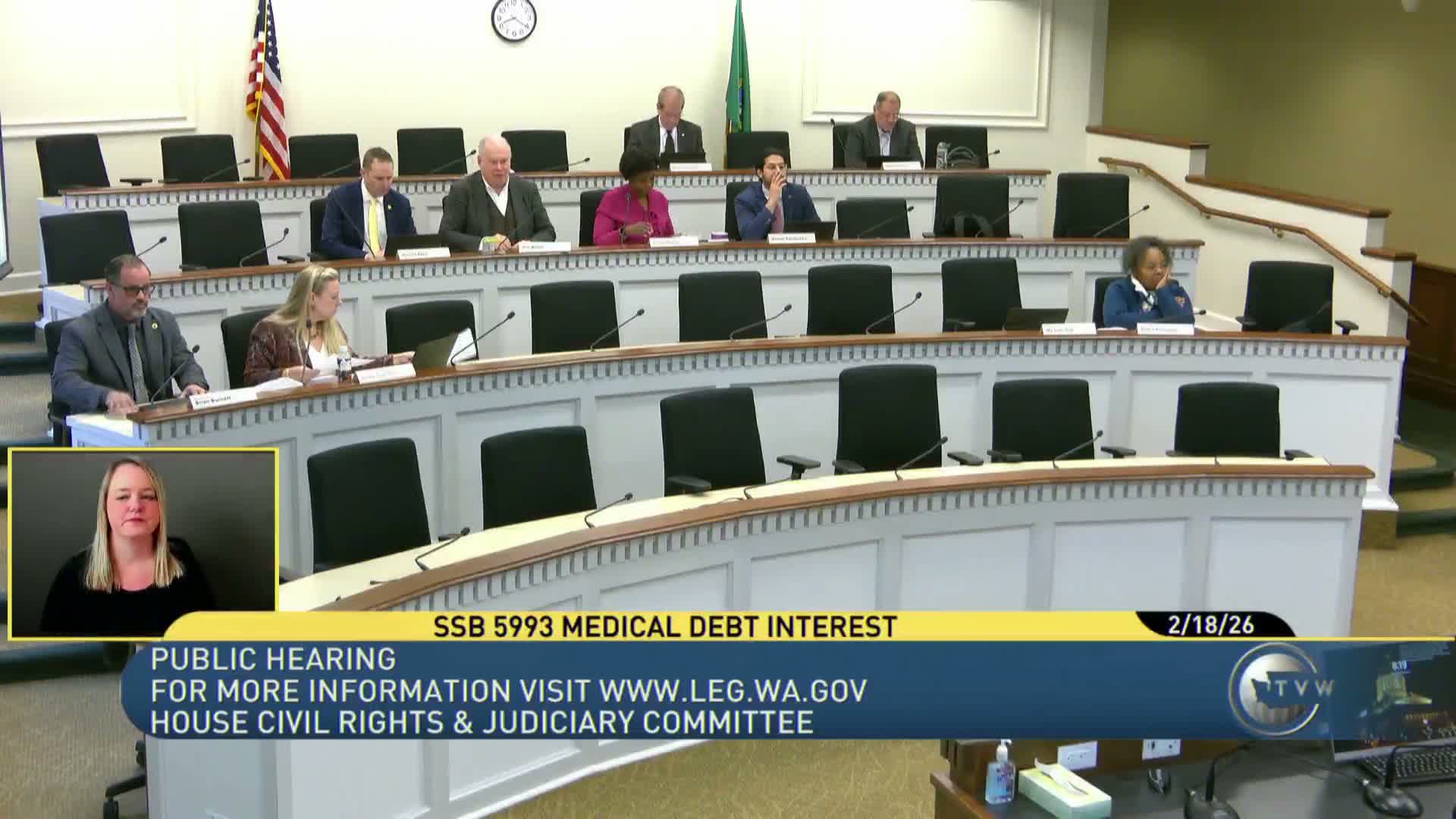
The committee heard ESSB 5993 on Feb. 18, a bill to lower interest on certain medical debts and provide additional consumer protections.
Committee staff explained that Washington current law limits prejudgment interest on medical debt to 9% and that SB 5993 would cap interest at 1% per year for medical debt accrued after Dec. 31, 2026 when there is no written agreement, while leaving written-agreement interest unchanged. Staff also said the bill would bar interest for periods when required charity-care screening and initial determination are incomplete, and would not charge interest if the debt is later determined invalid or unenforceable.
Sponsor Sen. Emily Alvarado (34th Legislative District) said the measure addresses growing health-care costs and personal debt burdens, noting "1 in 5 Washingtonians has medical debt" and that the earlier draft banned interest entirely but the enacted compromise set a 1% cap to cover administrative costs. She acknowledged concerns about hospital sustainability but said "I don't have evidence either way" on whether lower interest increases or decreases repayments.
Public testimony was sharply divided. AARP, patient advocates, cancer-patient groups and individuals described medical debt as a driver of hardship and supported the bill. "No one should enter financial ruin for seeking life saving medical care," one testifier said. By contrast, representatives of the Northwest Collectors Association, the Washington State Hospital Association, dental and physician groups argued a 1% cap is unrealistic, could not cover administrative costs, and might push providers toward upfront cash models or consolidation, risking access for rural areas.
Committee members asked about evidence on repayment behavior and whether charity-care rules and state-level differences made interstate comparisons difficult. Sponsors and some witnesses urged further stakeholder engagement to refine the bill; no committee vote was taken on the bill that day.