
Bill would exempt conservation groups, tribes and public agencies from 'we-buy' homeowner protections
Get AI-powered insights, summaries, and transcripts
Subscribe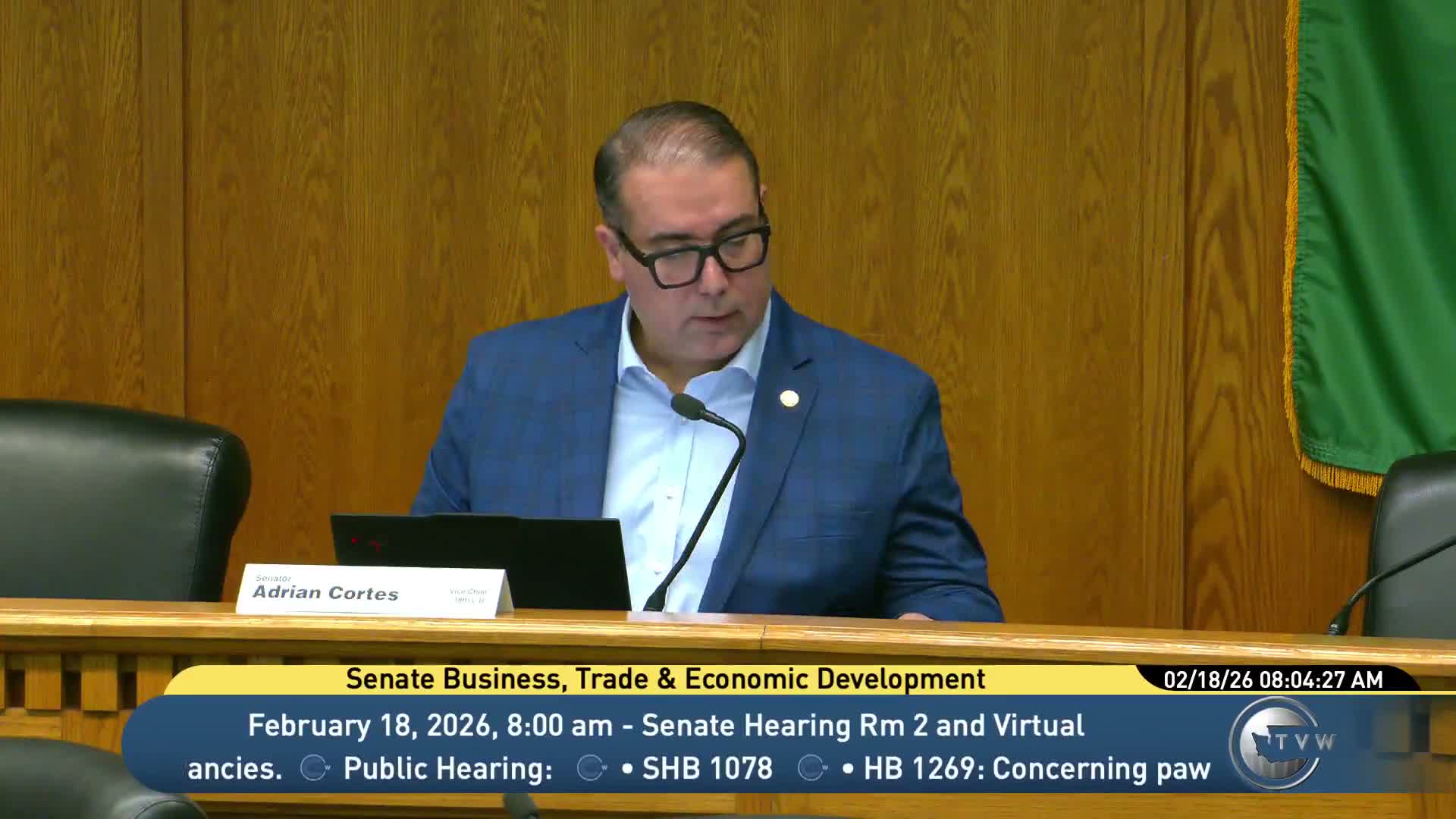
Summary
House Bill 2624 would expand an exemption in a law aimed at protecting homeowners from predatory solicitations so that public entities, Indian tribes and nonprofit land-conservation corporations may acquire unlisted property for public purposes without triggering timing and appraisal requirements. Conservation groups and small forest owners testified with opposing views.
House Bill 2624 would broaden an exemption in the state—onsumer-protection statute that currently shields certain public acquisitions from requirements created last session to protect homeowners targeted by unsolicited cash offers.
Committee staff told the Senate Business, Trade and Economic Development Committee that the underlying law gives owners of unlisted property rights including an appraisal, notice of appraisal and the right under some conditions to cancel a purchase contract without penalty. HB 2624 would permit any public entity, an Indian tribe or a nonprofit nature-conservancy organization to solicit and complete purchases of unlisted real property for public purposes without invoking those owner protections. Staff said the measure carries no appropriation and that a fiscal note was not requested; it reported the bill passed the House 57-38.
Rep. Brandy Donaghy, the bill—o-sponsor who described the measure as a technical "trailer" to last year—hanges, said conservation transactions follow different processes and timetables than quick-cash buyers and sometimes require specialized appraisals that can cost about $15,000 and take months to complete. "There was a group that was missed that should have been excluded," Donaghy said, asking the committee for support.
Conservation and small-landowner testimony split at the hearing. Dr. Elaine O'Neil of the Washington Farm Forestry Association said small forest landowners broadly would be exposed if the exemption is written too broadly and urged more stakeholder engagement. "We regularly receive unsolicited offers to take this piece of timberland off our hand for incredibly low-ball prices," she said, warning that older owners unfamiliar with timber and market values can be taken advantage of.
Bill Clark of Trust for Public Land countered that conservation transactions are lengthy, involve multiple public approvals and existing appraisal requirements, and are not comparable to high-volume cash-for-home business models. Clark said the trust seeks parity for land-conservation purchases with other public-purpose exemptions already in statute.
The committee paused the item for the day after hearing testimony; no committee vote was recorded in the transcript. The bill's authors and opponents said they were willing to discuss technical fixes and additional outreach in the interim.