Get Full Government Meeting Transcripts, Videos, & Alerts Forever!
Get email alerts on the Occupational Licensing Massage Establishments topic
No spam. Unsubscribe anytime.
Committee advances bill to license massage establishments amid privacy and trafficking concerns
Summary
The House Health and Human Services committee voted 5–4 to give SB 246 a due pass; the bill would authorize licensing of massage therapy establishments and allow RLD inspectors to enter facilities, drawing concerns about inspections of active service rooms and calls for statutory privacy minimums and amendments.
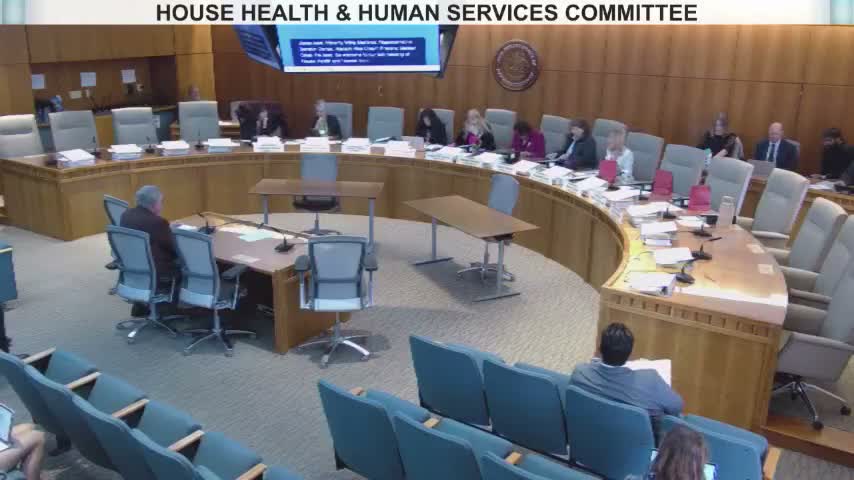
The House Health and Human Services committee advanced SB 246, a bill to authorize licensing of massage therapy establishments and give the Regulation and Licensing Department (RLD) authority to inspect those facilities, on a 5–4 due-pass vote.
Sponsor remarks and public testimony framed the measure as both a public-health regulation and a tool to detect unlawful activity. The senator introducing the bill said the measure is intended "to keep the legitimacy of this group together" and to provide "a place you can go and get some pain relief or, physical therapy." Jason Thompson, representing the New Mexico chapter of the American Massage Therapy Association, said his group remained officially neutral but urged the massage therapy board be delegated rulemaking authority so inspection and licensing details are handled by practitioners.
Privacy and inspection procedures were the central points of debate. Several representatives, including Representative Kates, pressed the sponsor and RLD on whether inspectors could enter a service room while a client was present. "What you want to achieve is a accountability mechanism for trafficking," Kates said, but she warned the bill as written allows inspectors to "come in in the middle of a session," which she described as problematic for customer privacy and dignity. In a moment that underscored the privacy concern, Kates said, "But I am not naked when I'm getting my haircut," drawing a contrast between other licensed inspections and massage service rooms.
Melissa Salazar, director of boards and commissions at the Regulation and Licensing Department, told the committee that the bill intentionally leaves specifics to rulemaking by the massage therapy board. She cited other RLD boards' rules that limit inspections to posted business hours and described practices where inspectors reschedule when sensitive procedures are occurring. "It's all gonna be dependent on the rules that the board promulgates," Salazar said, adding that inspectors are mindful of what is happening during an inspection and that prior examples include barber/cosmetology and body-art rules limiting inspections to regular business hours.
Representatives expressing skepticism said they worried RLD could become an enforcement arm of law enforcement or that the inspection power would not meaningfully improve trafficking prosecutions. Representative Naya asked why criminal investigators are not addressing trafficking; the sponsor and Salazar responded that victims often decline to cooperate with police and that regulatory violations could provide alternate enforcement leverage.
Committee members also asked logistical and fiscal questions. Salazar said RLD currently licenses therapists but not establishments; only certain boards (barber/cosmetology, body art, funeral) license establishments now. She said inspectors would be RLD employees assigned to boards and commissions, not police officers, and that establishment fees (if created) would be set by the board to cover costs.
Representative Jones moved a due pass; Minority Whip Whit Martinez seconded. The committee took a roll-call vote and recorded the motion as passing 5 to 4. Several members who voted yes recommended the bill be amended on the floor to add statutory privacy minimums or explicit limits on inspections of active service rooms. The sponsor said the committee's feedback would be used to improve the bill before floor consideration.
The committee adjourned after brief post-vote comments and an informal photo.
Votes at a glance SB 246 — Motion: due pass (as amended) Mover: Representative Jones; Second: Whit Martinez (Minority Whip) Result: Passed, 5 yes — 4 no (one pass/abstain recorded).