Subcommittee advances bill to jump‑start low‑carbon building materials in New Mexico
Loading...
Summary
A Senate conservation subcommittee voted to advance House Bill 153, a three‑part voluntary package that funds product certification, production incentives and contractor rebates to expand low‑carbon materials in New Mexico; sponsors tied the measure to climate goals and job creation while members raised concerns about local supply and market costs.
A Senate conservation subcommittee voted to give do‑pass recommendation to House Bill 153, a three‑part, voluntary program to accelerate use and production of low‑carbon construction materials in New Mexico.
The bill creates an Environmental Product Declaration (EPD) program to certify manufacturers’ product carbon footprints, an Industrial Carbon Reduction incentive that sponsors described as roughly $85 per metric ton of CO2 reduced plus capital grants for manufacturers, and a contractor rebate intended to bring low‑carbon products toward cost parity with conventional materials. The sponsor said the package aims to reduce industrial emissions, strengthen domestic supply chains and create manufacturing jobs.
Why it matters: the industrial sector accounts for a significant share of greenhouse gas emissions and the bill is designed to use state incentives to both build supply (manufacturing capacity) and grow demand among builders and developers. The sponsor told the committee the governor’s budget includes $25,000,000 for the programs and that production incentives include a 10‑year runway to support nascent companies.
Supporters and examples: the sponsor noted existing local firms (concrete, asphalt, aluminum recycling) could be upgraded to produce lower‑carbon blends and cited private companies exploring new technologies. The sponsor gave an example, saying a pilot plant under discussion could produce about 30,000 tons of low‑carbon cement and avoid an estimated 27,000 metric tons of CO2 per year. "This bill is about both decarbonization and manufacturing. It's about climate and jobs," the bill sponsor said.
Questions and concerns: committee members pressed on legal and market risks. Senator O’Malley raised a potential anti‑donation concern noted in the fiscal information report; the sponsor said the State Ethics Commission did not advise opposition but recommended clear performance, verification and contractual frameworks, and that the bill was updated with input from legislative staff. Several members asked whether the rebates and incentives would require contractors to buy in‑state. The sponsor said the rules prioritize New Mexico products where possible but cannot mandate them immediately because local supply is limited.
Eligibility and thresholds: committee discussion identified quantitative thresholds in the bill: contractor rebates would require products that demonstrate about 15% lifecycle emissions reductions to qualify; production incentives target larger reductions (around 40%) and are intended for more innovative technologies. The sponsor said rebate awards can reach up to $500,000 per project in some cases, subject to program rules.
Market skepticism and oversight: some members warned that past state efforts to subsidize manufacturing have not produced long‑term local industry when global market forces make out‑of‑state supply cheaper. Supporters pointed to planned reporting requirements to the Legislature and the finite initial appropriation as built‑in limits that would allow oversight and evaluation before additional funding is considered.
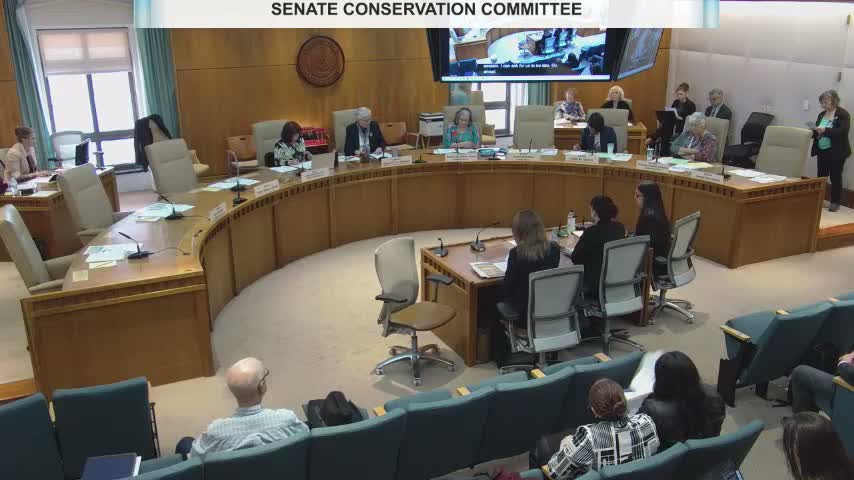
Committee action: with members called to the floor, Senator Charlie moved a do‑pass recommendation. The committee recorded a majority of yes votes and one no vote; the chair announced a do‑pass from the subcommittee and adjourned. The bill now advances to the next committee or floor schedule for further action.
What’s next: committee members said the agencies named in the bill (the Environment Department and the Economic Development Department) will have rulemaking authority to set verification procedures, application processes, and prioritization criteria spelled out in statute and administrative rules.