Experts urge mandatory disclosure and financial assurance for refinery cleanup costs
Loading...
Summary
Researchers, Water Boards and environmental attorneys told the committee that refinery operators often do not disclose asset‑retirement obligations and that the state should adopt standardized cost estimates and financial assurance to prevent liabilities shifting to communities.
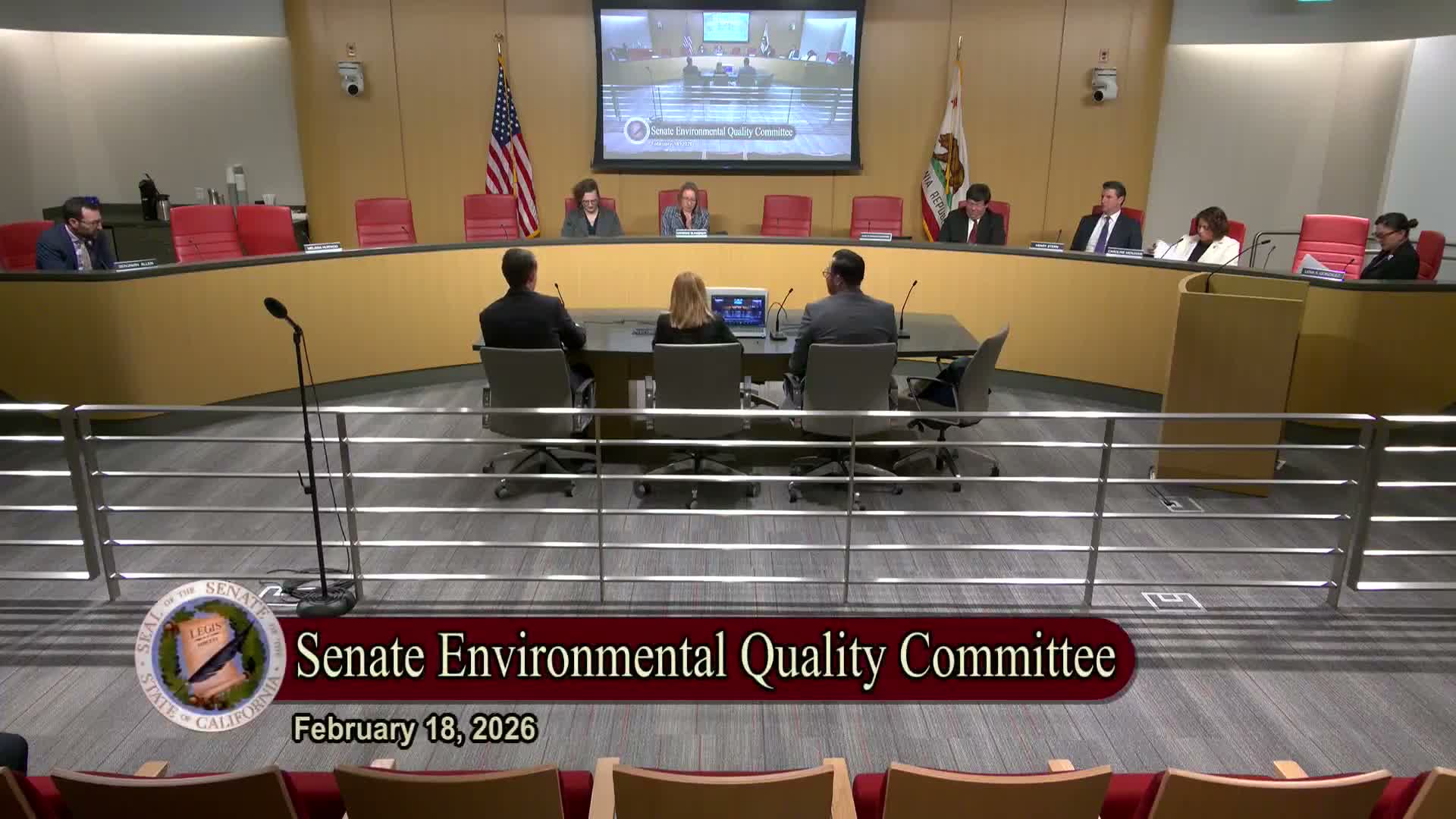
Speakers at the Senate hearing presented converging evidence that current public information about refinery contamination and likely cleanup costs is incomplete and that financial assurance is inadequate.
Anne Alexander, an environmental attorney who co‑authored a case study of the Phillips 66 facilities, said refinery sites often predate modern environmental laws and can contain deep, complex contamination. ‘‘Decommissioning and cleanup of a site like that is going to be at minimum in the 9 figures, and easily will take a decade or more,’’ she said, noting reporting gaps by operators and an accounting loophole that allows some refineries to avoid recognizing asset retirement obligations in public filings.
Emily Grubert and other researchers highlighted a common pattern across industrial sectors: end‑of‑life costs tend to be systematically underestimated unless regulatory frameworks require standardized, probabilistic cost estimation and enforceable financial assurance. Grubert pointed to Wyoming’s post‑closure rules for coal as a model for requiring funds be on hand to meet retirement obligations.
Water Board staff described existing authorities to compel assessment and cleanup. Assistant Deputy Director Annalisa Kihara cited California Water Code Sections 13267 and 13304 and said regional boards can require new monitoring wells and additional assessment once infrastructure is removed. But Kihara acknowledged limitations in pre‑closure access to parts of sites and said more transparency and shared information would help communities and regulators plan.
Recommendations given to the committee included: require refinery operators to disclose asset retirement obligations and decommissioning plans to state agencies and the public; adopt default cost‑estimation methods (for example, probabilistic approaches such as Monte Carlo simulations) to bound uncertainties; and establish state financial assurance requirements (or strengthen reliance on existing federal RCRA mechanisms) to ensure funds are available for remediation.
Committee staff and legislators indicated interest in drafting follow‑up legislation on disclosure standards and financial assurance in the current session.