Founder urges state translational fund to bridge medtech ‘valley of death’
Loading...
Summary
A Cervia Neurosciences co‑founder told the Assembly committee that California lacks mid‑stage non‑dilutive funding for medtech, which risks losing innovations; she proposed a targeted state translational fund (low‑tens of millions) to de‑risk companies and attract private capital.
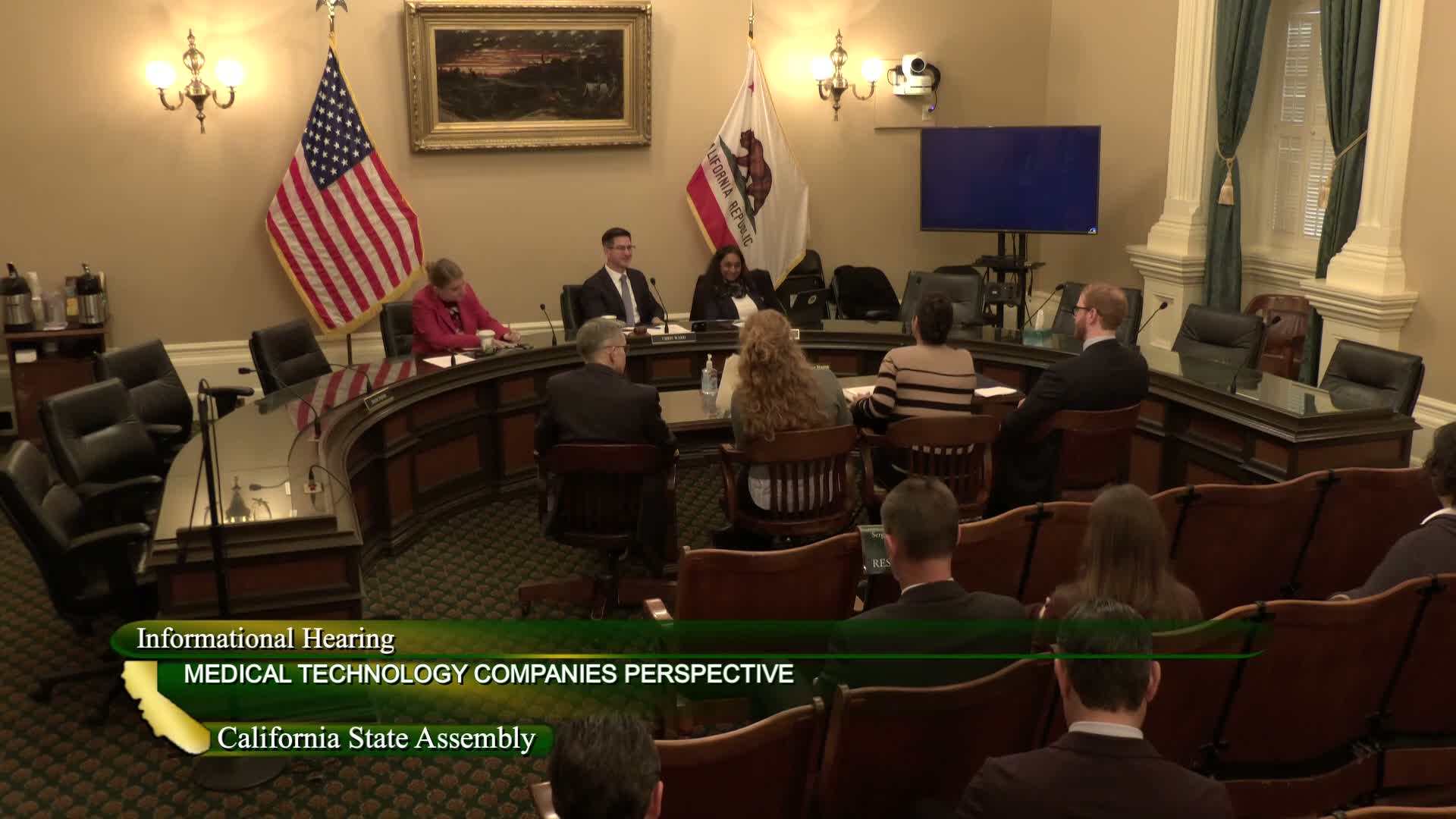
Ida Garakani Goode, co‑founder and chief operating officer of Cervia Neurosciences, told the Assembly Select Committee the central barrier to bringing some medtech innovations to market is the translational ‘‘valley of death’’ — the capital‑intensive phase between discovery and revenue where safety and regulatory requirements remain high but private investors are reluctant to lead.
Cervia’s approach — a mobile, MRI‑guided transcranial magnetic stimulation system the witness called the ‘‘ladybug’’ — has published, randomized sham‑controlled data (JAMA, 2024) showing cognitive improvements in mild‑to‑moderate Alzheimer’s cases over a four‑week treatment. Goode said the technology can be delivered in memory‑care settings and made mobile to reach rural patients, but the company needs durable, mid‑stage funding to finish pivotal development.
"We are missing that gap here in California," Goode said, urging a small, state‑funded, non‑dilutive translational fund to provide prototype‑to‑clinical bridging capital in the millions so companies can achieve the milestones that attract private follow‑on investors. She cited analogous programs in Maryland, Michigan and North Carolina and told the committee that targeted state support could keep jobs and scaling activity in California.
Committee members expressed interest but requested data on return on investment and models used elsewhere before committing to a budget proposal. No legislative action was taken during the hearing; members asked witnesses to supply comparative ROI analyses and program designs.