Witnesses tell Assembly that digital pathology and AI could expand rural access — but cost and reimbursement block adoption
Loading...
Summary
A Leica/diagnostics representative told the Assembly select committee that digitizing pathology slides and applying FDA‑cleared AI tools can speed diagnoses and reduce rural disparities, but infrastructure costs and lack of reimbursement keep U.S. adoption below 5%.
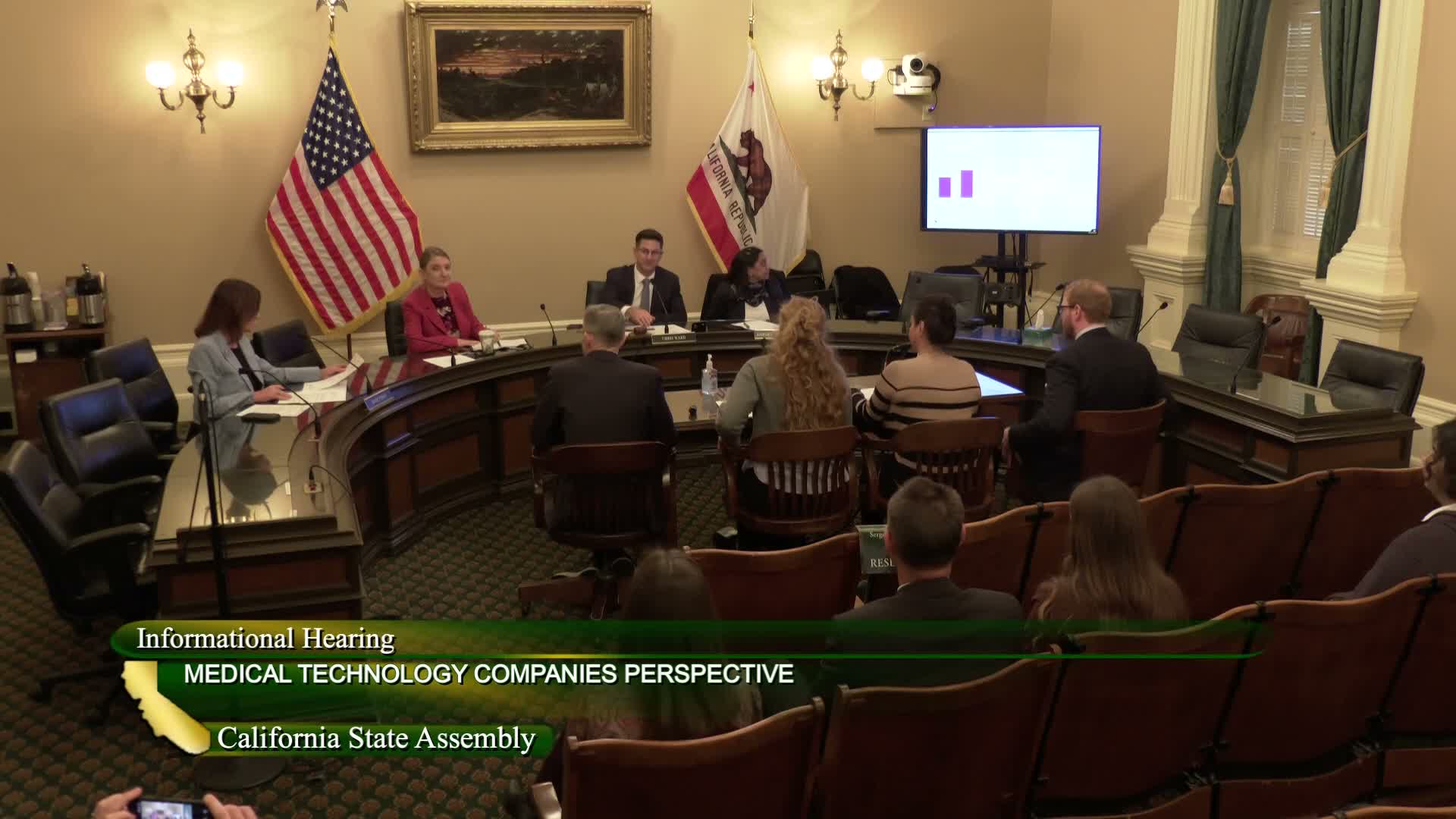
Rob Monroe, vice president and chief medical officer (diagnostics), told the Assembly Select Committee on Biotechnology and Medical Technology that digital pathology — the process of scanning traditional glass slides so pathologists can review them digitally — has the potential to improve diagnostic accuracy, speed turnaround times and reduce rural disparities in cancer diagnosis.
"At the present moment, adoption of digital pathology in The US remains low, less than 5%," Monroe said, describing barriers including infrastructure demands, implementation costs and a lack of well‑defined reimbursement that would compensate laboratories and pathologists for the digitization step.
Monroe said digital slides enable subspecialty review without shipping fragile glass slides, let AI tools quantify biomarkers used to select targeted therapies, and prioritize critical cases for faster review. He recommended state engagement to explore pilot reimbursement models and infrastructure grants to allow smaller and rural labs to test digital workflows.
Committee members asked whether AI could replace pathologists. Monroe and other witnesses said FDA policy and current product design keep a clinician ‘‘in the loop’’; AI assists and prioritizes but does not remove pathologist sign‑off.
The committee did not adopt a vote or regulatory change. Members requested additional materials from Monroe on reimbursement pilots and potential state programs that could lower implementation costs for smaller labs.