Get AI Briefings, Transcripts & Alerts on Local & National Government Meetings — Forever.
Ticket to Work program explained: how Social Security supports people with disabilities returning to work
Loading...
Summary
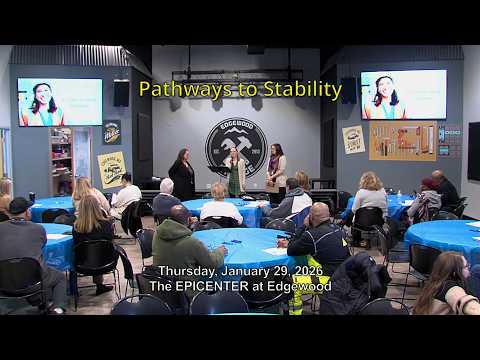
At a Pathways to Stability event, Deborah Temple of the Maryland Employment Network outlined the Social Security Ticket to Work program, eligibility rules, timely‑progress benchmarks and the central role of benefits counseling to protect medical coverage and manage work transitions.
Deborah Temple, Ticket to Work relations manager at the Maryland Employment Network, told attendees that Ticket to Work is a Social Security program designed to help people receiving SSI or SSDI pursue employment and reduce reliance on monthly disability cash benefits. "The goal is to assist people receiving Social Security disability benefits in reducing their reliance on disability benefits," Temple said, citing Social Security materials and the program website, choosework.ssa.gov.
Temple explained who qualifies and how Social Security measures progress. People who receive SSI, SSDI or child disability benefits and who are generally 18–64 are typical candidates to assign a ticket; supports may continue in practice into the late 60s as needed. She described the program's timely‑progress benchmarks — a series of 12‑month review thresholds that can include earnings, education or other milestones — and cited updated 2026 numeric thresholds: a trial work level around $1,120 per month and a substantial gainful activity (SGA) threshold near $1,690 per month.
Why the benchmarks matter, Temple said, is that Social Security uses them to determine when a participant has met the program's work milestones and when benefit phases change. For SSDI recipients she noted distinct work phases including a nine‑month trial work period and an extended period of eligibility; participants may have additional months (including an expedited reinstatement period of up to five years) to return to benefits if employment does not continue.
Temple outlined how the Ticket to Work structure is delivered through four complementary pieces: statewide vocational rehabilitation (in Maryland, the Division of Rehabilitation Services or DORS), employment networks (private or nonprofit entities that provide ongoing job supports), WIPA (Work Incentives Planning and Assistance, which offers benefits counseling), and PABSS (Protection and Advocacy for Beneficiaries of Social Security, which provides legal advocacy). She emphasized that vocational rehabilitation offers training and high‑intensity services while employment networks provide ongoing job coaching, retention services, and benefits counseling but generally do not provide training directly.
"Benefits counseling is vital," Temple said. She repeatedly urged participants to use benefits counseling before and during work transitions to understand how earnings and work incentives affect cash benefits and medical coverage. She warned that assumptions about part‑time hours or hourly wages can inadvertently trigger SGA, and offered arithmetic examples to show how earnings translate to household income after benefits adjustments.
Temple closed by encouraging attendees to ask questions during the later Q&A and to follow up with staff. She offered contact information for Maryland Employment Network for one‑on‑one guidance and referrals to the appropriate program partner when needed.