Get Full Government Meeting Transcripts, Videos, & Alerts Forever!
Get email alerts on the Legislative Response topic
No spam. Unsubscribe anytime.
Senators promise follow-up after emotional testimony on ICE effects in schools
Summary
After hours of testimony, senators signaled intent to examine compensatory-aid changes, attendance reporting and emergency mental-health funding; no formal votes were taken at the Feb. 18 Education Finance Committee hearing.
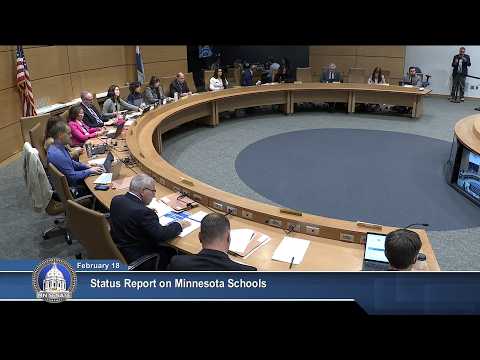
ST. PAUL, Minn. — Lawmakers wrapped a Feb. 18 Education Finance Committee hearing by expressing shock at accounts of federal immigration-enforcement activity near schools and by outlining possible legislative responses, though the panel took no immediate votes.
Sen. Steve Swadzinski called the testimony “heart-wrenching” and said he had difficulty recalling comparable sessions in his tenure. Sen. Bonnie Wessland thanked witnesses and said the Legislature must act to prevent further harm: “ICE needs to get the hell out of our state,” she told the committee during her floor remarks.
Several senators suggested near-term funding options and policy fixes. Witnesses and members urged restoration of the pre-2023 compensatory-aid formula for districts serving high concentrations of English learners and students in poverty, emergency stabilization grants for schools that lose students suddenly, and expanded funding for school-based mental-health counselors and trauma services. Sen. Maikleid proposed examining tax-policy changes, including revisiting airline and data-center tax exemptions, as potential revenue sources to shore up education funding.
Other senators requested a broader set of witnesses, including law-enforcement representatives and community members with differing perspectives on federal enforcement. Sen. Eric Lucero and Sen. Alex Holmstrom asked for opportunities to bring additional witnesses from their districts.
The chair said the committee will collect the testimony and data, continue conversations on attendance pilots and student supports, and consider follow-up hearings as legislation is drafted. No bills were introduced or voted on during the session.
The hearing underscored the Legislature’s immediate challenge: addressing short-term emergency needs for students and schools while fitting any new funding or policy into the broader 2026 budget process.