Get Full Government Meeting Transcripts, Videos, & Alerts Forever!
Get email alerts on the Tax Administration topic
No spam. Unsubscribe anytime.
Tax committee reviews DAFS technical and corrective changes bill (LD 2188)
Summary
DAFS presented LD 2188, a package of technical corrections and minor substantive tax-law changes (title 36 updates, administrative clarifications, and alignment with federal rules). Municipal and agency witnesses asked for section-by-section detail and offered drafting suggestions for the work session.
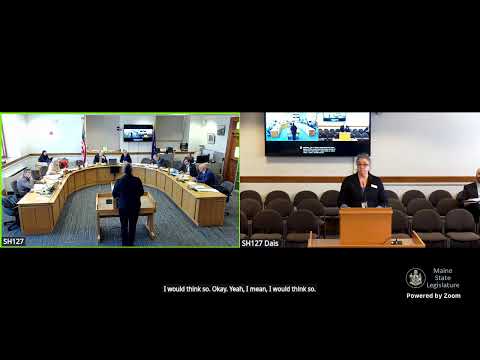
The Department of Administrative and Financial Services submitted LD 2188, a combined annual package of technical amendments, statute corrections and a limited set of minor substantive changes to Maine’s tax code. Representative Dan Sayre presented the bill to the Joint Standing Committee on Taxation and deferred detailed exposition to agency experts from Maine Revenue Services (MRS).
DAFS said the bill bundles routine 'Act to Amend' changes and technical fixes designed to remove obsolete references (for example, removing repeated references to the expired capital investment credit), harmonize certain subtractions with federal adjusted gross income (for ABLE account earnings), clarify the treatment of property held in revocable living trusts for homestead program eligibility, and fix cross-references and typographical errors. MRS indicated the bill has negligible estimated fiscal impact and no projected administrative costs, and that an MRS amendment will be offered at the work session with a detailed, section-by-section explanation.
Why it matters: LD 2188 would simplify tax administration and reduce ambiguity in existing law. Municipal officials said clarifications around tax-year timing and property-sale/proration procedures are important for local collectors and treasurers. Municipal concerns included ensuring towns with limited internet access can still receive timely state revenue and school-funding information.
Testimony and technical questions: Dan Pittman (Associate Tax Policy Counsel, DAFS) walked through examples and promised more illustrative numbers at the work session. Committee members asked for plain-language explanations of a half-dozen provisions (portable classroom sales exemptions, pension-deduction phase-outs for married filing separately, durable medical equipment exemptions, revocable living trusts and homestead qualifications, and the repeal of an income subtraction for long-term care insurance premiums). Amanda Campbell of the Maine Municipal Association testified neither for nor against and requested additional drafting suggestions from MMA’s legal team; she said municipal officials largely support Part C clarifications but want clearer guidance on timing and notice to local tax collectors.
Next steps: MRS and DAFS officials will return at the work session with a section-by-section briefing, examples and proposed technical amendment language. The committee closed the public hearing and will consider agency amendments and fiscal/administrative notes before deliberating further.