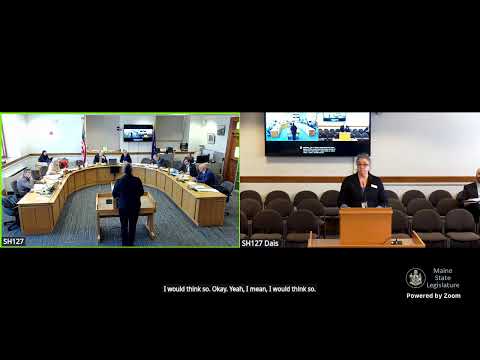
Maine tax committee hears proposal to move net-energy-billing costs to general fund via refundable credit
Loading...
Summary
Lawmakers and witnesses debated LD 12 23, Representative Steve Foster’s proposal to shift net energy billing (NEB) charges from electric ratepayers to the state general fund through a refundable income tax credit targeting residential and small-business customers; witnesses and agencies urged clearer administration, protections for non-filers and consideration of funding LIAP via the general fund instead.
Representative Steve Foster introduced LD 12 23 to the Joint Standing Committee on Taxation as an amended measure that would reimburse residential and small-business electric customers for the portion of their bills tied to net energy billing (NEB) and other public-policy charges by providing a refundable state income tax credit rather than keeping the costs on utility bills.
Foster said NEB costs imposed by past legislation (LD 17 11) have grown substantially and estimated cumulative NEB-related charges at roughly $240,000,000 annually. He said the amendment focuses on residential and small-business rate classes because larger commercial and industrial users typically account for electricity costs as business expenses and because calculating NEB for larger classes would require costly utility billing changes. Foster told the committee the credit is designed to be refundable and administrable without raising electric rates; he suggested utilities could provide a year-end line on bills with the NEB amount to help taxpayers claim the credit and said the sponsor’s amendment contemplates utility reporting by 01/01/2028 if the program starts January 2027.
Why it matters: Supporters say NEB and related public-policy charges function as regressive additions to electric bills and that shifting them to the general fund spreads costs more progressively. Opponents and independent witnesses cautioned that a tax-credit approach could leave people who do not file state returns (including many seniors and low-income residents) without an immediate benefit unless there is an explicit outreach and filing mechanism; some witnesses urged direct general-fund appropriations to existing low-income assistance programs as a more targeted alternative.
Testimony and agency input: Jeff Jones, a Bangor resident and volunteer with Citizens Climate Lobby, told the committee NEB is regressive and proposed funding relief via a carbon pollution fee on fossil fuels as a way to achieve revenue parity. Steven Hudson, representing the Industrial Energy Consumer Group, supported shifting policy-related costs from rates to the general fund and said the bill aligns with rate-design principles, while noting the bill currently excludes large consumers. Heather Sanborn, the state’s Public Advocate, testified neither for nor against and clarified that the NEB component standardized on residential bills during October 2025–2026 was about $9.92 per month; she urged the legislature to fund the Low Income Assistance Program (LIAP) from the general fund (LD 9 95 had proposed a $15 million appropriation) as a more direct and effective affordability tool. Diedrich Schneider of the Public Utilities Commission said the PUC sees merit in exploring a tax credit but suggested limiting eligibility for customers who receive monetized NEB benefits and offered technical language suggestions (including references to Title 35-A §3209(c)). Daniel D’Alessandro of the Office of Tax Policy warned that many eligible ratepayers who do not file returns could miss the credit and noted an administrative cost to taxpayers and the state for processing hundreds of thousands of claims; he said direct payments to utilities could reduce administration burdens.
Implementation questions: Committee members repeatedly pressed for clarity on who would receive credits and how the state would ensure that low-income or non-filing households are not left out. Witnesses and the sponsor proposed offsets including: a refundable credit requiring a filing route and utility-provided reporting; end-of-year bill inserts or a dedicated bill line showing yearly NEB charges; or, alternatively, funding LIAP from the general fund to target low-income households directly. The PUC recommended considering whether program participants who directly benefit from NEB arrangements should be excluded or limited from claiming the credit.
Next steps: The committee held a public hearing and took extensive questions; no vote or formal action occurred. Sponsors, agencies and stakeholders indicated they will provide additional language, fiscal estimates and administrative detail at the work session so the committee can evaluate fiscal impact, outreach requirements for non-filers and potential eligibility limits.