Get Full Government Meeting Transcripts, Videos, & Alerts Forever!
Get email alerts on the Safe At Home Expansion topic
No spam. Unsubscribe anytime.
Committee hears bill to expand Ohio’s Safe at Home program to more violent‑crime survivors
Summary
The House General Government Committee held a first hearing on House Bill 396 to extend the Secretary of State’s Safe at Home address‑confidentiality program to survivors of gun violence and family members of homicide victims; sponsors said funding was set aside in the recent state budget but implementation questions remain.
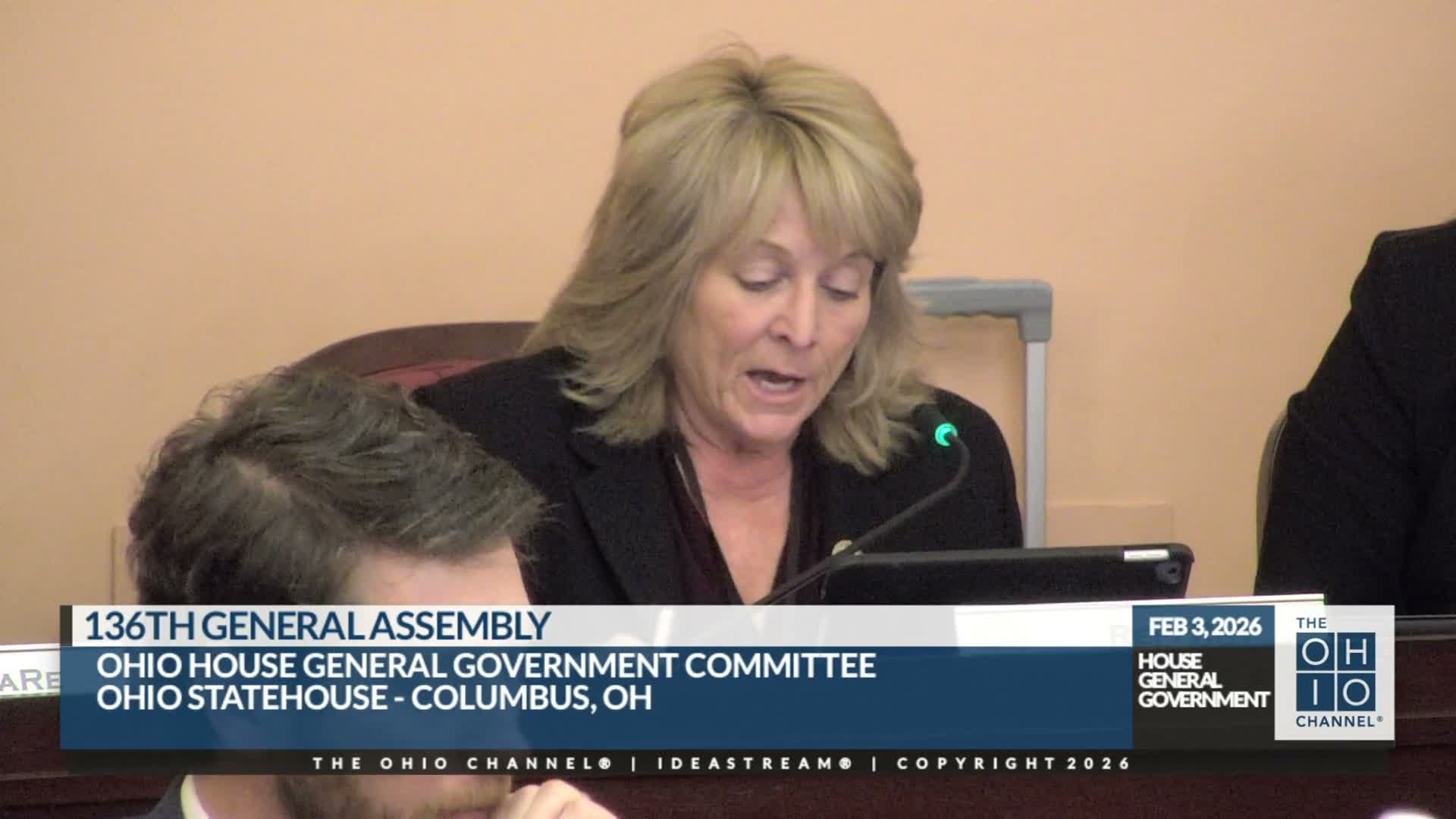
House General Government Committee Chair Wray convened a first hearing on House Bill 396 on Feb. 20, which would expand the Secretary of State’s Safe at Home address‑confidentiality program to include survivors of additional serious violence, including gunshot victims, and family members of homicide victims.
The bill’s sponsor told the committee the program — created in 2016 to let victims of domestic violence, stalking and similar crimes conceal their home addresses — should be broadened to help more people stay safe. “House Bill 396 is a critical piece of legislation and would expand the Secretary of State’s successful Safe at Home address confidentiality program, so that more victims of violent crime can protect their safety and privacy,” the sponsor said.
The sponsor said the funding needed to support the expansion "has already been set aside in the most recent state budget," and described the bill as providing the legislative authority to use that allocation. At the same time, the sponsor told members the existing program has been underutilized and that enrollment is expected to grow: “we expect that that number is going to rise significantly,” the sponsor said, and the Secretary of State’s Office may need to hire additional staff or seek an implementing amendment after coordination with the County Recorders Association.
Representative Burton questioned how many additional applicants the change might create and whether the budgeted funds would be sufficient. The sponsor said the likely increase in registrations could require more staff at the Secretary of State’s Office but emphasized that the current budget allocation should cover the initial expansion; the sponsor also said implementation details remain under review and could prompt a future amendment to clarify record masking and other technical steps.
Representative Price asked how minors would be treated under the bill. The sponsor replied that the bill and current procedures allow a parent or guardian to apply on behalf of a minor or a protected adult. Chair Wray read from the bill analysis, which states that "a parent or guardian may apply on behalf of a minor child or a protected adult who is a victim or lives with a victim," and the sponsor confirmed that the analysis covers the minors question.
No formal committee vote on the bill occurred at the hearing. Earlier in the session the committee approved the Nov. 18 meeting minutes with no objections. The sponsor closed by offering to answer additional questions; Chair Wray ended the hearing and adjourned the committee.