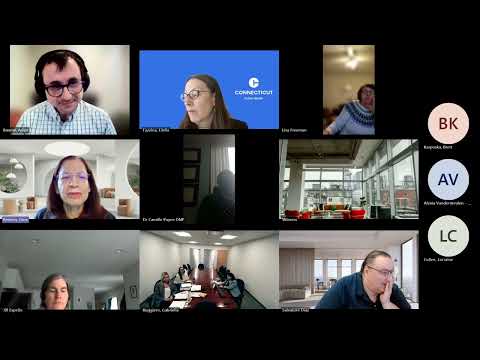
Nursing board hears misconduct case against Teresa Sheehan; disputes over videotaping and written complaints
Loading...
Summary
The state Board of Nursing Examiners held an administrative hearing on Feb. 18, 2026, on Department of Public Health charges against nurse Teresa Marie Sheehan. The panel permitted video recording, declined to admit a complainant's written affidavit without in-person testimony, and admitted the department's investigative report with pages 1—8 sealed.
Gina Reiner, chair of the state Board of Nursing Examiners, opened an administrative hearing on Feb. 18, 2026, to consider a statement of charges filed by the Department of Public Health against licensed nurse Theresa (Teresa) Marie Sheehan. The panel reviewed procedural rules, evidence protocols and scheduled testimony as the Department prepared to present witnesses and experts.
Reiner told the panel that "the burden of proof is on the department to prove its case by a preponderance of the evidence," and reviewed the hearing format including exhibits, opening statements, witness testimony and cross-examination. Attorney Linda Pizzina identified herself as counsel for the Department of Public Health; respondent Sheehan and respondent counsel (Heidi Solano and Gabriela Ruggiero were noted on the record).
A preliminary dispute centered on whether the virtual hearing should be video recorded and whether sensitive patient-identifying material should be handled in executive session. Respondent counsel objected to videotaping and said the complainant's identity and patient records should be protected from public posting; Department counsel urged the panel to allow recording, citing the Freedom of Information Act requirement that virtual proceedings be posted online. The panel overruled the objection and permitted videotaping after counsel cited CGS §1-225a as the pertinent authority for posting virtual hearings.
Counsel for the respondent objected to admission of a sworn written affidavit submitted by the complainant on due-process grounds, arguing that "I cannot cross examine an affidavit, and it would deprive my client of the fundamental right of due process and of cross examination," and that some statements in the submission "are far outside of what a layperson would be able to testify to." Department counsel (board adviser Aden Baum) responded that non-party written statements may be received under CGS §4-1177(c)(B) as "non-party statements" for context but are not evidence that the panel should rely on for findings unless corroborated or the declarant testifies: "The statement contains factual assertions, opinions about causation and standards of care, accusations of fraud and forgery," he said, adding the panel should treat such submissions as background unless independently supported by evidence.
Board member Sal Diaz moved to overrule the objection and admit the complainant's written witness statement as a non-party statement; Lisa Freeman seconded. After discussion about how much weight a board member could give to a written non-party statement without cross-examination, the chair called a roll. The recorded votes were Sal Diaz (aye), Lisa Freeman (no), Dr. Camille Payne (nay) and Chair Gina Reiner (nay). The motion failed and, at that time, the objection to admitting the complainant's affidavit was sustained.
The Department offered multiple exhibits, including an investigative report (Department exhibit 1). Respondent counsel objected to the investigative report as hearsay and argued the Department's expert should testify rather than presenting the report; Department counsel replied that hearsay is admissible in administrative proceedings where reliable and probative. The chair overruled the objection and admitted Department exhibit 1 as a full exhibit, directing that pages 1 through 8 be sealed to protect confidential information. Department exhibit 2 (the complainant's complaint and related materials) was also placed on the record and marked under seal for confidentiality; Department exhibit 3 (facility licensing and investigation records) was discussed at length, with respondent counsel accepting admission of the core medical-record portions while objecting to non-record materials bundled in the exhibit and asking for page-level clarification.
Counsel also raised scheduling and logistics: respondent counsel noted Sheehan has multiple sclerosis and may need short breaks during the hearing; the panel agreed to accommodate health-related breaks. The chair announced a half-hour lunch recess and planned to reconvene at 12:20 p.m., with the hearing scheduled to continue until 4 p.m. The Department indicated it expected to call at least one expert witness and the complainant for testimony later in the proceeding, and the panel discussed possible rescheduling if time ran short.
No findings on the merits were reached during the session covered by the transcript. The board's next steps were to resume testimony after the break, receive expert testimony, and consider admitted exhibits (including the sealed investigative report) in deliberations.