Get Full Government Meeting Transcripts, Videos, & Alerts Forever!
Get email alerts on the Prostitution Policy topic
No spam. Unsubscribe anytime.
House panel advances bill to boost buyer penalties, direct fees to survivor services and change treatment of people engaged in prostitution
Summary
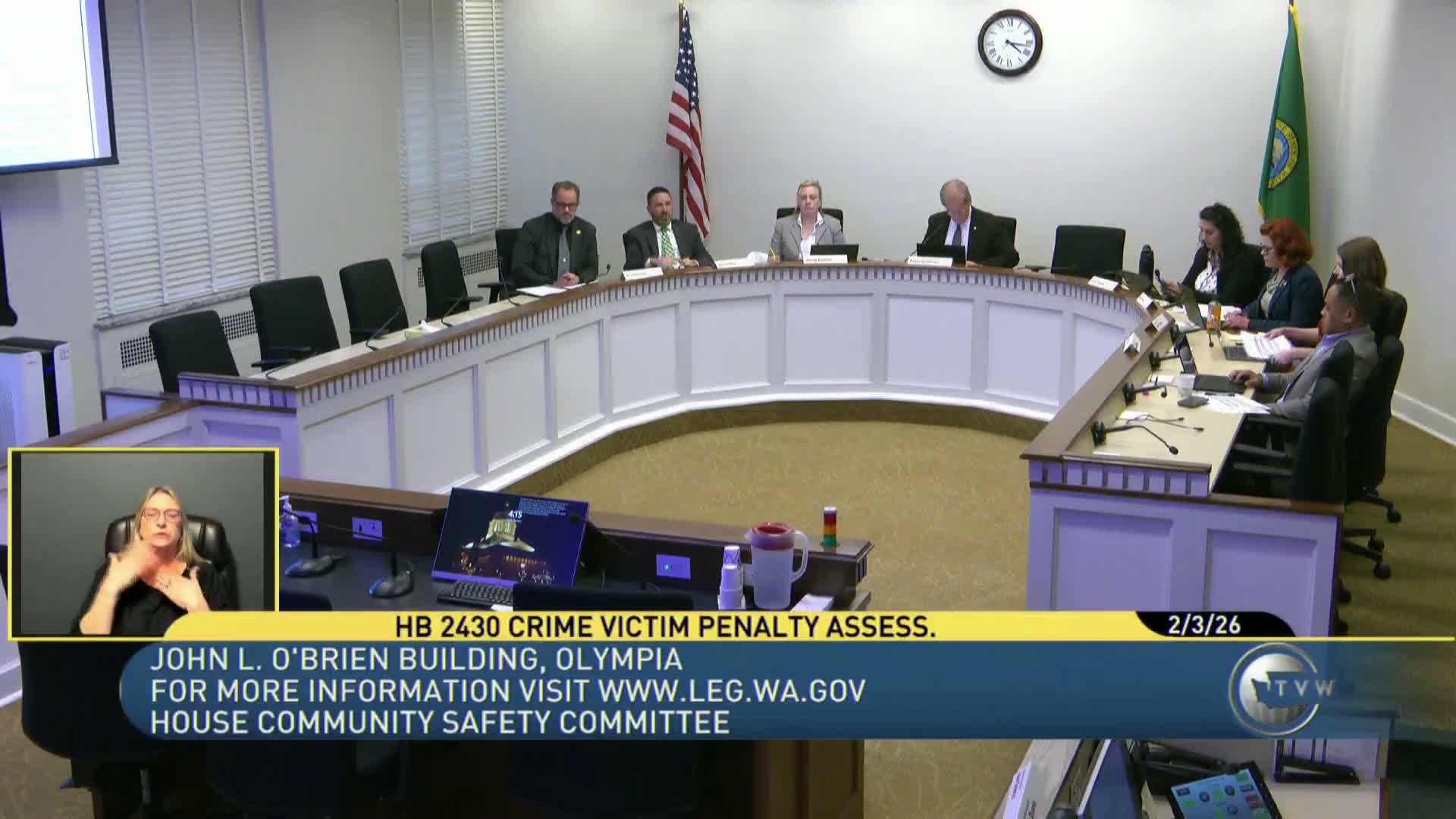
The House Community Safety Committee on Feb. 3 voted 5–4 to report out a substitute to House Bill 25 26 after adopting an amendment that adds survivor referrals and widens the definition of patronizing. Supporters said the measure will protect survivors and fund services; opponents warned it risks decriminalizing activity without adding guaranteed services and could hamper enforcement.
The House Community Safety Committee on Feb. 3 voted to report out a substituted version of House Bill 25 26, a measure that renames and restructures prostitution-related offenses and directs most fee revenue to survivor-led services.
The substitute, H3308.1, renames the offense to 'patronizing a person for prostitution,' makes first and second convictions gross misdemeanors and a third or subsequent conviction a class C felony, and directs 98% of the revenue from assessed fees to community-based, survivor-led organizations, according to committee staff. The substitute also contains an emergency clause with an effective date of April 1, 2026.
During executive session the committee adopted Amendment Wale 275, which expands the ways a person may commit prostitution to include accepting anything of value; requires law enforcement to refer a person engaged in prostitution to services for the person's first and second investigative detentions; makes a third or subsequent investigative detention a misdemeanor; specifies that assault of a person engaged in prostitution is a class C felony; and bars arrest for prostitution when the person is reporting another crime or law enforcement is investigating another crime.
A proponent who spoke to the committee described personal experience with trafficking and urged the panel to prioritize diversion and services over arrest for survivors. "I was trafficked from the ages of 11 to 13," the proponent said during floor remarks, arguing the first two contacts should emphasize services and support rather than criminalization.
Opponents and skeptical members questioned whether the state has the community-based programs the bill would require law enforcement to refer people into. Representative Griffey said many jurisdictions lack such programs outside Seattle and King County, and warned the policy could place officers in an untenable position if referral options are not available.
Supporters, including members who favored the amendment, said the bill balances holding buyers accountable while reducing criminal penalties for people they described as victims of trafficking and exploitation. The substitute was reported out to the full House with a due-pass recommendation by a 5–4 roll-call vote.
Next steps: the bill will be placed on the House calendar for further consideration by the full House. The committee record shows adoption of Amendment Wale 275 and the substitute as reported out; implementation details for referral programs and funding were discussed but no additional dedicated funding was included in this bill text.
Votes at a glance: substitute House Bill 25 26 reported out 5 ayes, 4 nays.