Get Full Government Meeting Transcripts, Videos, & Alerts Forever!
Get email alerts on the Litigation Finance topic
No spam. Unsubscribe anytime.
Committee advances bill requiring disclosure by third‑party litigation funders
Summary
The Civil Rights and Judiciary Committee reported House Bill 2,255 out of committee with a 'do pass' recommendation after staff described new disclosure requirements and members debated transparency and fairness in litigation financing.
The Civil Rights and Judiciary Committee voted to report House Bill 2,255 out of committee with a "do pass" recommendation after staff described the measure as a disclosure‑focused response to third‑party litigation financing.
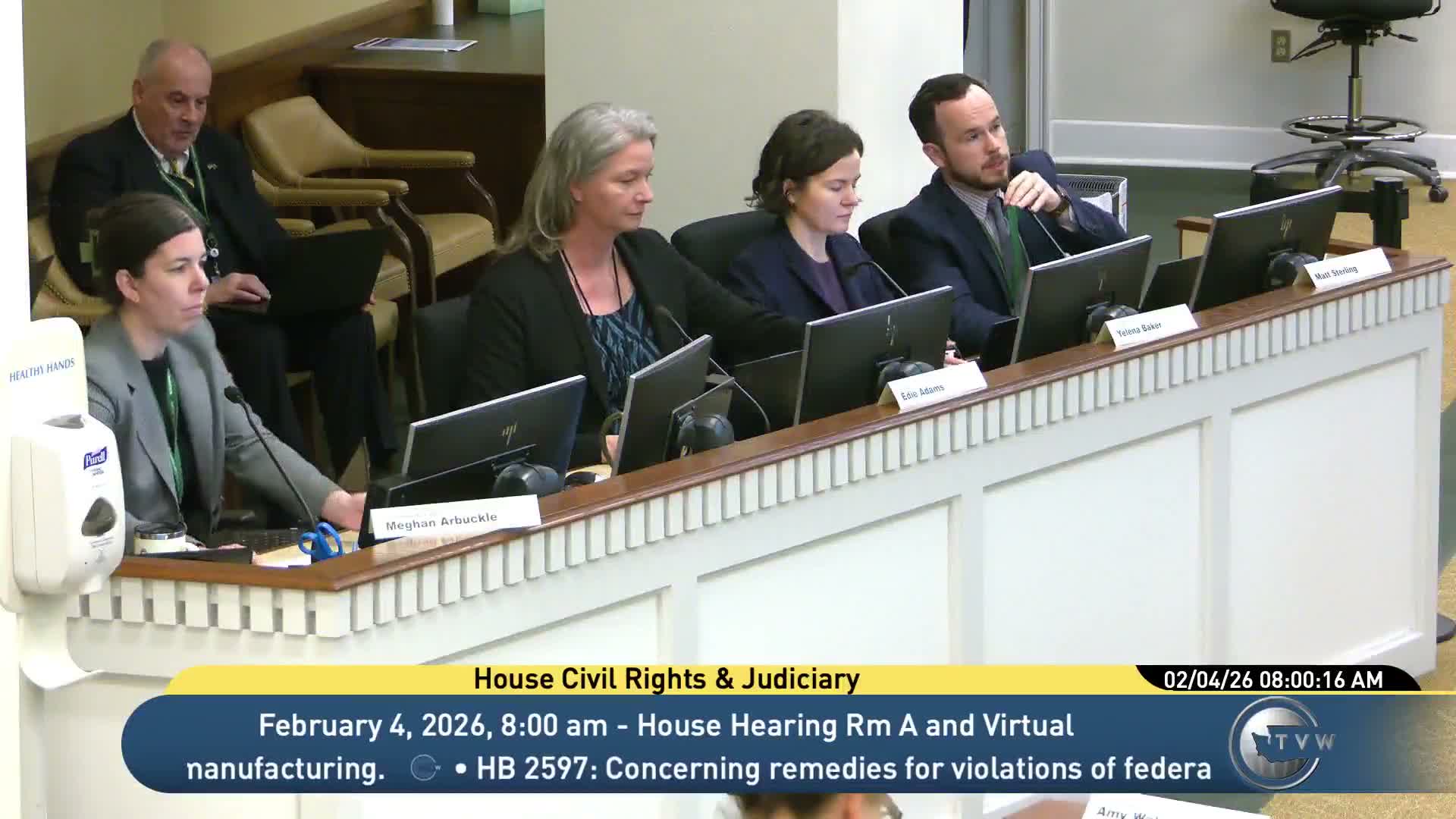
Matt Sterling, staff to the committee, told members the bill would impose disclosure requirements on third‑party litigation funders, prohibit certain acts in funding agreements and make violations actionable under the state's Consumer Protection Act, with statutory damages and other remedies available to enforcement authorities. "Happy to answer any questions," Sterling said during his presentation.
Vice Chair Farber moved the bill out of committee. Representative Wallen, urging support, framed the bill as a step toward court and party transparency about financing arrangements when outside companies invest in litigation: "I think we always like to decide on being more transparent rather than less," he said. Representative Goodman said she would support moving the bill forward while working to tighten language so disclosures do not create an "unlevel playing field." Representative Walsh described the measure as adding reporting elements rather than banning funding arrangements.
The committee took a voice vote and staff announced 12 ayes, 1 nay. By that tally, HB 2,255 was reported out of committee with a due‑pass recommendation.
Next steps: the bill will move from committee for further consideration by the full chamber.