Get Full Government Meeting Transcripts, Videos, & Alerts Forever!
Get email alerts on the Privacy Alpr topic
No spam. Unsubscribe anytime.
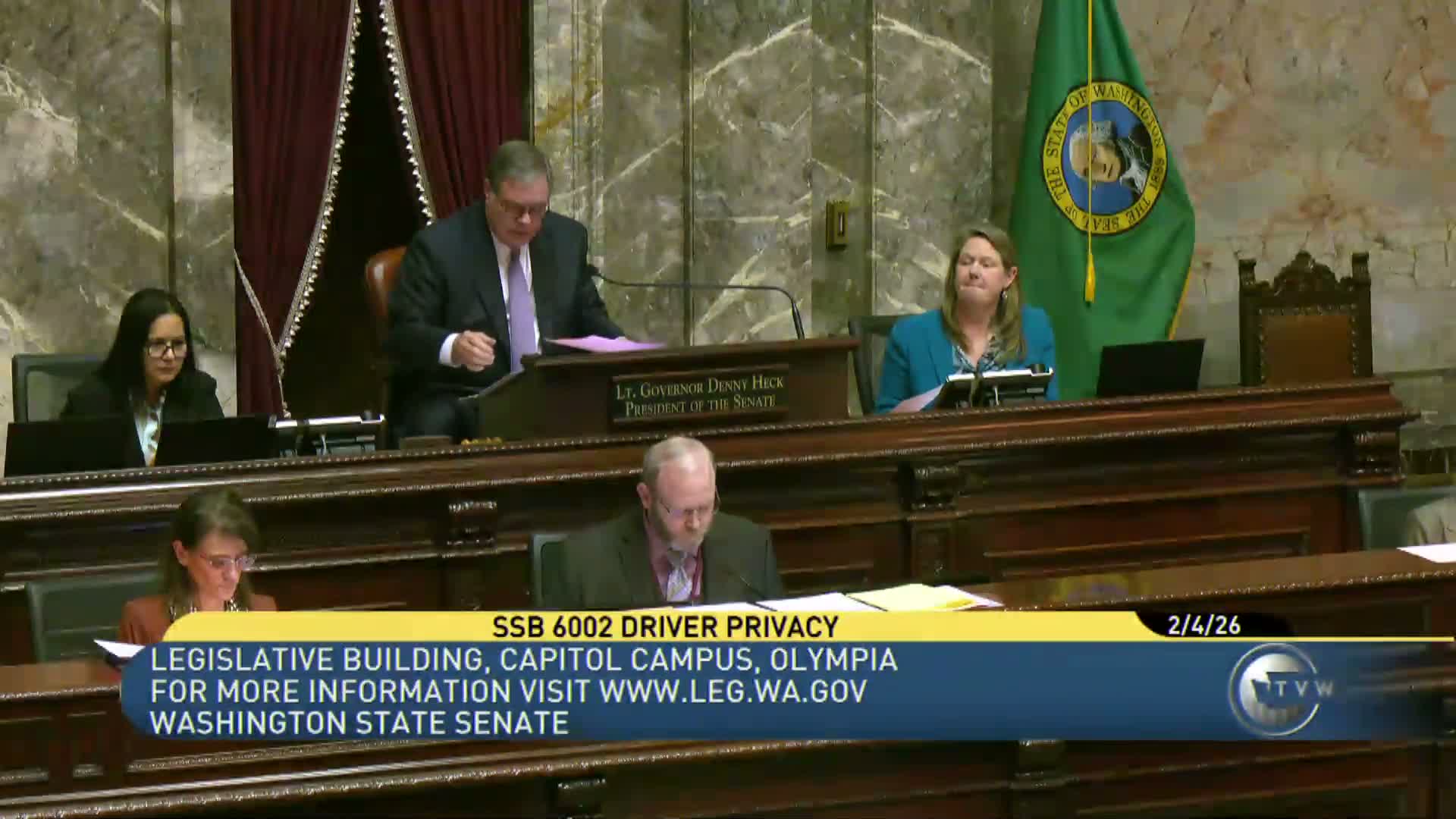
Senate Approves Statewide ALPR Privacy Rules After Hours of Debate
Summary
The Washington Senate passed substitute SB 6002 on Feb. 3, 2026, setting statewide rules for automated license plate reader systems after extended debate over privacy, retention and allowable law-enforcement uses; the measure cleared the floor with a recorded majority.
The Washington State Senate on Feb. 3 advanced and passed substitute Senate Bill 6,002, a measure that sets statewide rules for automated license plate reader (ALPR) systems and clarifies when and how law enforcement may access and retain plate-reader data.
The bill’s sponsors and supporters said the measure strikes a balance between public-safety utility and privacy protections. After floor amendments and extended debate over retention periods and authorized uses, the Senate declared the bill passed on final reading.
Why it matters: The bill addresses growing concerns about large-scale tracking and third-party vendor access to movement data. Sponsors said clear statutory limits prevent misuse and provide consistent rules for jurisdictions that have paused ALPR contracts pending direction. Opponents argued further limits or shorter retention periods are needed to protect privacy.
What happened on the floor: Lawmakers considered a striking amendment and several technical changes; the striking amendment was adopted following debate. Senator Trudeau framed the bill in constitutional terms, invoking Washington’s privacy protections: “In our in Washington state constitution Article 1 Section 7, it grants a strong fundamental right to privacy, protecting individuals from state intrusion into their private affairs without legal authority,” he said on the floor. Senator Holy and others emphasized law-enforcement utility and said carefully defined authorized uses—stolen vehicles, missing persons, felony warrants and similar matters—must be preserved.
Key points from debate - Privacy frame: Senator Trudeau repeatedly said the bill was rooted in the state constitution’s privacy protection and urged that the bill provide both safeguards and workable authority for investigators. - Law-enforcement utility: Senator Holy argued the bill preserves critical uses for public safety and protections against vendor misuse; Senator Wagner urged clarity about which crimes should justify ALPR use. Senator Christian and others described concrete cases where ALPRs helped resolve crimes without dangerous chases. - Retention and access: Senators discussed retention windows and public-records access. Supporters noted revisions had increased retention to a period providing investigative utility while imposing safeguards; opponents sought shorter retention and stronger vendor restrictions.
Outcome and next steps: The Senate advanced the engrossed substitute and declared substitute SB 6,002 passed on final reading. The title of the bill will be the title of the act; the measure moves on for whatever subsequent processing the statute requires.
Quotes “...it grants a strong fundamental right to privacy, protecting individuals from state intrusion into their private affairs without legal authority,” — Senator Trudeau.
“This legislation was all about finding balance, trying to figure out exactly what we needed to construct,” — Senator Holy.
The Senate record shows floor amendment votes and roll-call tallies recorded on the day; the bill was placed on final passage following adoption of key technical changes and the striking amendment. The measure is now finalized as titled on the Senate floor and will proceed according to legislative process.