Get Full Government Meeting Transcripts, Videos, & Alerts Forever!
Get email alerts on the Conservation Bank topic
No spam. Unsubscribe anytime.
House oversight committee adopts subcommittee study endorsing changes at South Carolina Conservation Bank
Summary
The House Government Efficiency and Legislative Oversight Committee voted to adopt a 10-finding study of the South Carolina Conservation Bank that recommends statutory changes, a nonprofit qualification threshold, and alignment with federal easement rules while warning that budget cuts could imperil projects.
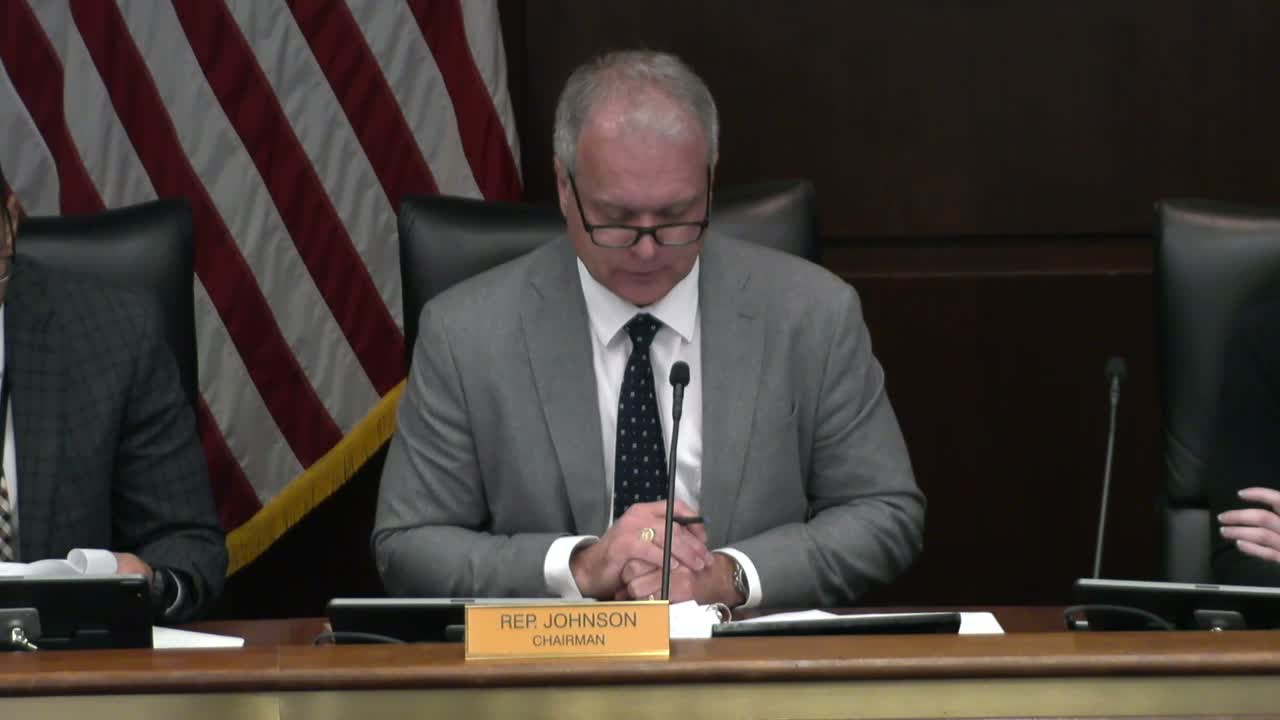
The House Government Efficiency and Legislative Oversight Committee on Feb. 3 adopted a subcommittee study of the South Carolina Conservation Bank that outlines 10 findings and recommends statutory and operational changes to strengthen the agency.
The study, presented by Subcommittee Chair Representative Travis Moore, said the Conservation Bank has helped protect more than 413,000 acres through about $359,000,000 in grants and operates primarily by funding partners — such as land trusts and state agencies — to secure conservation easements or fee‑simple acquisitions. "The Conservation Bank plays a vital role in preserving the state's natural and working lands," Moore said during the presentation.
Why it matters: The subcommittee framed the Bank as a cost‑effective state tool that leverages additional federal, local and private funding. The report highlights the Bank's ability to move quickly on real estate transactions and recommends formalizing its coordinating role through statute, setting long‑term conservation goals, and modernizing reporting and review processes.
Key findings and recommendations: The report recommends the General Assembly consider a statutory designation for the Bank as a statewide clearinghouse for land transactions; establish long‑term conservation goals (the subcommittee referenced revisiting a 30x30 concept and noted Representative Moore later filed a bill proposing an aspirational goal of 7,000,000 acres conserved by 2050); set a $100,000 minimum financial threshold for nonprofit partners; expand the Bank's board to add an ex officio Chief Resilience Officer from the Office of Resilience; and align state law with federal requirements for conservation easements to preserve donors’ tax benefits.
Financial and operational points: The study noted the Bank operates with a very small staff (reported as four full‑time employees) while managing millions in grants. It described a reimbursable grant program under which nonprofit partners may purchase priority properties up front and seek reimbursement once title and federal matching funds are secured; the program has recouped $5,700,000 from federal sources and the presentation said it is expected to bring back over $20,000,000 from outstanding projects. The subcommittee warned that routine 3% reductions in state appropriations could substantially limit the Bank's ability to fund high‑priority conservation projects.
Agency responses and clarifications: In response to questions from the chair about whether the Bank places a cap on acreage it will pay for, Director Riley West said, "No, sir. There's no cap," and clarified that a separate state tax credit is a $250‑per‑acre formula tied to federal deductions and is not administered by the Bank. When asked how many landowners use the 25% tax credit, West said most who qualify take advantage of it but that individual tax returns are private and his office does not track exact participation.
Board leadership: During the meeting outgoing board chair Mike McShane introduced Dr. Peter King as the Bank's incoming chairman; King thanked the committee for the opportunity to serve.
Vote and next steps: Representative Moore moved to adopt the subcommittee study; staff conducted a roll call and the committee recorded Aye responses and absences, and the report was adopted. The subcommittee and agency materials, including the full report and recommendations, are posted on the committee website. The committee offered members the option to request additional evaluation by the full committee or to refer the study back to subcommittee for further assessment as a next step.