Get Full Government Meeting Transcripts, Videos, & Alerts Forever!
Get email alerts on the Tribal Data Sovereignty topic
No spam. Unsubscribe anytime.
Bill to codify tribal data sovereignty and exempt tribal health data prompts support and open‑government concerns
Summary
House Bill 26 85 would require state agencies to apply tribal data sovereignty principles, direct disease reporting to tribal health jurisdictions, and exempt tribal data from public disclosure; tribal leaders urged passage while open‑government advocates warned the PRA exemption may be too broad.
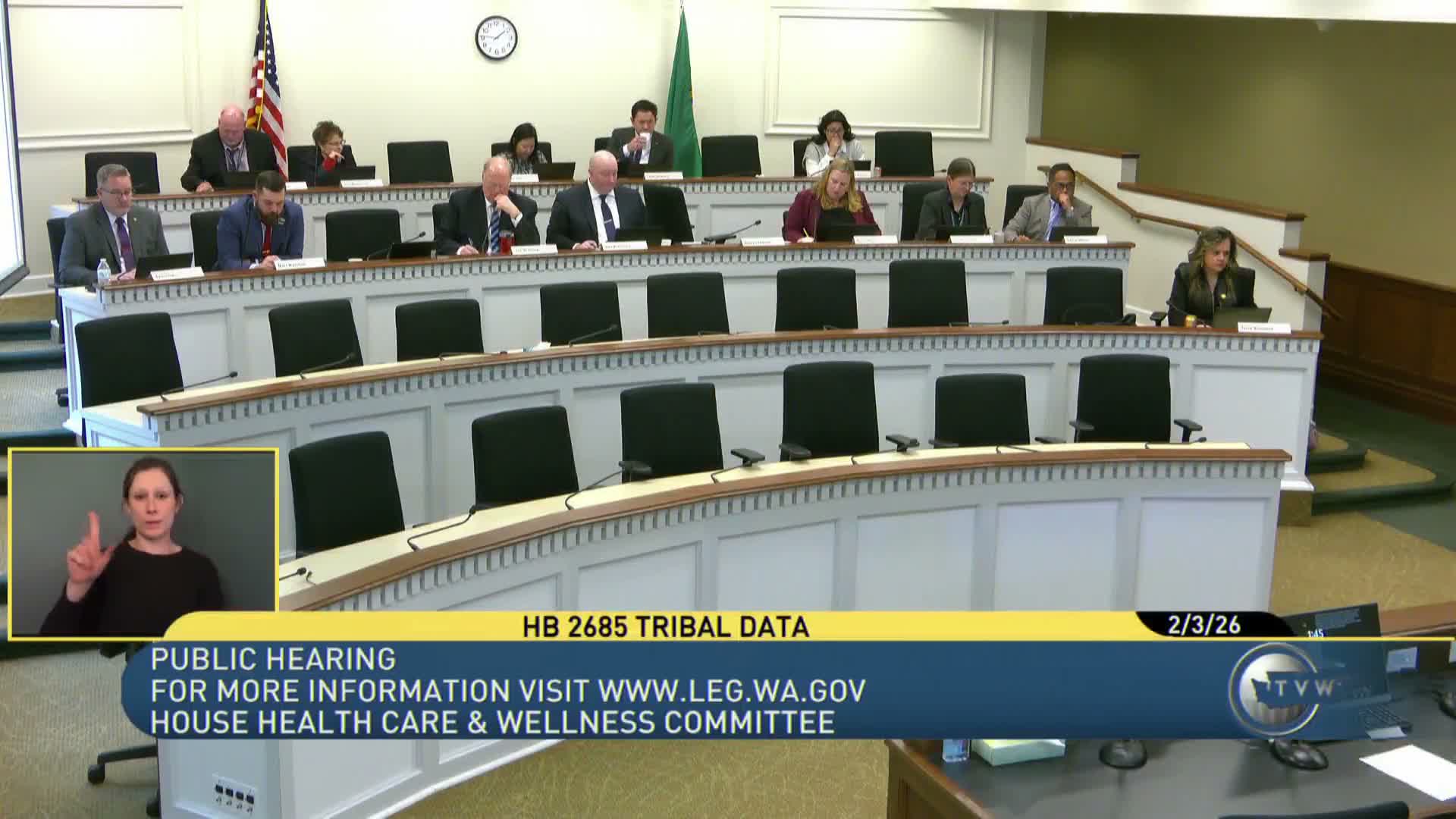
The committee heard testimony on House Bill 26 85, which would require state agencies that handle tribal data to apply tribal data sovereignty principles, direct the State Board of Health to require reporting of notifiable conditions to tribal health jurisdictions, and exempt tribal data held by certain state agencies or local health jurisdictions from disclosure under the Public Records Act.
Representative Deborah Lekanoff, the prime sponsor, said the bill codifies eight tribal data sovereignty principles approved by the governor’s Indian Health Advisory Council and was prompted by delays and access problems revealed during COVID. She said the measure is intended to enable government‑to‑government collaboration and let tribes ‘‘tell the story’’ of their data.
Tribal leaders testified in support. Lisonbee Ball, an elected council member, said tribes have long asserted authority over collection and use of data concerning their members and urged the committee to advance the bill. Vicky Lowe (American Indian Health Commission) recalled COVID‑era delays accessing the state disease reporting system and said tribal data sharing agreements and templates are already under development.
Opponents raised concerns about scope and transparency. Robert McClure of the Washington Coalition for Open Government said his group learned of the bill only recently and that the proposed PRA exemption "appears to cover all data" tribes provide to many agencies, some not closely related to health. McClure said he and his coalition will oppose the bill until the committee narrows or better explains the exemption.
Aaron Spark of the Health Care Authority said HCA supports tribal data access and governance but warned the bill as drafted may be overbroad, could apply to encounter and claims data across programs, lacks a clear definition of ownership interests, and does not provide caveats where federal or state law requires reporting. HCA said implementation would require resourcing and further language work.
The committee closed public testimony after a mix of strong tribal support and procedural concerns from open‑government and agency witnesses; no committee vote occurred at this hearing.
Next steps noted in the record include continued consultation between tribes, HCA and relevant state agencies to refine definitions, scope, and implementation details.