Get Full Government Meeting Transcripts, Videos, & Alerts Forever!
Get email alerts on the Tribal Health Traditional Practices topic
No spam. Unsubscribe anytime.
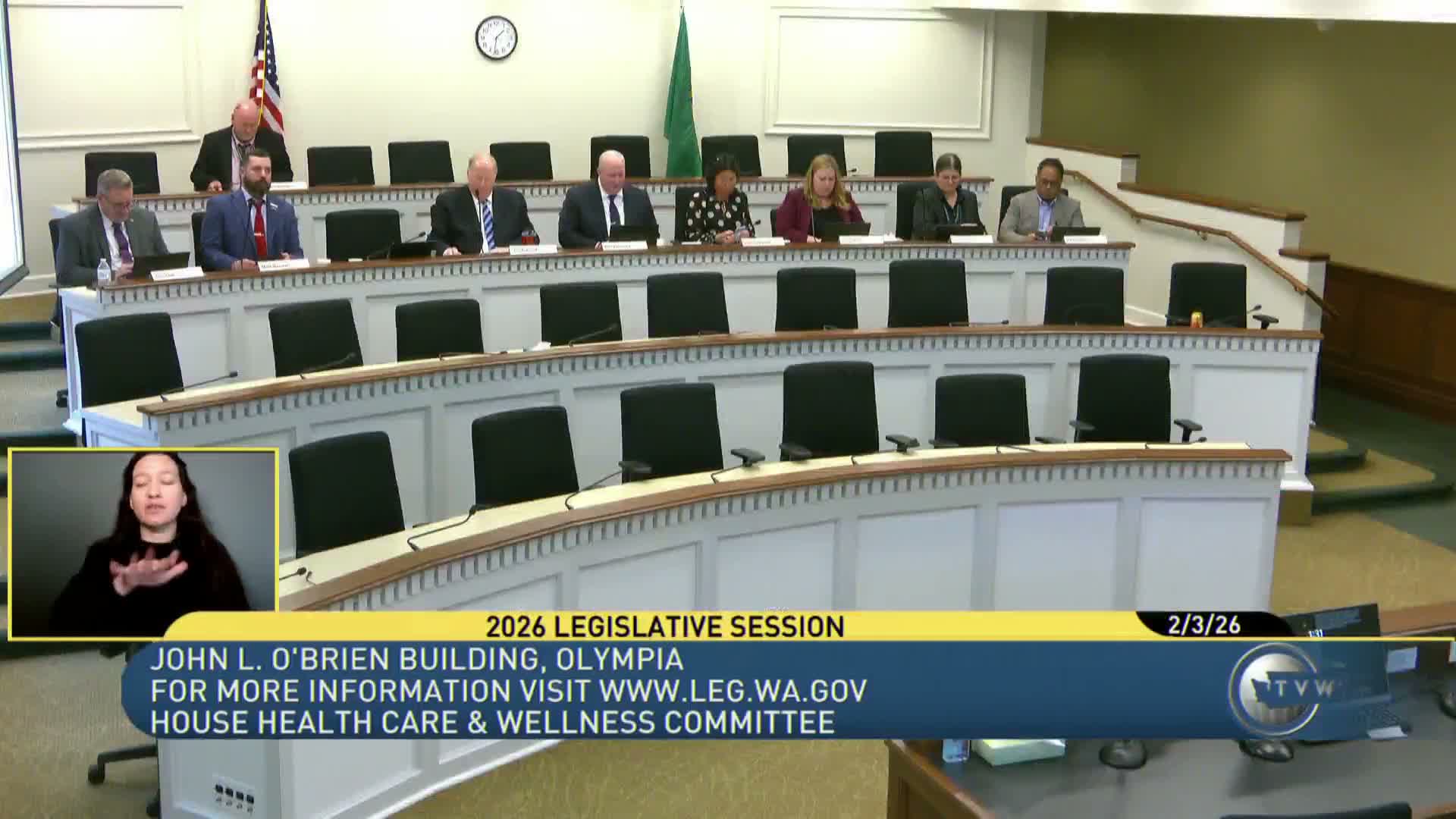
Committee hears bill to let Medicaid cover traditional tribal health practices
Summary
The House Healthcare and Wellness Committee heard testimony on House Bill 25 55 to authorize the Health Care Authority to apply for a CMS waiver allowing Medicaid reimbursement for traditional health practices at Indian health facilities; tribal leaders and HCA staff urged further consultation on payment structure.
The House Healthcare and Wellness Committee heard staff and tribal testimony on House Bill 25 55, which would authorize the Health Care Authority to apply for a federal waiver to allow Medicaid coverage of traditional health care practices delivered at Indian health care facilities. Chris Blake, committee staff, described the bill's purpose and the CMS waiver timeline the bill directs.
The bill, explained Blake, would let HCA seek a waiver to cover traditional practices provided at Indian Health Service facilities, tribal facilities and urban Indian organizations and to permit coverage for Medicaid enrollees able to receive services at those facilities. Blake said CMS guidance typically allows 100% federal match for services provided to members of federally recognized tribes while non‑tribal patients could be covered at the standard match rate.
Representative Deborah Lekanoff, the prime sponsor, told the committee the legislation is largely technical and intended to let Washington ‘‘apply for the 1115 Medicaid waiver’’ so traditional Indian medicine practitioners can be recognized as providers and their services reimbursed. Lekanoff cited multistate precedents and recovery center data in arguing that expanding recognized services would leverage federal funding and improve outcomes.
Tribal health leaders urged swift submission of the waiver and collaboration with state agencies. Vicky Lowe, executive director of the American Indian Health Commission, said tribes and urban Indian organizations are prepared to work with HCA and the governor’s office and that budget impacts would likely fall in the next biennium. Esther Lucero, president and CEO of the Seattle Indian Health Board, cited three years of program data and said traditional services were associated in their data with reductions in suicidal ideation, substance‑use and depression; she urged that urban Indian programs be included despite a different federal match.
Aaron Spark, HCA’s Office of Tribal Affairs administrator, said the agency supports expanding access but flagged unresolved questions about payment structure, the operational feasibility of the bill’s 07/01/2026 waiver timeline, and how to treat inclusion of urban Indian organizations in the financing model. He said HCA has engaged tribes and state partners but that the agency anticipated further work on reimbursement details.
The committee closed public hearing on HB 25 55 after testimony and questions; no committee vote on the bill occurred during the meeting.
The next step is unspecified in the hearing record; sponsors and HCA emphasized continued tribal consultation and work on reimbursement details.