Get Full Government Meeting Transcripts, Videos, & Alerts Forever!
Get email alerts on the Committee Roundup topic
No spam. Unsubscribe anytime.
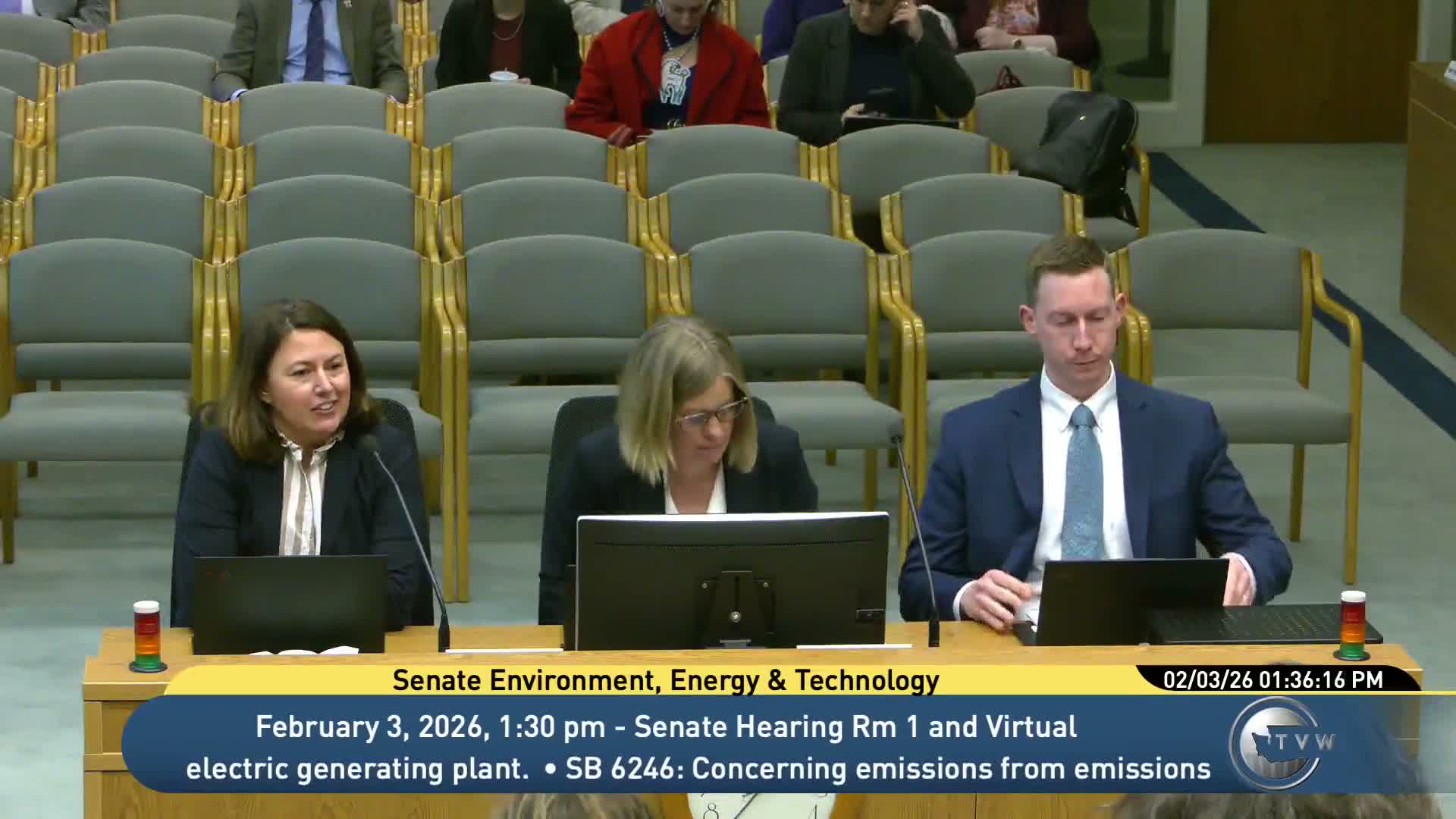
Senate Environment, Energy & Technology committee advances 11 bills in executive session
Summary
In an executive session, the Senate committee advanced 11 bills covering data‑center rules, AI oversight, cultural‑resource protections under SEPA, transmission authority, fuel definitions, lead in cookware, weatherization and related measures; most were advanced as "passed subject to signatures."
The Senate Environment, Energy & Technology Committee met in executive session and moved 11 bills forward to the next stage of consideration, with most receiving a due‑pass recommendation and the procedural notation "passed subject to signatures." The committee began by asking staff to brief each bill and then took sequential votes after a brief caucus.
Key items advanced included: an appliance‑affordability study bill (Senate Bill 6,124) with an amendment excluding consumer electronics from the study; an emerging large energy‑use facilities bill (SB 6,171) addressing data‑center tariffs, reporting and an annual per‑kWh fee (the fee language was the subject of an amendment debate); SB 6,284 establishing risk‑management and disclosure requirements for high‑risk artificial‑intelligence systems and extending the AI Task Force; and SB 5,609 on cultural resource protections under SEPA, which proposes convening DAP‑led work groups and includes licensing language for archaeologists.
Other bills advanced included measures on allocation of no‑cost allowances for emissions‑intensive, trade‑exposed facilities under the Climate Commitment Act (SB 6,246); technical changes for alternative jet fuel incentives and tax credits (SB 59,32); a modernization of the Motor Fuel Quality Act definition of motor fuel (SB 62,69); authorization for community‑scaled weatherization projects (SB 6,223); two proposed substitutes addressing lead in cookware (SB 5,975); and an act to create a statewide electric transmission authority and related amendments (SB 5,466, with multiple amendments debated).
Debate highlights and procedural outcomes were: staff briefings preceded each motion; sponsors and members frequently noted remaining stakeholder work and potential amendments; several amendment votes failed on voice vote; and most measures were reported out with due‑pass recommendations to Ways & Means or Rules as appropriate. The committee adjourned after completing its scheduled executive actions.
Votes at a glance (as recorded in committee): - SB 6,124 (appliance affordability study): amendment A adopted; bill advanced, "passed subject to signatures." - SB 6,171 (emerging large energy‑use facilities / data centers): proposed substitute and motions advanced; committee debated and recorded opposition and support on fee removal, but the bill was advanced. - SB 6,284 (AI systems): proposed substitute D adopted; bill advanced to Ways & Means. - SB 5,609 (SEPA cultural resource protections): substitutes and amendments debated; proposed substitute advanced. - SB 6,172 (coal facility treatment): advanced with an amendment addressing emergency DOE orders. - SB 6,246 (EITE allocation): advanced to Ways & Means. - SB 59,32 (alternative jet fuel): proposed substitute adopted to preserve 10‑year credit periods for qualifying projects; advanced. - SB 62,69 (Motor Fuel Quality Act): proposed substitute adopted; advanced to Rules. - SB 6,223 (community‑scaled weatherization): advanced. - SB 5,975 (lead in cookware): two substitutes considered; proposed substitute K advanced. - SB 5,466 (transmission authority / WIDA): multiple amendments M1–M5 were debated (several failed); the second proposed substitute was advanced.
The committee recorded voice votes for each motion; the transcript captures verbal "aye" and "nay" responses rather than roll‑call tallies. Several senators emphasized the need for additional stakeholder work or clarified that items would return for further amendment. The committee adjourned after the board‑signing reminder.