Lifetime Citizen Portal Access — AI Briefings, Alerts & Unlimited Follows
Committee reports substitute clarifying lifecycle emissions and tax credits for alternative jet fuel
Loading...
Summary
A proposed substitute to HB 23‑22 that sets lifecycle greenhouse‑gas emissions as the basis for alternative jet fuel tax incentives, establishes effective dates for several tax credits and removes a Clean Fuels Program change was reported out by voice vote 21–0.
The Environment and Energy Committee on Friday reported a substitute to HB 23‑22 clarifying the eligibility rules and timing for state tax incentives for alternative jet fuel (AJF).
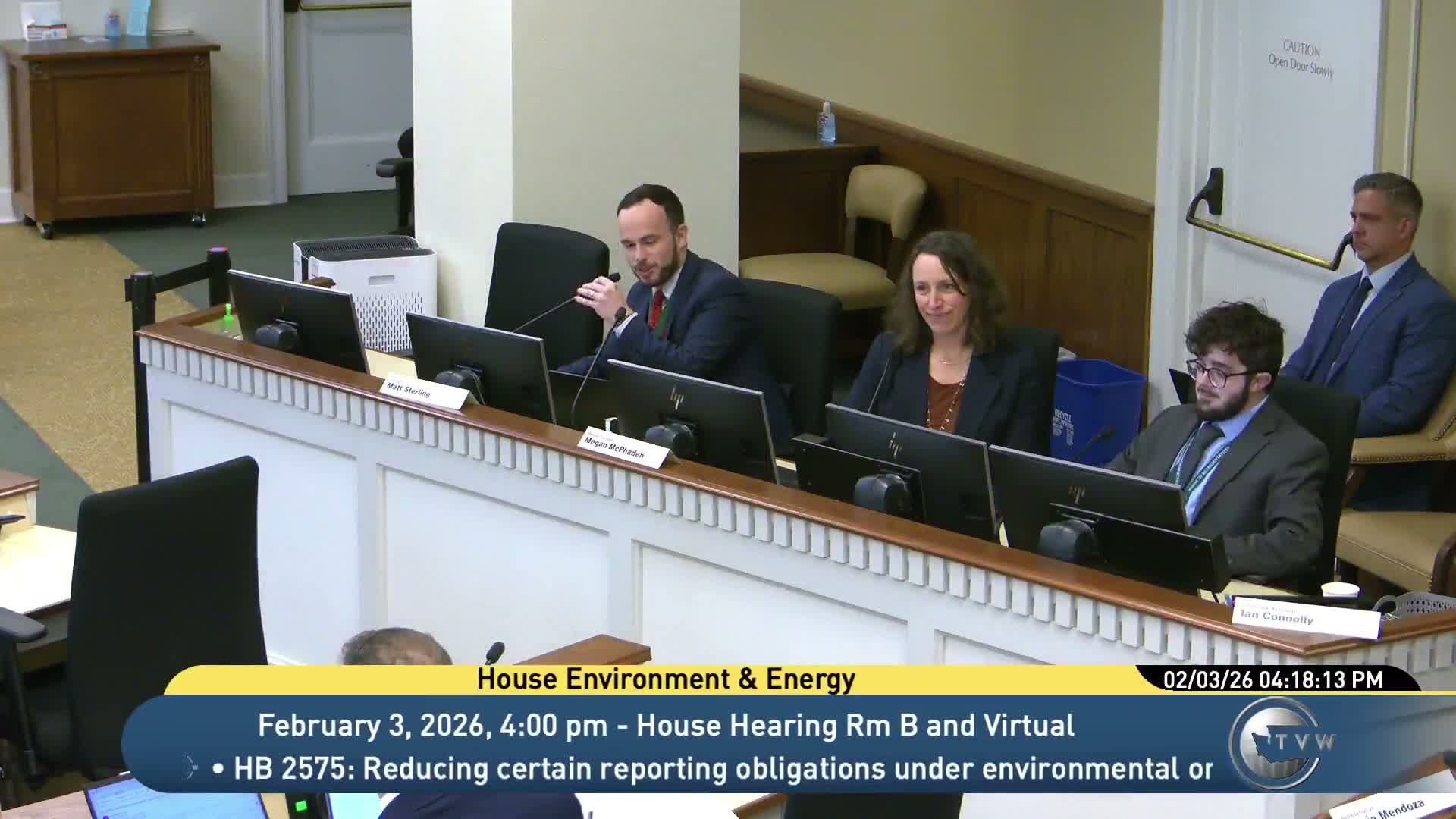
Matt Sterling told the committee the substitute would remove a proposed change to the Clean Fuels Program carbon‑intensity pathway, establish July 1, 2031, as the effective date for a set of preferential tax rates and credits for AJF manufacturers and users, eliminate product capacity thresholds that previously triggered those incentives, and make eligibility dependent on lifecycle greenhouse‑gas emissions rather than direct emissions.
Representative Hackney urged support for the improvements in the substitute and Representative Lee praised the changes, saying Washington’s aviation sector is a leader that can benefit from the bill. The committee took a voice vote; staff announced 21 ayes, 0 nays and the substitute was reported out with a due‑pass recommendation.
No amendments were recorded during the executive session. The bill proceeds according to legislative scheduling.