Get Full Government Meeting Transcripts, Videos, & Alerts Forever!
Get email alerts on the Civics Signature Instruction topic
No spam. Unsubscribe anytime.
Committee advances cursive/signature instruction bill with cultural accommodations
Summary
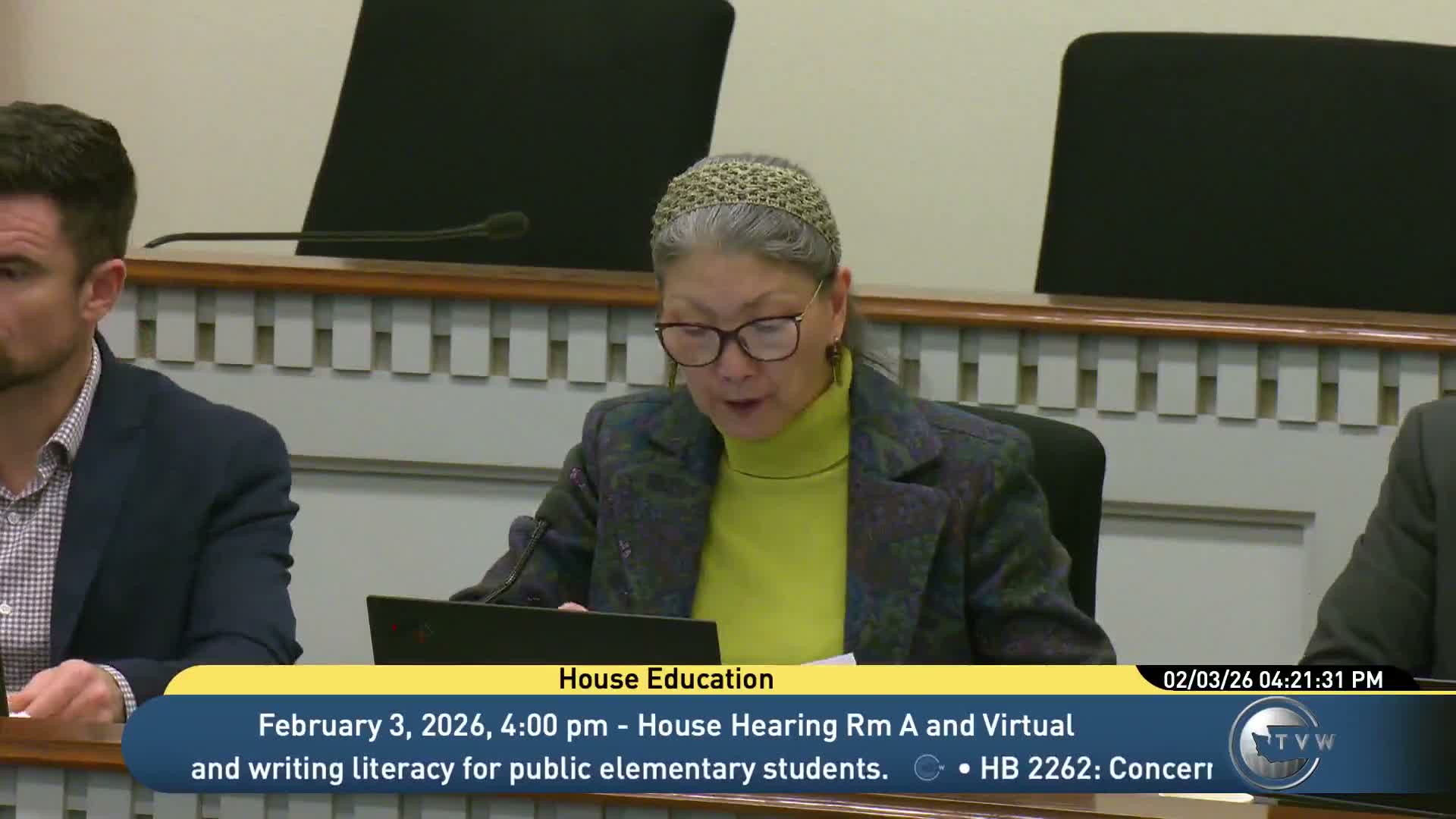
The committee advanced House Bill 2,262 to require instruction on producing legible or culturally appropriate signature marks in high‑school civics, and to add certain Secretary of State reporting; members adopted amendments allowing non‑Latin signature forms and historical context, and reported the bill (14–0, 5 excused).
The House Education Committee voted to report House Bill 2,262, which requires mandatory high‑school civics instruction to include producing legible, repeatable official signatures and explains how signatures are used by election officials. Staff identified several member amendments that clarify cultural and equity accommodations.
Staff (Ethan) told the committee that the bill also "requires statewide election reports of the Office of the Secretary of State to include certain information about ballots that were rejected for signature mismatches." Members debated a slate of amendments to allow students whose cultural or linguistic heritage uses non‑Latin scripts to satisfy the requirement with a consistent personalized handwritten mark or customary signature form.
Representative Reeves and Representative Rood supported amendments that add historical context about how signature practices have limited civic participation for marginalized communities. Representative Reeves said the reforms "respect and value" students who sign in scripts other than Roman characters. Multiple amendments addressing cultural accommodation and instruction content were adopted; the committee reported the substitute with a due‑pass recommendation, with the clerk recording 14 ayes, 0 nays, and 5 excused.
What’s next: The substitute moves toward the House floor; any fiscal or statutory interactions will be addressed in later committee work.