Get email alerts on the Eite Allowances topic
No spam. Unsubscribe anytime.
Committee backs bill directing Ecology to recommend allowance schedule for EITE facilities
Summary
House Bill 2,537, which directs Ecology to report and recommend allowance schedules for emissions‑intensive, trade‑exposed (EITE) facilities and requires biennial reporting and planning, was reported out of committee 12–9 after debate over competitiveness and allowance use.
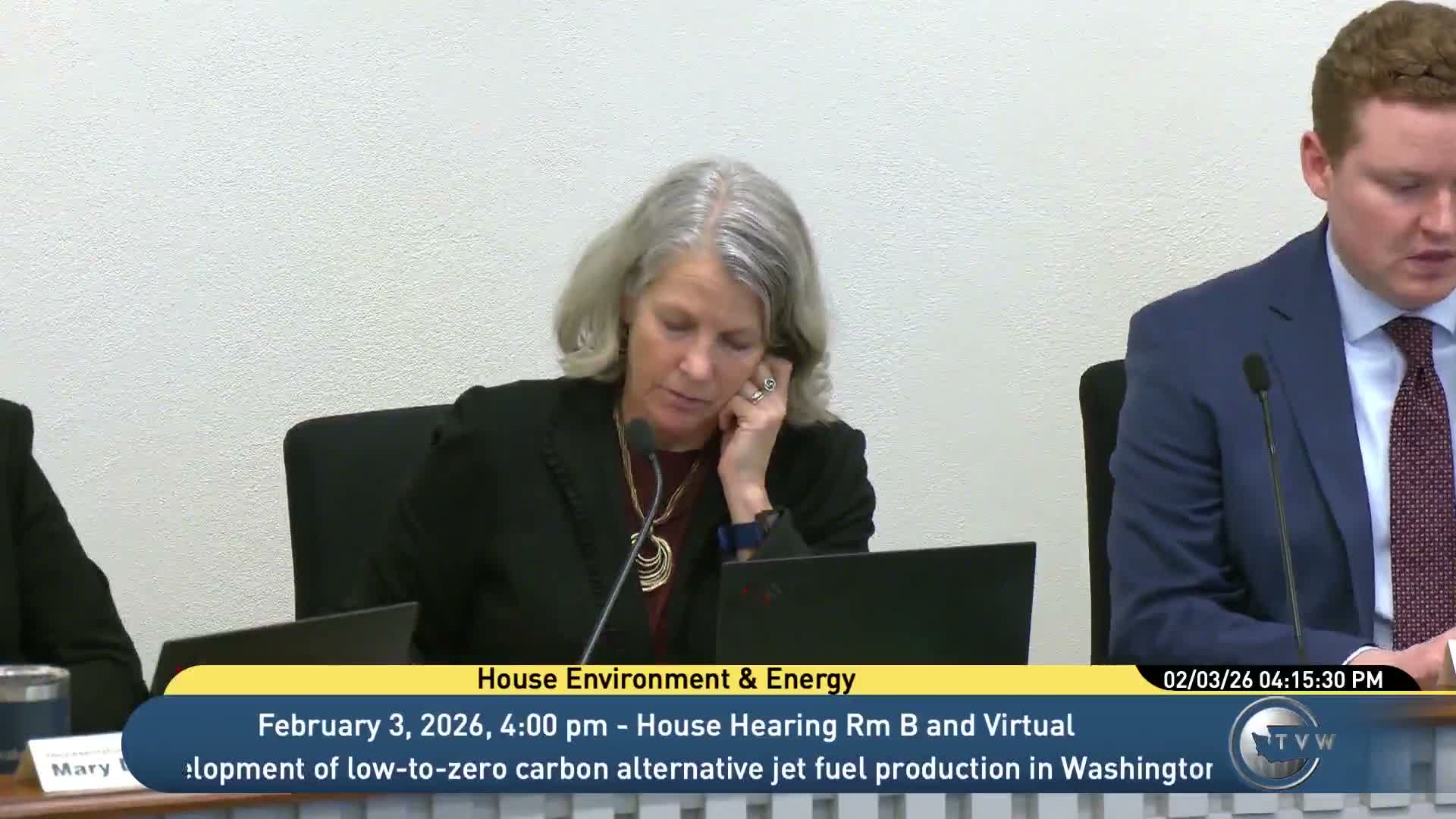
The Environment and Energy Committee voted to report House Bill 2,537 out of committee with a due‑pass recommendation after debate about industry competitiveness and the role of allowances.
Matt Sterling, staff to the committee, summarized the bill: "House Bill 2,537 relates to emissions from EITE facilities under the Climate Commitment Act. The bill would require the report from Ecology that's due to the legislature by December 1 to provide recommendations for addressing the schedule of allowances provided to EITE facilities from 2035 to 2050." He said the bill would require biennial reports after 2027, plans updated every four years, and biannual information about greenhouse gas emissions for each EITE facility unit. Violations of reporting or planning requirements could be subject to penalties up to $10,000 per violation per day, he said.
Ranking Member Dai questioned whether the policy would make industry uncomfortable and argued the legislature should consider how allowances could be consigned for emissions‑reduction projects and to avoid job losses. Representative Grama supported the bill’s facility‑by‑facility reporting approach, saying it avoids a one‑size‑fits‑all solution.
After roll call, staff announced 12 ayes and 9 nays and the bill was reported out of committee with a due‑pass recommendation. The committee did not adopt amendments in the executive session.
The bill moves next according to the legislature’s scheduling and any further amendments sponsors may file.
AI generated
The text on this page is AI generated. Summaries, highlights, analysis, and video transcripts are all produced from the original source material.
AI can make mistakes, so if you spot one, and we will fix it for everyone.
Note: the source content is unaltered by us. Any content source we link to, be it a video, an audio recording, or a document, is presented exactly as its publisher released it. That publisher is usually a government body, sometimes an individual official or another organisation.