
Committee weighs extending regional transit bond terms to 75 years to align with federal TIFIA loans
Get AI-powered insights, summaries, and transcripts
Subscribe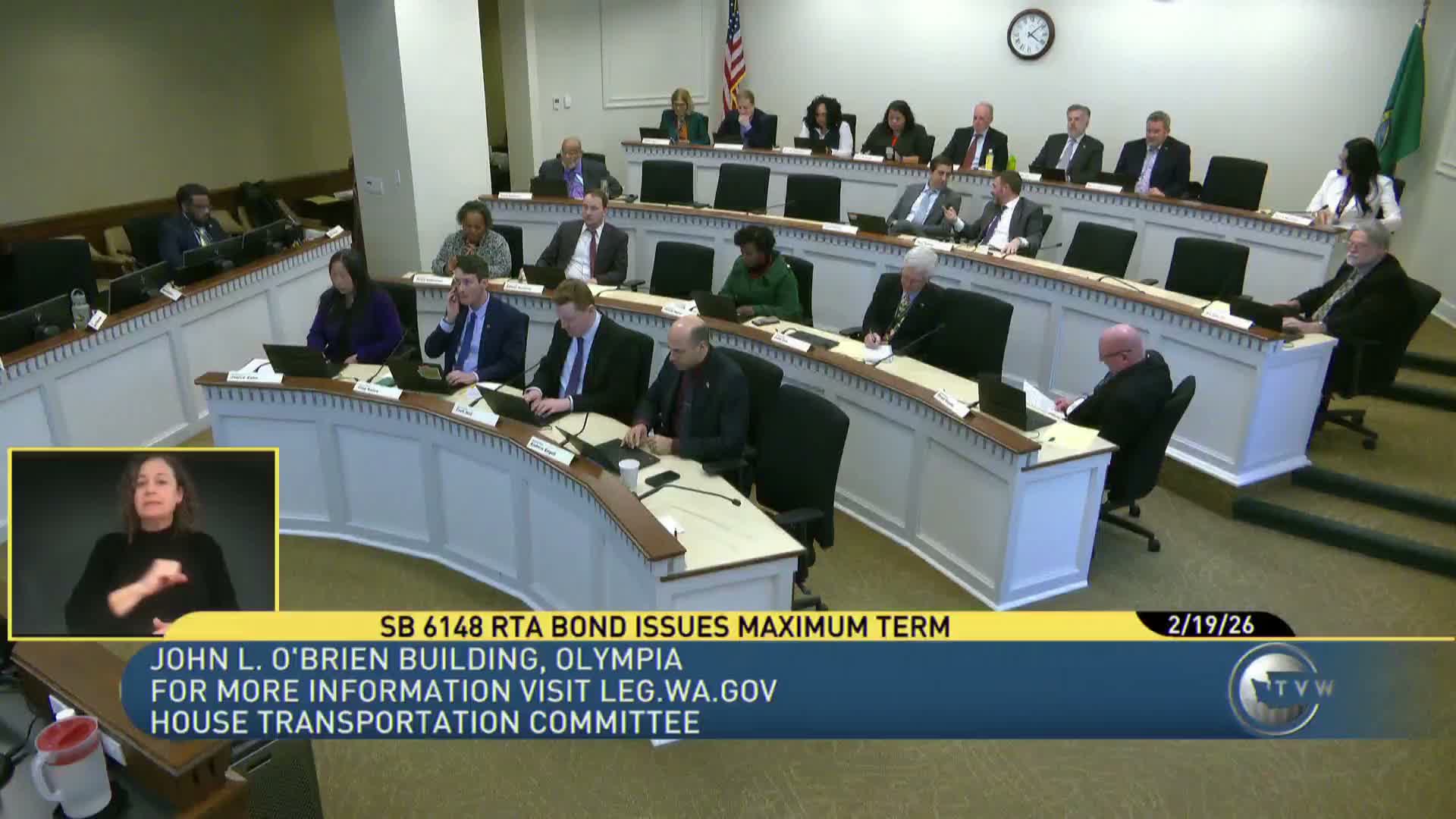
Summary
Senate Bill 6148 would let regional transit authorities issue bonds up to 75 years, aligning with federal TIFIA terms; proponents including county executives and Sound Transit supporters say it eases near‑term debt pressure and preserves projects, while opponents warn of intergenerational debt and fiscal risk.
Senate Bill 6148 would extend the maximum statutory term for bonds issued by a regional transit authority from 40 years to 75 years and would make an RTA ineligible for the regional mobility grant program if it issues bonds with terms greater than 40 years.
David Monnke, committee staff, explained the bill's mechanics and noted Sound Transit is the sole existing RTA in the state. Mark Mattson, on the fiscal side, shared illustrative examples (from a Treasury official) showing how longer terms lower annual debt service for a single hypothetical $100,000,000 issuance but increase total principal‑and‑interest paid over the life of the bonds; Mattson cautioned that the transcript record contains a garbled figure for the 75‑year total and that interest‑rate effects for longer terms can vary.
Senator Marco Elias, the bill's prime sponsor, said allowing parity with federal TIFIA (Transportation Infrastructure Finance and Innovation Act) loan terms would let Sound Transit use additional financing tools to preserve project schedules and buy time to refinance as market conditions improve. Elias and several witnesses said longer tools could fund construction now, maintain project momentum for ST3 expansions and create local jobs.
Local officials and Sound Transit allies testified in support. Snohomish County Executive and Sound Transit Board chair Dave Summers said the agency faces cost pressures and that the enterprise initiative is looking for efficiencies; Ryan Mello, Pierce County executive, and Issaquah council member Kelly Jang said the authority would help keep voter‑approved projects on track. Former Sound Transit CFO Brian McCartan and other finance witnesses described three layers of safeguards: statutory limits on debt (1.5% of assessed value without voter approval), rating‑agency and market scrutiny for unusually long bonds, and federal TIFIA lending due diligence and pay‑priority terms.
Opponents, including Tim Eyman and Jeff Powell of Citizens Against Unfair Taxes, warned a 75‑year bond maturity is unusually long for local debt, risks higher lifetime costs and could shift repayment burdens to future generations. Public commenters urged the committee to wait for Sound Transit's enterprise initiative to complete its revisions to the ST3 financial plan before granting new authority.
Committee members asked technical questions about whether Sound Transit debt would affect state bonding (witnesses said Sound Transit bonds are revenue‑backed and do not tap state credit) and how TIFIA loans interact with other funding (witnesses explained current TIFIA share limits and potential mixes of TIFIA loans, local taxes, bonds and grants). The meeting ended with no committee vote recorded.