Get Full Government Meeting Transcripts, Videos, & Alerts Forever!
Get email alerts on the Mn Military Veterans Museum topic
No spam. Unsubscribe anytime.
Minnesota Military and Veterans Museum says 40,000 sq ft facility near Camp Ripley will target a September opening
Summary
Museum director Randall Dietrich told the House Veterans and Military Affairs Division the public-private, roughly $40 million project on 30 donated acres will include theaters, multimedia stations and restored artifacts (including the sail of USS Minneapolis–Saint Paul) and aims to open in September with programming tied to the 20th anniversary of 9/11.
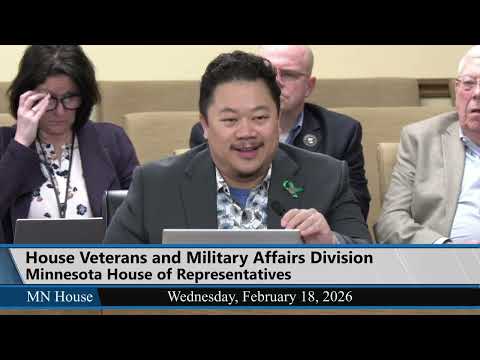
The Minnesota Military and Veterans Museum team updated the House Veterans and Military Affairs Division on Feb. 18 about construction progress and programming plans for a new museum sited just outside Camp Ripley.
"Our museum is dedicated to telling stories from veterans of all 87 counties and all service branches," Randall Dietrich, the museum’s executive director, told lawmakers as he walked the committee through renderings and plans for the 40,000-square-foot facility on a donated 30-acre parcel near Highway 371.
Dietrich described moving tanks, artillery and aircraft to the site and restoring large artifacts for display, including the conning tower and rudder from the USS Minneapolis–Saint Paul (SSN 708). He said the building will house three theaters, seven multimedia stations, classroom spaces, a Vesey Memorial Hall and gallery spaces dedicated to conflicts from the Civil War through the present.
The project is a public–private partnership the director estimated at about $40,000,000. Construction began about a year ago; Dietrich said the team is working to open in September and will publish a schedule of opening-season events. He encouraged lawmakers and the public to sign up for updates via the museum website, mnvetmuseum.org.
Lawmakers praised the restoration work and asked about collections management. Dietrich said the museum will employ a full-time curator and archivist, operate a collections area with high-density shelving, and has 111 display cases being produced for exhibits. He asked that citizens with artifacts contact the museum through its website to begin donation conversations.
The committee did not act on funding or take formal votes related to the museum during the Feb. 18 meeting.