DHS outlines where 2025 law changes are delayed by CMS reviews and what that means for the forecast
Loading...
Summary
Department testimony identified dozens of statutory changes from 2025 that require state-plan or waiver amendments; many submissions are pending CMS review or were submitted late, producing delayed effective dates and potential forecast savings or costs for the state.
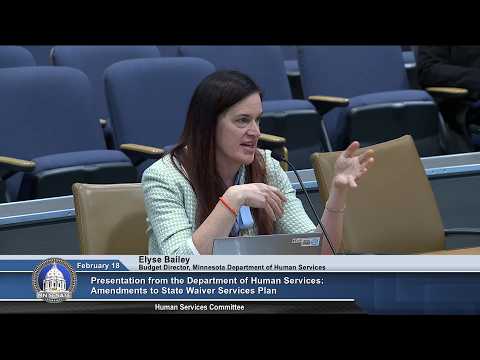
Department of Human Services budget director Elise Bailey told the committee that the department is managing more than 50 budget items that require state-plan or waiver amendments, and several high-impact changes have been delayed by the federal review process.
Bailey described the federal review timeline: DHS posts a 30-day public comment, submits a state-plan or waiver amendment to CMS, and CMS has a 90-day clock to review. That clock can be paused if CMS issues a formal Request for Additional Information (RAI), which stops the 90-day clock until DHS responds. Bailey said the department has seen more formal questions and paused clocks than in prior years and that several submissions were filed within the 90-day window (too close to the effective date) because DHS lacked capacity during a heavy implementation period.
Members asked about concrete program items. Bailey said the nursing-facility patient-driven payment model and several nursing-home rate changes are pending, and the nursing-home surcharge — a revenue source the committee had counted on — may be limited by HR 1 provisions, with an estimated tail revenue impact cited by nonpartisan staff at roughly $118 million in later biennia. Bailey also described delayed implementation for MNChoices attestation changes (one portion denied by CMS) and for CFSS/consumer-directed supports tied to the SEIU agreement.
On forecasting, Bailey explained that the department applies fiscal notes from the enacted laws to the end-of-session forecast; when effective dates shift or are delayed those costs or savings get shifted in subsequent forecasts. She told the committee that delays can sometimes be reprocessed when CMS later approves retroactive effective dates (for state-plan amendments) but that waiver-based items typically cannot be made retroactive.
Committee members asked DHS to provide a prioritized list of delayed items sorted by fiscal impact and by whether the change can be applied retroactively; members also requested MMB or fiscal staff model the budget impacts for the February forecast. Bailey agreed to return with that information.
Next steps: DHS will provide the committee with a ranked list of delayed items, indicate which items can be retroactive if approved, and detail the likely fiscal impact per item for inclusion in the next forecast.