
Georgia veterans agency details suicide-review findings, expands outreach and launches free mental‑health app
Get AI-powered insights, summaries, and transcripts
Sign Up Free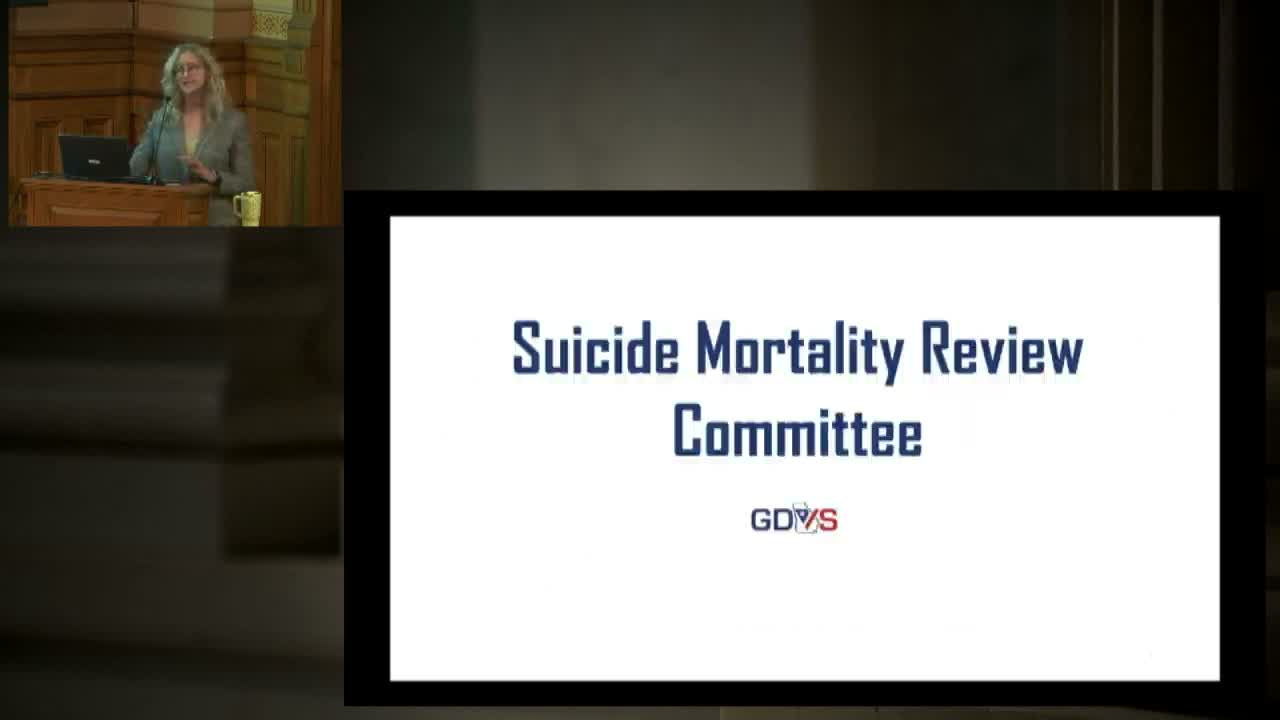
Summary
Commissioner Trish Ross told a joint Defense & Veterans Affairs hearing the Department of Veterans Service is intensifying suicide-prevention work after a mortality review; the department has screened thousands, runs a statewide referral network and rolled out a no-cost app providing 24/7 clinical access to veterans.
Commissioner Trish Ross, head of the Georgia Department of Veterans Service, told a joint session of the Defense & Veterans Affairs committees that the department has intensified suicide-prevention efforts after a statewide suicide mortality review and related research with Kennesaw State’s AIM Center.
The department convened a suicide mortality review committee and performed a landscape analysis using violent death reporting system data, Ross said. She told lawmakers the review surfaced ongoing risks: Georgia recorded roughly 200 veteran suicides last year and a veteran suicide rate—17.6 in the department’s referenced series—that remains higher than the national average.
The review’s demographic signals include a majority male cohort, an average age near 56, and a high share of deaths involving firearms. Ross said firearms accounted for almost 80% of veteran suicide deaths in the department’s historical data and that many decedents had comorbid mental or physical-health conditions that increase risk.
"We are in the business of prevention, not reaction," Ross said, describing the committee’s aim to identify upstream interventions. The department continues the committee’s work despite initial grant funding ending, she said, because the findings are important to ongoing prevention.
Ross described the Fox Grant, which the department has held for four years, and said the agency screened about 4,500 people in 2023 with an annual increase of roughly 250 screenings. The department provides trainings (Mental Health First Aid, SAVE, ACE, SI) and runs large outreach events such as the "Let's Connect" summit; Ross said the summit achieved 97% participant satisfaction.
The department also piloted a mental‑health app called Here Now that Ross said is available to every veteran in Georgia at no cost and offers wellness content, peer‑group channels and 24/7 access to clinical providers. "You have 24/7 access to clinical providers around the country. No cost," Ross said during the hearing.
Ross said the department’s closed‑loop referral platform (Unite Us) and a new public resource directory have shortened time-to-service: referrals are accepted in about 1.6 days and partner organizations typically meet needs in roughly 6.4 days. She credited a network of more than 800 partner organizations and said the department has connected more than 18,000 veterans through the platform and fully outreached about 5,000 individuals.
Why this matters: Ross told lawmakers early intervention and fast connections to community partners can reduce downstream harms associated with untreated mental‑health and social needs, including housing instability and financial stress—both contributors the department’s data identifies as top risk drivers.
The department said it will use social media and its opt‑in communications list (about 300,000 veterans) to inform veterans of major federal changes—such as any VA disability‑rating rule changes—and to share prevention resources. Ross also noted that a federal comment period was active at the time of the hearing and that the department planned outreach to help veterans understand the implications.
Next steps: Ross said the department plans further rounds of the mortality review, continued partnership with Kennesaw State, expanded training for community partners and wider promotion of the Here Now app and referral platform to reach at‑risk veterans earlier.