Get Full Government Meeting Transcripts, Videos, & Alerts Forever!
Get email alerts on the Homelessness Prevention topic
No spam. Unsubscribe anytime.
Georgia committee advances bill letting DCA use housing-trust fund for homelessness prevention
Summary
The State Planning & Community Affairs committee voted to amend and pass House Bill 689 out of committee. The bill would authorize the Department of Community Affairs to use the state's housing trust fund for homelessness prevention programs if the legislature later appropriates funds; sponsors emphasized prevention saves money and stabilizes families.
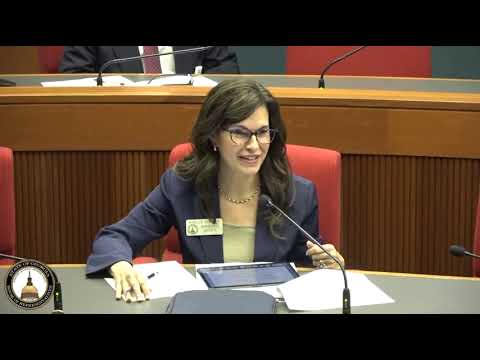
Representative Carpenter introduced House Bill 689 on the committee floor, saying the measure would allow the Georgia Department of Community Affairs to apply housing trust–fund dollars to homelessness prevention programs if the General Assembly later appropriates funds. "It's a whole lot more affordable to deal with things on the front side than after the fact," Carpenter said, framing the proposal as a fiscal and social prevention strategy.
Supporters told the committee they had experience delivering short-term rental and utility assistance and said small payments often prevent eviction and downstream costs. Audrea Reese, executive director of STAR Communities, said her nonprofit helped raise and administer more than $16.5 million for emergency rental assistance in Metro Atlanta and described cases in which modest assistance kept families housed. Katie Herring, managing attorney at the Atlanta Volunteer Lawyers Foundation, said legal representation combined with targeted rental assistance typically stabilizes households and cited an average intervention of about $1,800 per household.
Elizabeth Apley, an attorney and policy advocate representing a coalition of housing organizations, placed the bill in statute and research context and said the state already recognizes housing as a matter of "paramount concern" under OCGA 8-3-170 and related code. Apley described a COVID-era DCA pilot in which roughly $55 million in federal emergency rental assistance and legal services were paired; she said sponsors are seeking $25,000,000 in state funding to replicate that model if the legislature funds the program.
Carpenter and members debated implementation details — including vetting and eligibility standards, whether DCA would deliver services directly, geographic distribution, and audit provisions. Carpenter said the intent is to partner with existing nonprofit and local providers rather than create a new state delivery infrastructure and that DCA’s routine audit and contract oversight would apply.
Representative McLean moved that the committee "do pass" House Bill 689; members noted technical changes were needed to date references in the bill (updating 2026 references to 2027). The committee amended the bill to correct those dates and the chair then called a voice vote. The chair announced, "the ayes have it," advancing HB 689 out of committee as amended.
The bill itself does not appropriate funding; sponsor and testimony materials made a separate funding request to the appropriations process. The committee record shows the committee asked DCA and stakeholders to continue conversations about vetting, matching funds, and program design before appropriation decisions are made.