
Subcommittee hears bill to steer low‑value essential‑item thefts toward services, not jail
Get AI-powered insights, summaries, and transcripts
Subscribe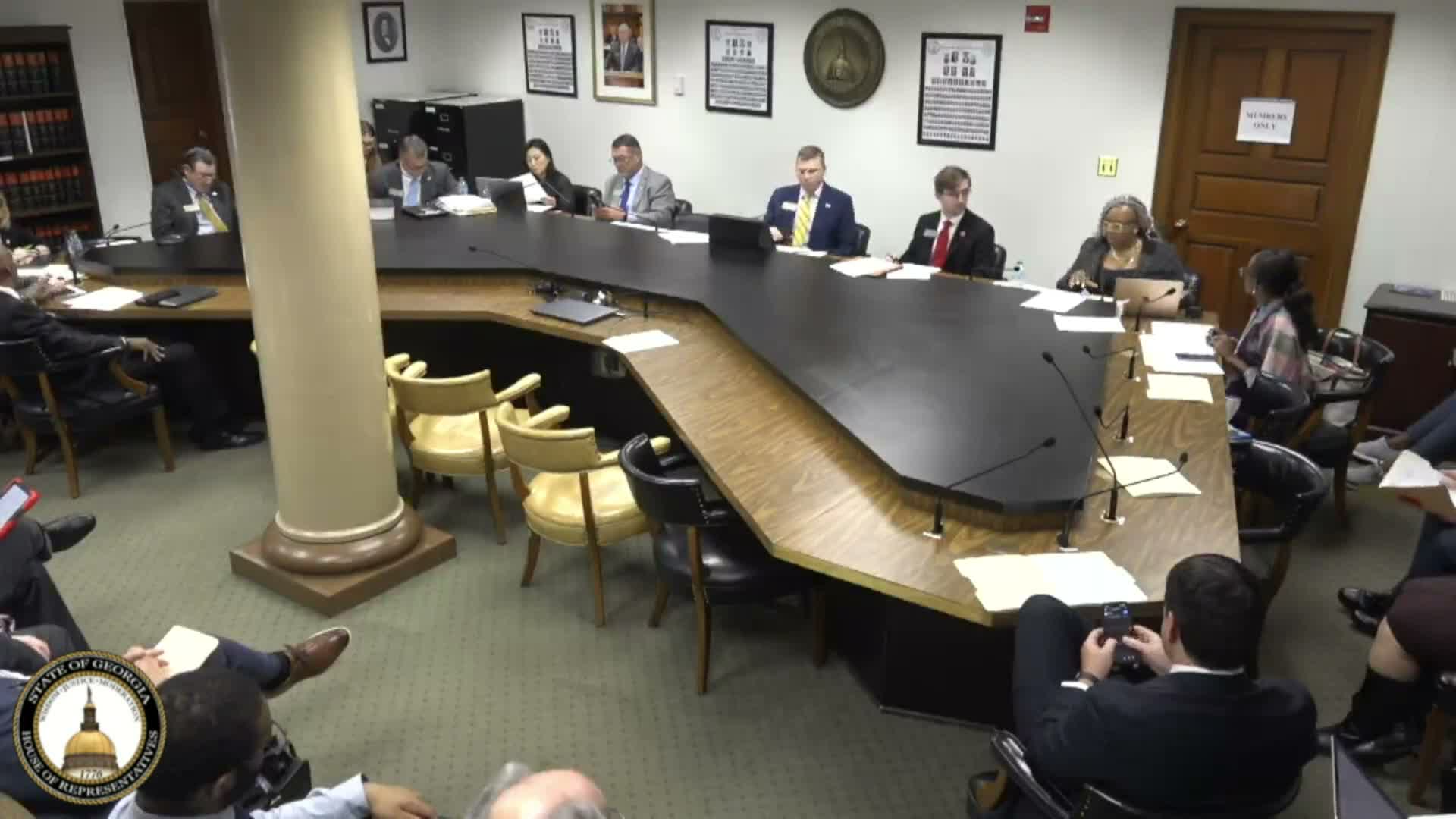
Summary
HB1175 would create alternative sentencing options for low‑value thefts of essential items — such as referrals to nonprofits, food pantries, or community service — and the committee kept the bill for further drafting to resolve statutory fee and restitution language.
Representative (sponsor) told the subcommittee HB1175 (LC481763S) aims to reduce incarceration for people who steal low‑value essential items out of urgent need — examples included unhoused people taking inexpensive food or toiletries — by creating sentencing alternatives such as referrals to nonprofit service providers and community service.
Christopher Bruce of the ACLU of Georgia supported the bill in testimony, citing research the organization provided on local jail populations and the link between poverty and low‑level arrests. Witnesses and committee members debated detailed drafting issues: how 'essential item' should be defined, whether existing misdemeanor citation procedures make some provisions redundant, and whether statutory surcharges and fees can be waived if fines are eliminated. Prosecuting‑attorney counsel and committee counsel warned that some statutory surcharges may be constitutionally required or administratively difficult to waive, and suggested drafting solutions such as explicitly waiving statutory surcharges where possible or tying the bill to existing citation procedures.
The committee did not adopt final text at this hearing. Members resumed a line‑by‑line review later in the session and decided to keep HB1175 as a hearing item so counsel can reconcile fee and restitution implications and produce a clean typed substitute for further vetting.
What happens next: Committee counsel and stakeholders will work on statutory language clarifying citations, restitution, and the treatment of surcharges before the bill returns for further consideration.